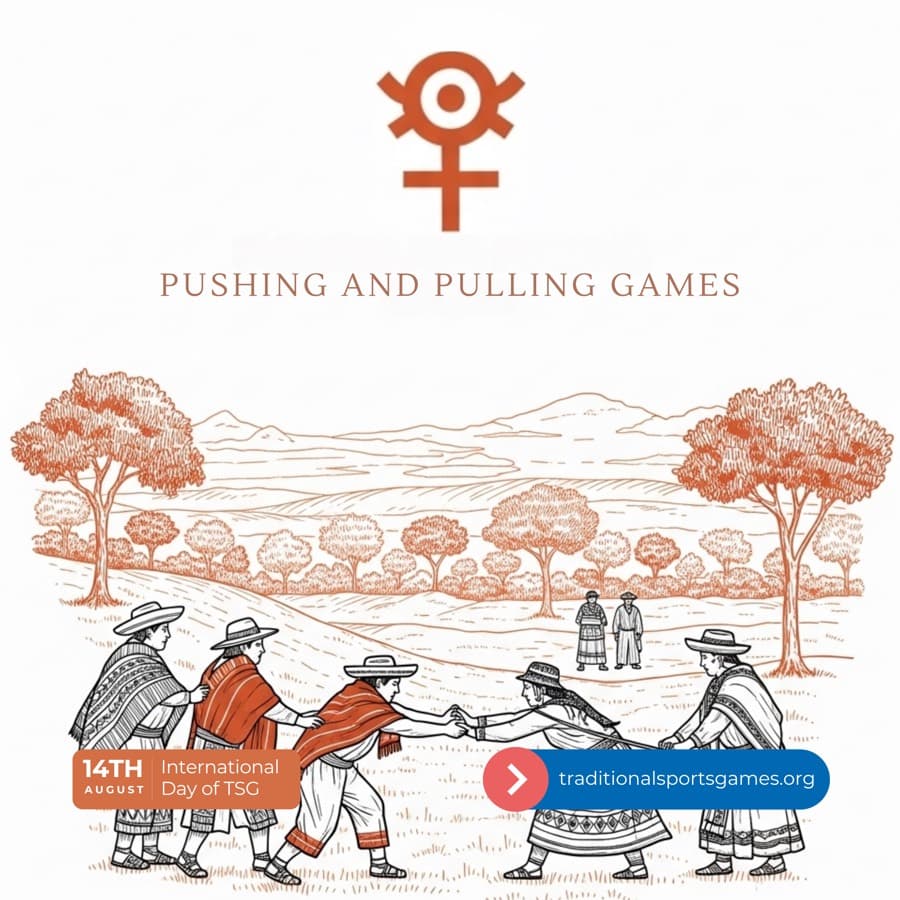
Pushing and Pulling Games – Strength-Building Traditions of Circumpolar Indigenous Peoples The traditional Pushing and Pulling Games of the Indigenous peoples in North America's circumpolar regions are powerful reflections of community, survival skills, and intergenerational wisdom. As recognized by traditional sports and games (TSG) initiatives, these games contribute to safeguarding intangible cultural heritage, particularly where ancestral practices support resilience, physical endurance, and spiritual connection to nature. Historical Background Rooted in Arctic Indigenous traditions—such as the Inuit, Inuvialuit, and Dene communities—pushing and pulling games were designed to build physical and mental strength essential for hunting, survival, and leadership in harsh environments. These games were practiced indoors during long winters or outdoors during seasonal gatherings, fostering a strong culture of inclusive education, intergenerational transmission, and youth empowerment. Gameplay and Rules
Type of Games: Pushing contests (e.g., chest push, back push), and pulling contests (e.g., arm pull, knuckle hop, ear pull). Participants: Typically played between two individuals or teams with matched strength and age categories. Objective: To move, unbalance, or pull the opponent across a designated space using body resistance, posture, and technique. Setting: Can be played on snow, ice, or indoor floors; often featured during cultural festivals or youth camps.
Cultural Significance These games are not mere contests—they are performing arts of strength, discipline, and respect. The values taught—such as perseverance, controlled power, and resilience—align with spiritual teachings and social harmony. They form an integral part of civil society engagement and community participation through cultural preservation, revitalization, and youth education. Strategic Aspects and Physical Benefits
Enhances core strength, balance, and endurance—important for traditional activities like ice hunting or long-distance travel. Teaches strategic body mechanics and mental discipline, promoting holistic development. Acts as a platform for youth leadership and peer learning.
Educational and Community Impact
Integrated into school curriculums and community centers for teaching culture and physical wellness. Reinforces pride in Indigenous identity and fosters cultural diversity within public education. Promotes peaceful interaction, mutual respect, and collective learning.
Contribution to Sustainable Development Goals These traditional strength-building games serve as a model for the following SDGs:
SDG 4 – Quality Education: Supports experiential learning through Indigenous knowledge systems. SDG 5 – Gender Equality: Encourages participation of both boys and girls, often with adjusted versions of the games. SDG 10 – Reduced Inequalities: Elevates Indigenous narratives and traditions through sport. SDG 11 – Sustainable Communities: Keeps local customs alive through communal engagement. SDG 16 – Peace & Strong Institutions: Builds respect, leadership, and discipline through non-violent games. SDG 17 – Global Partnerships: Allows for intercultural exchange and preservation initiatives under organizations like UNESCO and ICTSG.
Related Traditional Games Worldwide
Buzkashi (Central Asia) – A horseback team game requiring strength and control. Schwingen (Switzerland) – Traditional wrestling with heritage value. Bazh Yod (France) – A traditional Breton combat sport with spiritual and physical meaning.
Call to Action – Empower, Educate, and Preserve Reviving and promoting Pushing and Pulling Games across generations is essential to safeguarding Indigenous identities and community strength. We invite schools, youth programs, heritage institutions, and sports councils to recognize and promote these timeless traditions of the Arctic and beyond. Get Involved Benefits of Joining Support ICTSG About ICTSG: The International Council of Traditional Sports and Games (ICTSG) is dedicated to preserving, promoting, and revitalizing traditional sports and games as powerful tools for education, peace, and sustainable development.
About Us History Contact
When a sport disappears, it is like a language no longer spoken - its stories, values, and lessons risk being lost forever. When we revive a game, we revive a culture.
Khalil Ahmed Khan - President, ICTSG