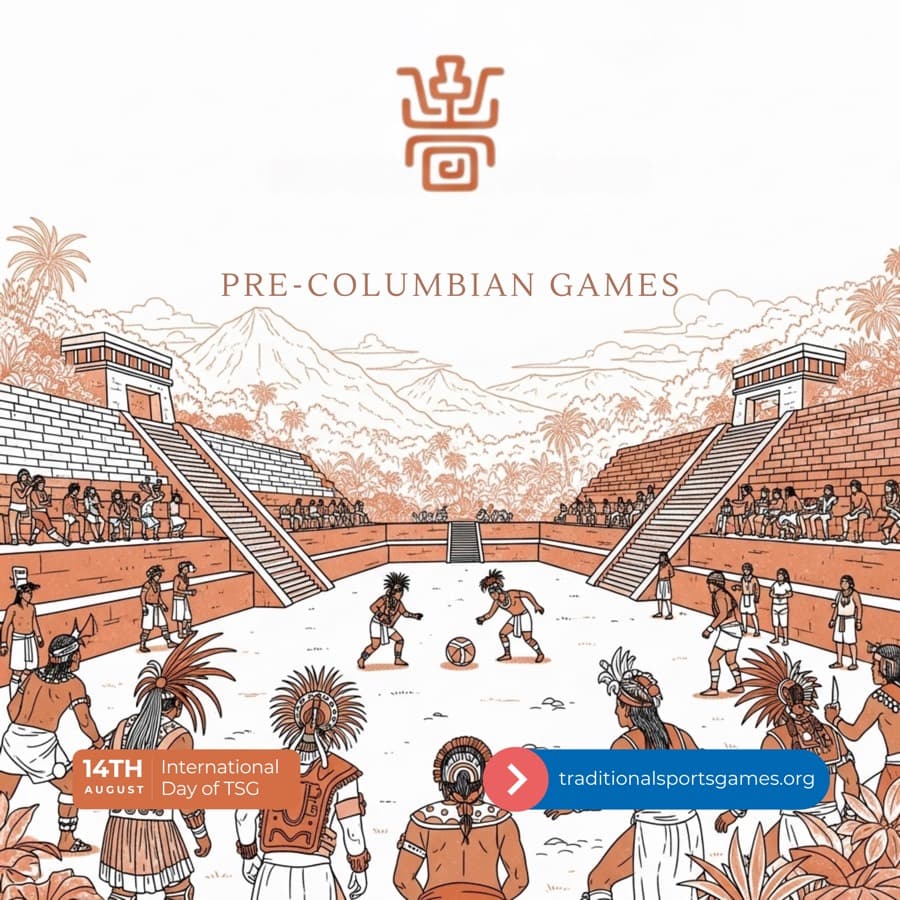
Pre-Columbian Games of North America – Indigenous Roots of Modern Field Hockey, Soccer, and Ice Sports Long before colonization, Indigenous communities across North America practiced a wide range of physical contests and games, many of which directly inspired today’s global sports. These traditional sports and games (TSG) were more than physical activities — they were cultural expressions of indigenous knowledge, intangible heritage, and intergenerational transmission. Historical Background Pre-Columbian societies, including the Cherokee, Iroquois, and Inuit, developed games that required speed, teamwork, and stamina. From early versions of soccer and field hockey to proto-forms of ice hockey and football, these contests were embedded in community ceremonies, seasonal festivals, and rites of passage. Examples of Pre-Columbian Games
Shinny: A stick-and-ball game played on frozen lakes, considered a precursor to ice hockey. Kickball and ball-foot games: Early forms of soccer involving large teams, boundary-less fields, and village-wide participation. Stickball: Played with curved sticks and a leather ball—this version of lacrosse mirrored elements of modern field hockey and American football. Snow Snake: A winter sport played by sliding long, smooth sticks down snow tracks (see more: Snow Snake).
Cultural Significance Each game reflected social practices, spiritual beliefs, and community structures. They were often played to honor spirits, settle disputes, or prepare youth for leadership and survival. Through these games, Indigenous societies celebrated cultural diversity and reinforced group identity. Educational and Strategic Value
Developed physical coordination and endurance. Promoted strategic thinking and group cooperation. Embedded inclusive education through oral storytelling and teamwork. Preserved language, rituals, and tribal values.
Community and Global Impact
Revived in Indigenous schools and cultural centers for youth empowerment. Shared at international gatherings, increasing civil society engagement. Contributed to global games like soccer, ice hockey, and lacrosse. Strengthened community bonds through seasonal festivals and tournaments.
UN SDGs and the Role of ICTSG The International Council of Traditional Sports and Games (ICTSG) champions the recognition of Pre-Columbian games as tools for achieving:
SDG 4 – Quality Education: Uses games to teach Indigenous history and ethics. SDG 5 – Gender Equality: Encourages participation of all genders in revival events. SDG 10 – Reduced Inequalities: Uplifts marginalized Indigenous narratives. SDG 11 – Sustainable Cities and Communities: Embeds traditional sports in local heritage programs. SDG 16 – Peace and Strong Institutions: Supports conflict resolution and mutual respect through play. SDG 17 – Partnerships for the Goals: Engages schools, councils, and UNESCO networks in heritage safeguarding.
Similar Traditional Games from Other Regions
Balle au Tambourin (France) – A team sport using tambourines, echoing early volleyball and tennis. Angkunh (Cambodia) – A festive ball-throwing game played during New Year celebrations. Atlı Cirit (Turkey) – An equestrian team game involving precision and heritage display.
Call to Action – Reclaiming Indigenous Play Pre-Columbian games are not relics—they are living legacies. These Indigenous sporting traditions deserve revival in our schools, museums, and communities. Join the ICTSG in safeguarding intangible cultural heritage and amplifying Indigenous voices through the universal language of play. Get Involved Benefits of Joining Support ICTSG About ICTSG: The International Council of Traditional Sports and Games (ICTSG) is dedicated to preserving, promoting, and revitalizing traditional sports and games as powerful tools for education, peace, and sustainable development.
About Us History Contact
When a sport disappears, it is like a language no longer spoken - its stories, values, and lessons risk being lost forever. When we revive a game, we revive a culture.
Khalil Ahmed Khan - President, ICTSG