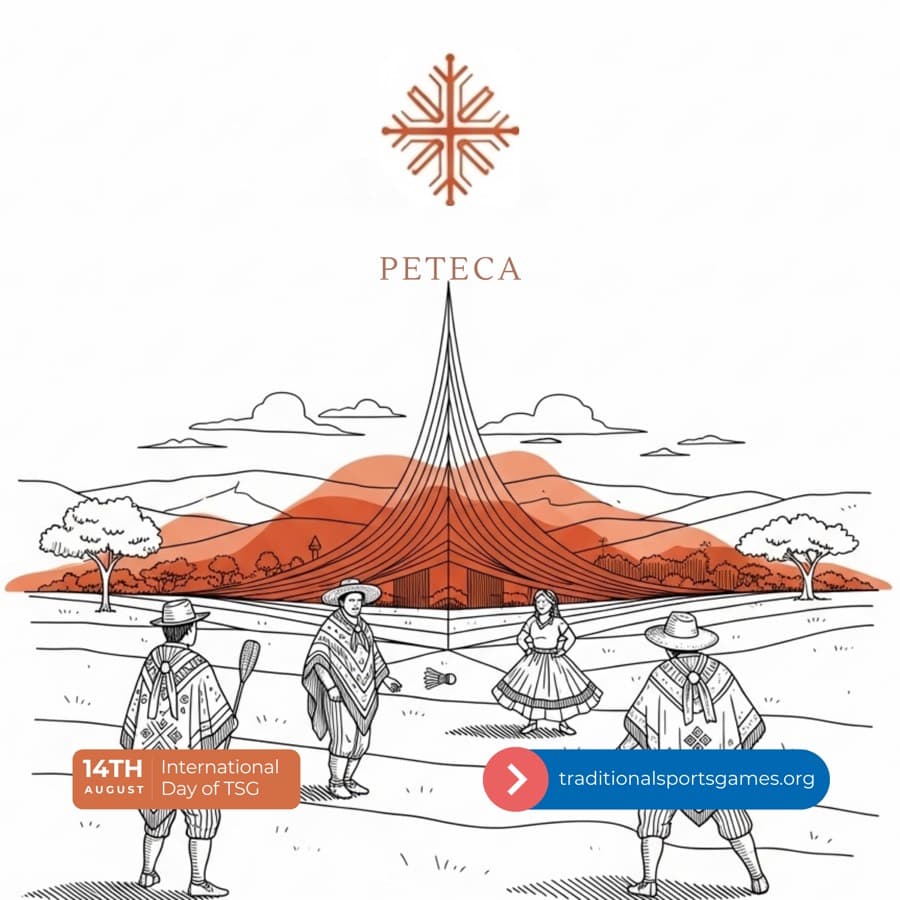
Peteca: Brazil’s Indigenous Hand-Shuttle Game of Strength, Skill, and Solidarity Peteca is a traditional Brazilian indigenous sport that involves hitting a feathered shuttlecock with the hand over a net. Deeply rooted in the heritage of Brazil's indigenous peoples, Peteca embodies intangible cultural heritage, intergenerational knowledge, and joyful physical expression. Today, the game is played both informally and professionally, preserving its cultural essence while promoting youth empowerment and community health. Historical Background and Indigenous Roots The origins of Peteca trace back to Brazil's pre-colonial indigenous communities, where it served both recreational and ceremonial functions. The term “Peteca” itself derives from the Tupi language, meaning “to strike.” Traditionally, it was used during festivals and celebrations, often accompanied by chants and dances, representing a powerful example of performing arts and social practices. Gameplay and Rules
Equipment: A handmade shuttlecock (Peteca) consisting of a rubber base with feathers attached. Court: Played on a court similar to volleyball with a central net. Players: Singles or doubles; each team tries to hit the shuttle over the net using only their hands. Objective: Score points by landing the shuttlecock on the opponent’s court or forcing errors.
Cultural Significance
Indigenous Knowledge Transmission: Peteca serves as a means of passing down traditions, language, and values across generations. Community Participation: Encourages collective play and festive unity in both rural and urban Brazilian settings. Gender-Inclusive: Peteca is enjoyed by all genders, promoting inclusive education and equality.
Strategic and Physical Benefits
Agility and Coordination: Requires precise hand-eye coordination, reflexes, and balance. Teamwork: Promotes strategic thinking and cooperative play. Global Health: Encourages physical activity and emotional well-being.
Educational and Social Value Peteca plays a valuable role in informal education and social integration:
Youth Development: Builds discipline, cultural pride, and confidence in younger generations. Cultural Literacy: Instructs players in indigenous history and environmental respect. Civil Society Engagement: Strengthens ties between schools, local communities, and NGOs.
SDG Integration through Peteca Peteca contributes directly to achieving key UN's Sustainable Development Goals:
SDG 4 – Quality Education: Enriches learning through cultural play and storytelling. SDG 5 – Gender Equality: Open to all genders and ages with inclusive participation. SDG 10 – Reduced Inequalities: Elevates indigenous knowledge and rural access to sports. SDG 11 – Sustainable Cities and Communities: Revives traditional practices in both rural and urban environments. SDG 16 – Peace, Justice, and Strong Institutions: Fosters social cohesion and respect for indigenous heritage. SDG 17 – Partnerships for the Goals: Supports collaboration between cultural ministries, educators, and ICTSG.
Explore Related Traditional Sports
Ulama – A pre-Columbian Mesoamerican ballgame with ritualistic roots. Kabaddi – A South Asian sport promoting strength and strategy. Sepak Takraw – A Southeast Asian ball game involving agility and acrobatics.
Call to Action Join the global effort to safeguard traditional sports and games like Peteca. Whether you are a teacher, policymaker, athlete, or cultural leader, your participation matters. Let us work together to ensure that TSGs remain a living part of our shared heritage and future development. Get Involved Benefits of Joining Support ICTSG About ICTSG: The International Council of Traditional Sports and Games (ICTSG) is dedicated to preserving, promoting, and revitalizing traditional sports and games as powerful tools for education, peace, and sustainable development.
About Us History Contact
When a sport disappears, it is like a language no longer spoken - its stories, values, and lessons risk being lost forever. When we revive a game, we revive a culture.
Khalil Ahmed Khan - President, ICTSG