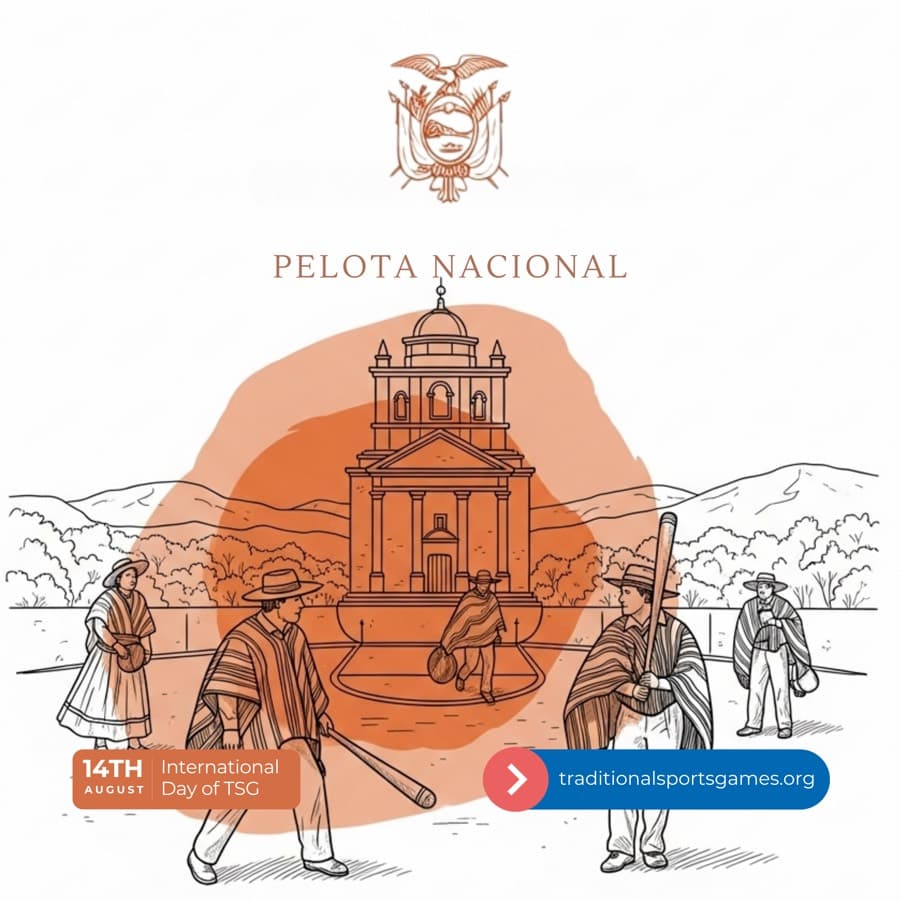
Pelota Nacional: Ecuador’s Traditional Racket Sport Rooted in Heritage Pelota Nacional is a traditional racket sport from Ecuador that merges skill, speed, and cultural expression. Played with distinctive spiky wooden racquets and a small rubber ball, it offers a powerful window into Ecuador’s intangible cultural heritage. Deeply intertwined with local identity and rural traditions, Pelota Nacional is an outstanding example of a traditional sport and game (TSG) that promotes community participation, youth development, and intergenerational transmission of knowledge. Historical Background and Origins Pelota Nacional has been practiced across Ecuador’s highland and coastal regions for generations. Its evolution mirrors the blending of indigenous sports and colonial-era pastimes. Rooted in the spirit of communal gatherings, this game has long served as a symbol of rural resilience, cultural diversity, and indigenous knowledge. Closely related to Pelota de Guante — a variant using gloves attached to round wooden paddles to hit a heavy ball — these games reflect regional adaptations and the enduring value of cultural safeguarding through sport. How Pelota Nacional Is Played
Players: Usually two teams of one to three players. Equipment: Spiked wooden racquets and a durable rubber ball. Objective: Hit the ball over a designated court area, often over a line or against a wall, scoring points when the opposing team fails to return the ball. Environment: Typically played on open flat surfaces in town squares or community fields.
Cultural Significance and Community Role Pelota Nacional represents more than physical activity—it is an expression of social practices and shared identity. The game brings together elders, youth, and families, fostering inclusive education and intergenerational transmission of cultural values. Its presence in rural festivals and community events strengthens civic pride and civil society engagement. This traditional game remains a source of unity and social interaction, creating safe, constructive environments for dialogue, physical well-being, and cultural resilience. Benefits and Educational Impact
Youth Empowerment: Encourages discipline, agility, and teamwork in local youth. Inclusive Play: Adaptable for men, women, and children of all ages. Global Health: Promotes physical fitness, mental focus, and stress relief. Civic Value: Acts as a community-driven alternative to commercialized sports.
Connection to the UN's Sustainable Development Goals (SDGs) Pelota Nacional embodies the principles of the UN-endorsed Traditional Sports and Games (TSG) movement and aligns with these key SDGs:
SDG 4: Quality Education – Integration of cultural games into physical education curricula. SDG 5: Gender Equality – Inclusive participation for women and girls in rural areas. SDG 10: Reduced Inequalities – Accessibility in both urban and underserved regions. SDG 11: Sustainable Communities – Reviving heritage through festivals and events. SDG 16: Peace and Inclusion – Promoting social harmony through structured local play. SDG 17: Partnerships – ICTSG and local networks collaborating to safeguard heritage.
Related Traditional Games from Other Cultures Pelota Nacional shares kinship with other heritage sports globally. Explore:
Balle au Tambourin (France) Kabaddi (South Asia) Angkunh (Cambodia)
Call to Action Pelota Nacional remains a vibrant symbol of Ecuador’s cultural legacy. As a sport rooted in community, resilience, and identity, it deserves greater visibility and protection. Join hands with ICTSG to preserve, share, and empower traditional sports as tools for peace, education, and sustainable development. Get Involved Benefits of Joining Support ICTSG About ICTSG: The International Council of Traditional Sports and Games (ICTSG) is dedicated to preserving, promoting, and revitalizing traditional sports and games as powerful tools for education, peace, and sustainable development.
About Us History Contact
When a sport disappears, it is like a language no longer spoken - its stories, values, and lessons risk being lost forever. When we revive a game, we revive a culture.
Khalil Ahmed Khan - President, ICTSG