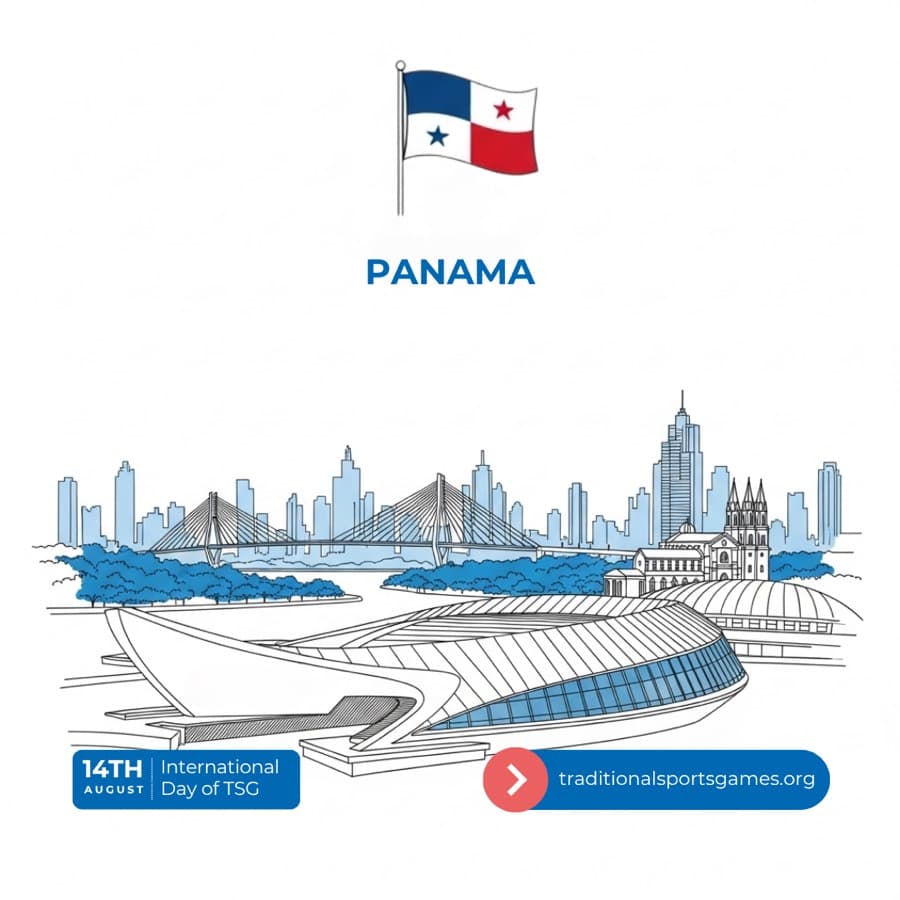
Positions Open with Panama Chapter 1. Chapter President for PanamaApply Now 2. General Secretary for PanamaApply Now 3. Information & Communications Lead for PanamaApply Now Pre‑Qualification Checklist Benefits & Perks Responsibilities
Overview Panama, the vibrant heart of Central America, serves as a cultural and geographical bridge between the Atlantic and Pacific. Renowned for the Panama Canal, its diverse indigenous heritage also positions it as a guardian of cultural traditions. Panama traditional sports and indigenous games reflect its deeply rooted communal spirit, emphasizing endurance, strategy, and unity. Geographic Importance Straddling two continents and connecting two oceans, Panama’s geography has made it a vital corridor for biodiversity and cultural exchange. This unique position has not only shaped its economic importance but also allowed a rich tapestry of traditional games to flourish—from jungle races to coastal canoeing contests. Panama’s Role in ICTSG Formation During the historic 4th Collective Consultation on Traditional Sports and Games held on 13–14 August 2018 at the Sheraton Grand Istanbul Atasehir, Panama was proudly represented by Mr. Dunicagli Pablo Green Solis of the Panama Traditional Sports Association. This momentous gathering was convened by UNESCO and hosted by WEC and the Ministry of Sports. Panama's contribution helped shape the vision for an international platform dedicated to safeguarding and promoting traditional games. Popular Traditional and Indigenous Sports
Archery & Spear-Throwing – A skill-based heritage of the Ngäbe-Buglé people representing precision and survival instincts. Log Carrying & Canoeing – Rooted in the practical demands of rainforest living, these sports emphasize strength and balance. Tug-of-War – Practiced across communities as a symbol of unity, competition, and ritual festivity. Deporte de Lazo – A traditional equestrian event involving team lasso competitions, reflecting rural Panamanian traditions. Tamborito & Cumbia – While musical in nature, these cultural expressions are rhythmic, choreographed, and play a role in communal identity formation.
Weather and Climate Conditions Panama experiences a tropical maritime climate characterized by a wet season (May to November) and a dry season (December to April). The coastal areas are typically hot and humid, while the highlands remain cooler. These conditions have influenced the development of Panama traditional sports, with many outdoor games adapted to the country’s diverse weather patterns. This adaptability is a testament to the resilience of Panama’s indigenous communities and their ability to preserve tradition under changing environmental conditions. UNSDG Goals Alignment The Panama Chapter’s initiatives are aligned with several key United Nations Sustainable Development Goals (SDGs):
SDG 3 – Good Health & Well-Being: Promoting physical activity through traditional games. SDG 4 – Quality Education: Integrating heritage games into school programs for cultural literacy. SDG 11 – Sustainable Cities & Communities: Supporting inclusive and safe community spaces. SDG 13 – Climate Action: Promoting environmental awareness through nature-based traditional practices.
Historical Relevance Panama’s indigenous communities, such as the Guna, Ngäbe-Buglé, and Emberá, have long used traditional games not only for recreation but also for education and social cohesion. These games have survived colonialism and globalization, standing as symbols of identity and cultural resistance. Through its involvement in ICTSG, Panama ensures these ancestral traditions are documented, practiced, and adapted for future generations—linking cultural survival with sustainable development. Get Involved Benefits of Joining Support ICTSG
About ICTSG: The International Council of Traditional Sports and Games (ICTSG) is dedicated to preserving, promoting, and revitalizing traditional sports and games as powerful tools for education, peace, and sustainable development.
About Us History Contact
When a sport disappears, it is like a language no longer spoken - its stories, values, and lessons risk being lost forever. When we revive a game, we revive a culture.
Khalil Ahmed Khan - President, ICTSG