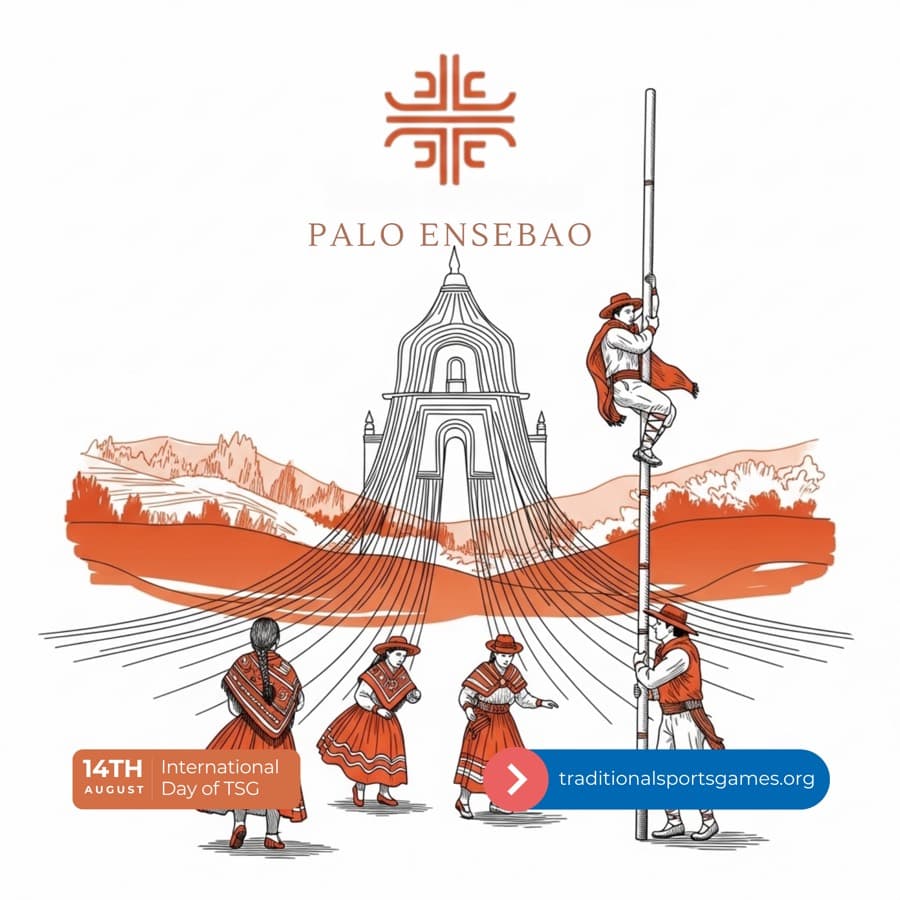
Palo Ensebao: Bolivia’s Traditional Greased Pole Climbing Game Palo Ensebao (Spanish for “greased pole”) is a traditional festive game widely practiced across Bolivia. Originating from indigenous and mestizo communities, this lively and physically demanding activity features participants attempting to climb a tall, grease-covered pole to retrieve a prize at the top. A key component of local carnivals and community festivals, Palo Ensebao embodies the values of traditional sports and games (TSG), civil society engagement, and cultural celebration. Historical Background and Cultural Context The origins of Palo Ensebao are linked to pre-Columbian festive rituals and later influenced by colonial and Catholic traditions. Today, it is most visible during annual festivities in both urban and rural Bolivia, often accompanying music, dance, and food. This playful competition continues to be an important example of intangible cultural heritage, reinforcing community participation and indigenous knowledge systems. Rules and Gameplay of Palo Ensebao The structure and execution of the game are simple yet entertaining:
Setup: A tall, vertical wooden pole (often bamboo or tree trunk) is installed in the center of a gathering area and covered in thick animal fat or grease. Objective: Individuals or teams must climb to the top to grab a reward—typically a bag of goods, food, or a symbolic prize. Team Play: Participants may attempt the climb solo or cooperatively, often forming human ladders to overcome the slippery surface. Time-Limited: Time restrictions may apply, adding pressure and enhancing the festive challenge.
Cultural Significance and Community Value More than a spectacle, Palo Ensebao holds deep cultural relevance:
Community Unity: Played during communal gatherings, it strengthens neighborhood identity and fosters joy across generations. Intergenerational Transmission: Younger participants learn traditional practices by observing and engaging with elders. Festive Identity: Integral to national and regional celebrations, it reflects Bolivia’s cultural diversity and resistance to cultural homogenization.
Strategic and Educational Aspects
Physical Strategy: Success depends on strength, teamwork, and coordination. Social Learning: Participants learn resilience, adaptability, and sportsmanship. Inclusive Education: Participation from all ages and social groups supports informal learning outside the classroom.
Health and Wellbeing Benefits
Promotes physical fitness through endurance-based activity. Encourages mental toughness and emotional regulation in a playful setting. Fosters belonging and laughter, improving community mental health and global health awareness.
UNESCO and SDG Alignment Palo Ensebao advances UNESCO's mission and supports the Sustainable Development Goals (SDGs) through traditional sport:
SDG 4 – Quality Education: Encourages experiential learning through play and culture. SDG 5 – Gender Equality: Inclusive participation is increasingly promoted in modern variations. SDG 10 – Reduced Inequalities: Celebrates marginalized communities and accessible heritage practices. SDG 11 – Sustainable Cities and Communities: Preserves cultural identity within urban and rural development. SDG 16 – Peace, Justice, and Strong Institutions: Builds peaceful coexistence and solidarity. SDG 17 – Partnerships for the Goals: Encourages collaboration between governments, communities, and global organizations.
Related Traditional Games from Other Cultures
Gostra – Malta’s version of greased pole climbing over the sea. Pãi da Mão – A Brazilian indigenous balance and strength game. At-Chabysh – Horseback sport of strength from Kyrgyzstan.
Call to Action Palo Ensebao represents joy, resilience, and cultural identity. Let us work together to safeguard this Bolivian treasure by promoting inclusive education, community celebration, and cross-cultural understanding through traditional sports and games. Your support ensures these traditions remain vibrant for generations to come. Get Involved Benefits of Joining Support ICTSG About ICTSG: The International Council of Traditional Sports and Games (ICTSG) is dedicated to preserving, promoting, and revitalizing traditional sports and games as powerful tools for education, peace, and sustainable development.
About Us History Contact
When a sport disappears, it is like a language no longer spoken - its stories, values, and lessons risk being lost forever. When we revive a game, we revive a culture.
Khalil Ahmed Khan - President, ICTSG