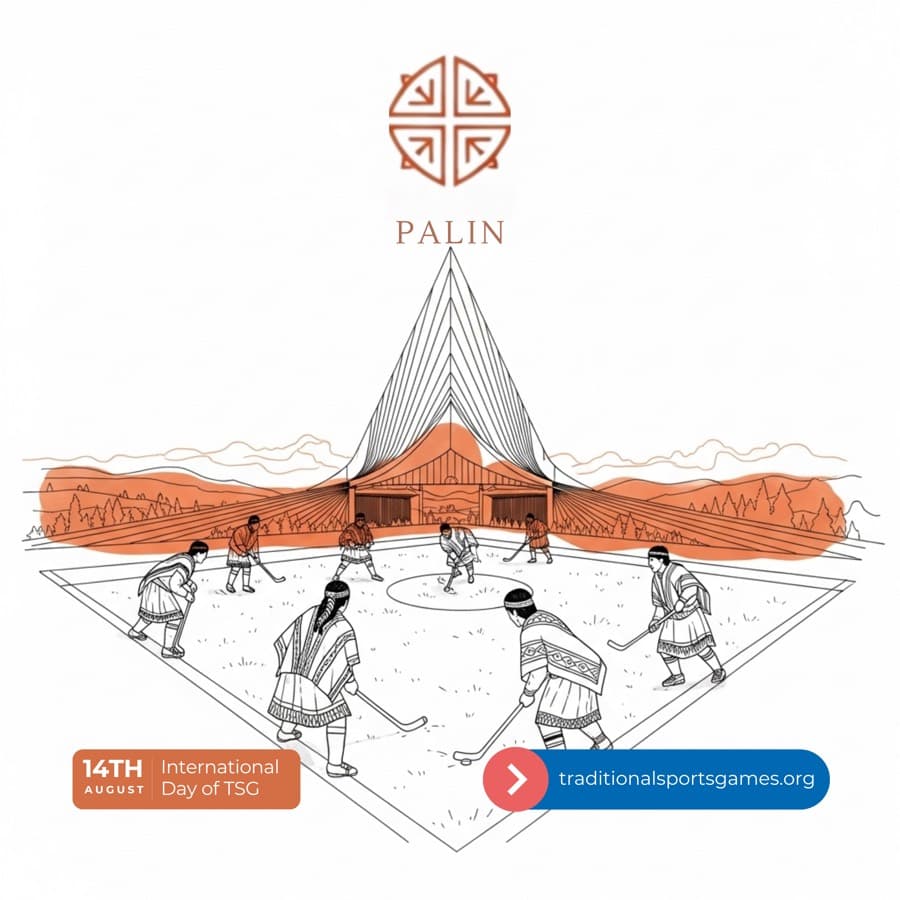
Palin: The Traditional Mapuche Ball Game of Unity and Identity Palin (also known as Palitun) is a traditional ball game of the Mapuche people of Chile, deeply rooted in indigenous knowledge and cultural symbolism. Played across generations, it uses a wooden stick (called weño) and a ball (pali) to connect not just players, but entire communities. Recognized as a national sport by the Chilean State in 2004, Palin today stands as a beacon of traditional sports and games (TSG) and intangible cultural heritage. Historical and Spiritual Background Palin predates colonial history, with origins among the Mapuche tribes as both a sport and a ceremonial activity. Traditionally played to strengthen alliances, resolve disputes, and celebrate seasonal events, it carries spiritual connotations deeply embedded in Mapuche cosmology. The matches often take place after a ritual gathering, reinforcing social practices, peace-building, and community ties. Gameplay and Rules
Played between two teams on a long, grassy field (roughly 100 meters in length). Each player uses a curved wooden stick (weño) to control a handmade wooden or rubber ball (pali). The objective is to push the ball toward the opposing team’s baseline using only the stick. Games are officiated by a respected elder and involve ceremonial dress and community spectatorship.
Cultural and Social Significance Beyond its competitive nature, Palin serves as a vehicle for intergenerational transmission of Mapuche values, language, and identity. The game acts as a social gathering to strengthen political, spiritual, and cultural relations among clans and families. It is an embodiment of inclusive education and civil society engagement, with youth, elders, and women all participating in various roles. Educational and Developmental Benefits
Youth Empowerment: Encourages leadership, respect, and discipline through community mentorship. Global Health: Promotes active lifestyles and mental well-being. Cultural Literacy: Teaches traditional Mapuche language, music, and rituals. Community Participation: Reunites families and clans through public events and celebrations.
Alignment with UN’s Sustainable Development Goals (SDGs) Palin strongly supports UN's agenda and the following SDGs:
SDG 4: Quality education through indigenous learning methods. SDG 5: Gender equality in inclusive team roles and ceremonial participation. SDG 10: Reduced inequalities by revitalizing indigenous pride and social balance. SDG 11: Sustainable communities through heritage and sports infrastructure. SDG 16: Peaceful societies promoted through nonviolent conflict resolution traditions. SDG 17: Global partnerships for safeguarding cultural heritage like Palin.
Related Traditional Sports Explore other culturally rich traditional games like Palin on traditionalsportsgames.org, such as:
Angkun (Cambodia) Bazh Yod (Brittany, France) Asparezoba (Georgia)
Safeguarding Indigenous Identity through Sport The preservation of Palin is not just about maintaining a game—it is about honoring the rights, identity, and dignity of indigenous communities. Through community-driven events, school-based education, and international partnerships with organizations like ICTSG, we can ensure Palin continues to flourish across future generations. Get Involved Benefits of Joining Support ICTSG About ICTSG: The International Council of Traditional Sports and Games (ICTSG) is dedicated to preserving, promoting, and revitalizing traditional sports and games as powerful tools for education, peace, and sustainable development.
About Us History Contact
When a sport disappears, it is like a language no longer spoken - its stories, values, and lessons risk being lost forever. When we revive a game, we revive a culture.
Khalil Ahmed Khan - President, ICTSG