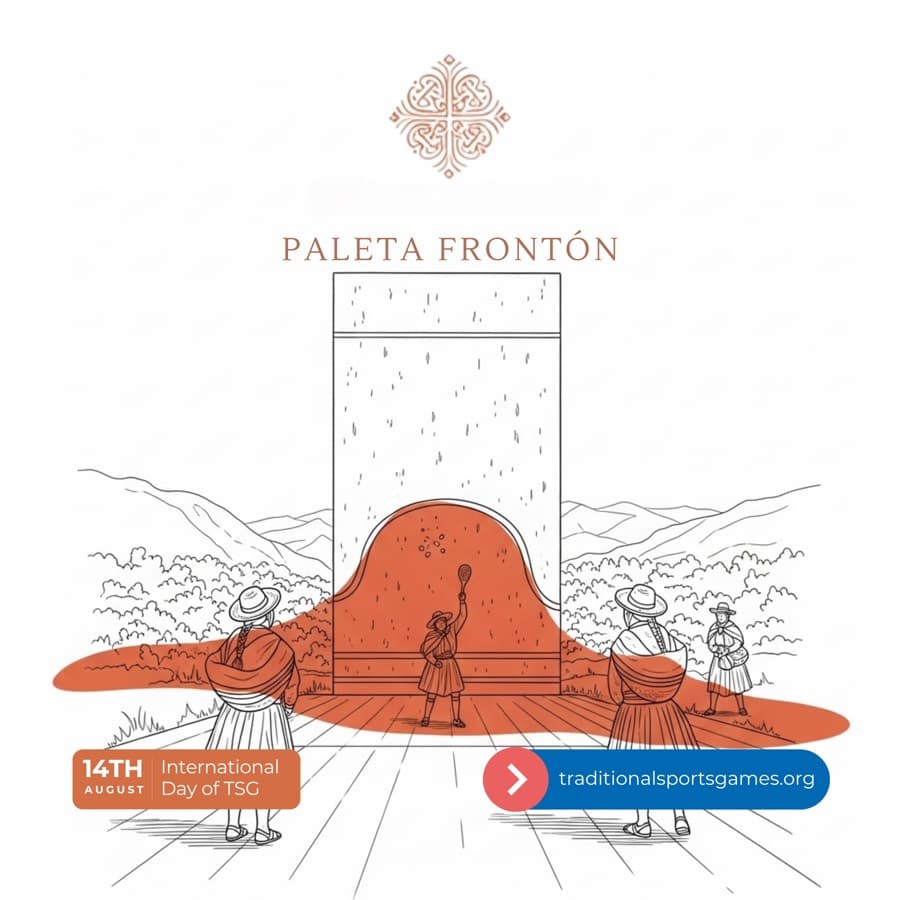
Paleta Frontón: Peru’s Iconic Racket Sport Rooted in Heritage Originating in the bustling city of Lima in 1945, Paleta Frontón is a distinctly Peruvian traditional sport that blends elements of squash and open-court play. It has grown in popularity not only across Peru but also in neighboring Bolivia, where efforts are underway to preserve and promote it as part of the region's rich traditional sports and games (TSG). Historical Background The birth of Paleta Frontón dates back to post-war Peru when local communities began adapting fronton-style court games with wooden paddles. Over time, the game evolved into a formal sport with structured rules, recognized today as a cultural symbol and vital part of Peru’s intangible heritage. Gameplay and Rules
Played on a walled open court, similar to squash but in open air. Uses a rubber ball and a thick paddle ("paleta") made of wood or composite material. Matches can be singles or doubles, with scoring similar to tennis. Serves must hit the front wall above a marked line, and rallies continue until a fault.
Cultural Significance and Indigenous Knowledge Paleta Frontón exemplifies Peru’s indigenous innovation, blending urban sport with deep-rooted traditions. It reflects values of social practices, inclusive education, and intergenerational transmission. Elder players often mentor youth, passing on strategies and cultural insights, thus empowering communities through shared identity. Benefits and Educational Value
Physical Health: Promotes cardiovascular endurance and coordination. Mental Agility: Demands quick reflexes and strategic thinking. Youth Empowerment: Engages young players in heritage appreciation and active lifestyles. Community Participation: Fosters local tournaments that build social cohesion and pride.
Link to Global Sustainable Goals Aligned with UNESCO's mission and the Sustainable Development Goals (SDGs), Paleta Frontón contributes meaningfully to:
SDG 4: Inclusive and equitable quality education through cultural transmission. SDG 5: Gender equality – both men and women actively participate in the sport. SDG 10: Reduced inequalities via community-level inclusion. SDG 11: Sustainable cities through sport-driven public engagement. SDG 16: Peaceful and inclusive societies through civil society engagement. SDG 17: Strengthened partnerships for heritage preservation and sports diplomacy.
Related Traditional Games Explore similar racket or wall-based sports from around the world on Traditional Sports Games, such as:
Aizkolaritza (Basque Country) Balle au Tambourin (France) Atlı Cirit (Turkey)
Preservation, Education & Civil Society Engagement As Paleta Frontón gains international recognition, the need for safeguarding this sport becomes even more urgent. It is a vibrant example of how traditional sports enrich global culture, promote physical well-being, and empower youth. Through schools, festivals, and ICTSG’s global initiatives, Paleta Frontón can continue to thrive across generations. Get Involved Benefits of Joining Support ICTSG About ICTSG: The International Council of Traditional Sports and Games (ICTSG) is dedicated to preserving, promoting, and revitalizing traditional sports and games as powerful tools for education, peace, and sustainable development.
About Us History Contact
When a sport disappears, it is like a language no longer spoken - its stories, values, and lessons risk being lost forever. When we revive a game, we revive a culture.
Khalil Ahmed Khan - President, ICTSG