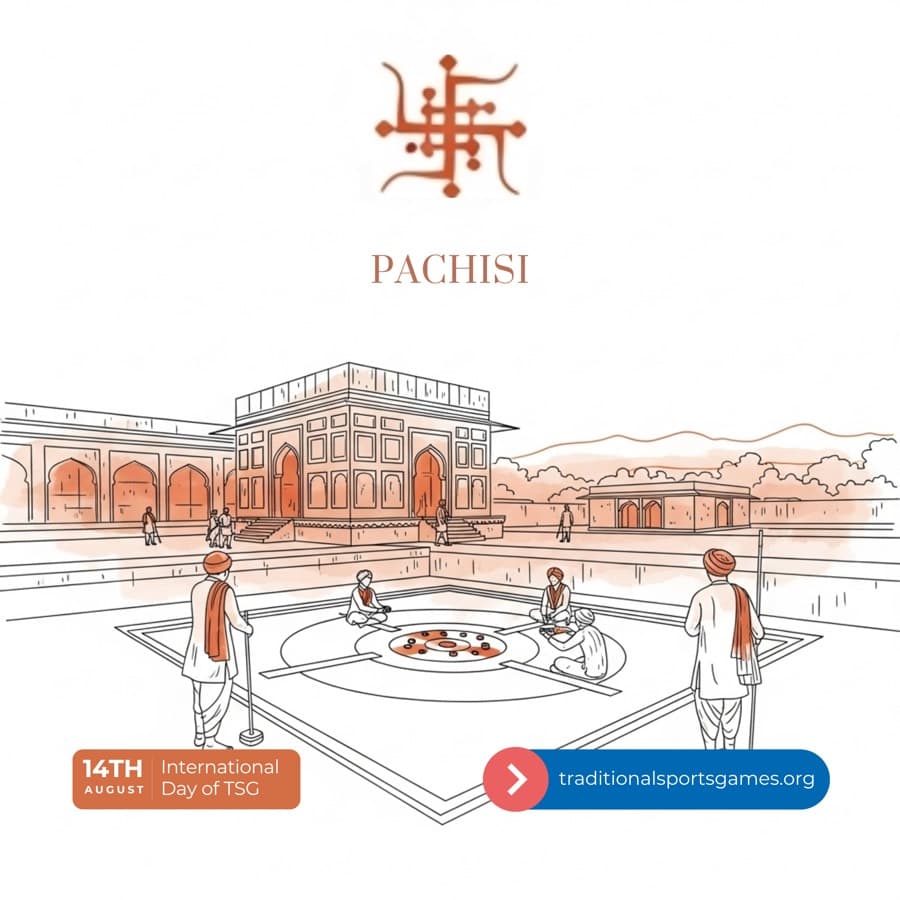
Pachisi: The Strategic Cross and Circle Game of Ancient India Pachisi, an ancient traditional board game from India, is often called the "national game of India." Its unique cross and circle format, deep cultural symbolism, and legacy of intergenerational play make it a timeless representative of traditional sports and games (TSG) and indigenous knowledge. Historical Background Dating back to the 6th century, Pachisi was played in royal courts and village communities alike. Mughal emperors, including Akbar the Great, were passionate players—often using giant, human-sized game boards. Over time, it influenced global games like Ludo and evolved into a cross-cultural heritage symbol, contributing to UNESCO’s safeguarding of intangible heritage. Gameplay Rules Pachisi is typically played by four players on a cross-shaped board using cowrie shells as dice and distinctively colored pieces. The goal is to move all pieces from the home base to the center square by strategic movement and calculated risk.
Each player begins with four pieces. Movement is determined by throwing six or seven cowrie shells. Players can form alliances or block opponents strategically. Capturing an opponent’s piece sends it back to the start, enhancing the game’s competitive and social nature.
Cultural Significance and Intangible Heritage Pachisi embodies the richness of South Asian cultural diversity, reflecting social dynamics, diplomacy, and cooperation. As an element of intangible cultural heritage, it bridges generations and fosters storytelling, art, and traditional knowledge through interactive play. Strategic and Educational Benefits
Builds decision-making and critical thinking skills. Encourages collaborative learning through alliances and group play. Promotes inclusive education with simple yet deep rules for all ages and backgrounds. Facilitates intergenerational transmission of cultural narratives and local wisdom.
UNESCO and Sustainable Development Goals Pachisi’s revival and safeguarding supports UNESCO’s SDGs by nurturing cultural pride, mental wellness, and social inclusivity:
SDG 4 – Quality Education: Enhances informal education through play. SDG 5 – Gender Equality: Played equally by all genders across time. SDG 10 – Reduced Inequalities: Open to all socioeconomic backgrounds. SDG 11 – Sustainable Cities: Reinforces living traditions in urban and rural settings. SDG 16 – Peace and Justice: Promotes respectful competition and cultural dialogue. SDG 17 – Global Partnerships: Encourages international collaboration on game preservation.
Community Participation and Modern Relevance Whether used in school curriculums, community centers, or digital applications, Pachisi fosters youth empowerment, mental agility, and community participation. Its use in workshops and festivals encourages civil society engagement and promotes global health through cognitive and social development. Explore Similar Games
Ludo – Global Modern Variant Patolli – Mexico Nyout – Korea
Call to Action: Preserve and Promote Pachisi Help keep Pachisi alive by participating in cultural events, integrating it into classrooms, and sharing its legacy with new generations. Let’s protect this cornerstone of traditional games through education and active engagement. Get Involved Benefits of Joining Support ICTSG
About ICTSG: The International Council of Traditional Sports and Games (ICTSG) leads the global mission to safeguard and promote traditional games and indigenous heritage. Through education, advocacy, and collaboration, ICTSG ensures living traditions like Pachisi thrive in future generations. About Us | History | Contact
When a sport disappears, it is like a language no longer spoken - its stories, values, and lessons risk being lost forever. When we revive a game, we revive a culture.
Khalil Ahmed Khan - President, ICTSG