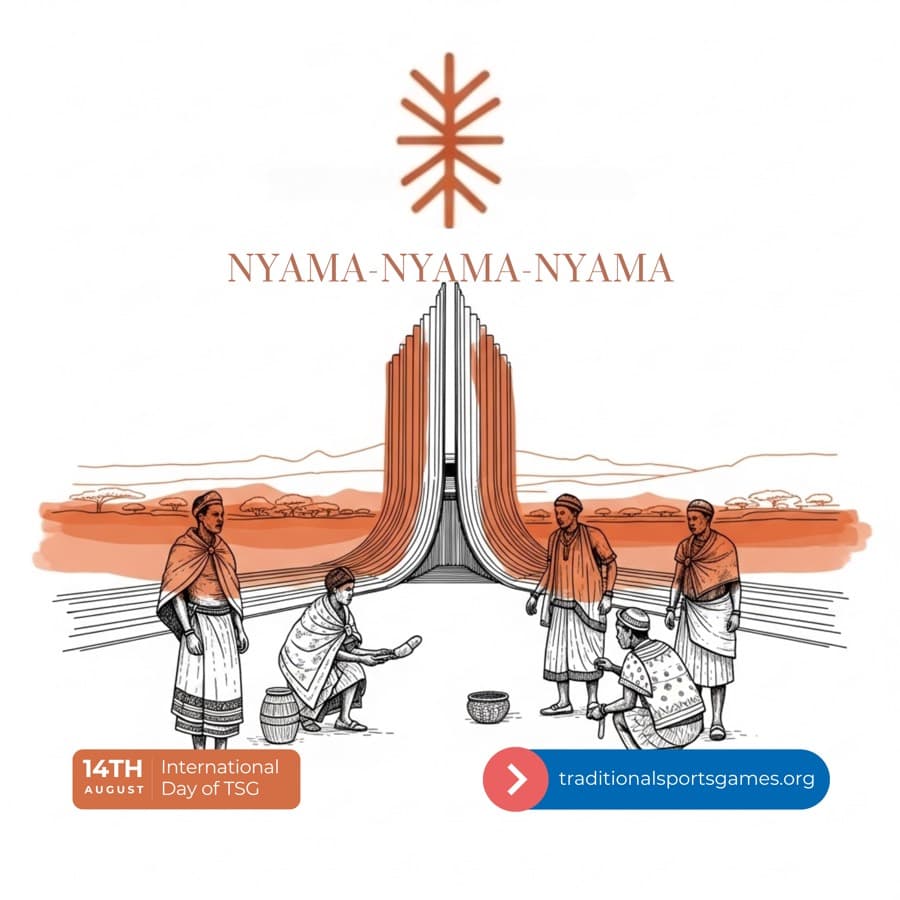
Nyama Nyama Nyama: Kenya’s Cultural Game of Learning, Memory, and Celebration
“Nyama Nyama Nyama,” a beloved children’s game from Kenya, is more than entertainment—it’s a living form of intangible heritage. Promoting traditional sports and games (TSG), this verbal-action game encapsulates indigenous knowledge, community values, and aligns with UNESCO’s mission to safeguard cultural diversity and foster inclusive education.
Historical Background Passed down through generations in Kenyan communities, Nyama Nyama Nyama draws on oral traditions and cultural awareness. It is rooted in social practices that reflect indigenous food customs and intergenerational transmission of knowledge, fulfilling the objectives of safeguarding intangible heritage under UNESCO’s global priorities.
Gameplay Rules
A leader chants “Nyama, nyama, nyama!” (Nyama means meat). All players echo the chant in unison. The leader names an animal (e.g., goat, lion, cow). If the animal is commonly consumed in Kenya, players jump and shout “Nyama!” If not, players should stay still. Incorrect reactions lead to elimination. Last player standing becomes the next leader.
Strategic Aspects The game encourages critical thinking, attentiveness, and memory skills. It introduces children to local dietary norms, promoting cultural identity while nurturing fast decision-making under playful conditions—ideal for youth empowerment and inclusive physical literacy.
Cultural Significance & Benefits
Indigenous Knowledge: Highlights local food culture and linguistic expression. Cultural Diversity: Reflects Kenya’s plural ethnic heritage through accessible play. Community Participation: Often played in schools and community settings. Intergenerational Learning: Shared between elders and youth. UNESCO Safeguarding: Aligns with the protection of oral traditions and social practices.
Educational Value
Promotes inclusive education (SDG 4) through non-formal learning. Encourages gender equality (SDG 5)—open to all genders equally. Fosters global health (SDG 3) through movement and active engagement. Reinforces cultural identity and community norms. Promotes peace and tolerance through fair play (SDG 16).
Community Impact Nyama Nyama Nyama plays a role in Kenyan educational activities, schoolyards, and cultural festivals. It fosters civil society engagement and collective celebration, supporting socio-cultural sustainability and intergenerational harmony in line with SDG 11 (Sustainable Cities & Communities).
Related Traditional Games
Simon Says – Instruction-based game with listening skills. Duck, Duck, Goose – Circle games promoting reaction and inclusion. Kabaddi – Memory and strategy-intensive with cultural roots.
Alignment with UN SDGs
SDG 4 (Quality Education): Builds knowledge through active participation. SDG 5 (Gender Equality): Encourages equal play for boys and girls. SDG 10 (Reduced Inequalities): Free and accessible for all communities. SDG 11 (Sustainable Cities): Supports community cohesion via local play. SDG 16 (Peace & Justice): Instills values of respect, patience, and justice. SDG 17 (Partnerships): A tool for collaboration between educators, NGOs, and cultural leaders.
Call to Action Nyama Nyama Nyama is a vibrant thread in Kenya’s cultural fabric. Let’s work together to protect and promote this engaging traditional game for future generations. Safeguarding intangible heritage is safeguarding our collective future. Get Involved Benefits of Joining Support ICTSG
The International Council of Traditional Sports and Games (ICTSG) champions cultural preservation, global networking, and advocacy for safeguarding TSG as a universal heritage. Through education, policy, and participation, ICTSG strengthens inclusive traditions worldwide. About Us History Contact
When a sport disappears, it is like a language no longer spoken - its stories, values, and lessons risk being lost forever. When we revive a game, we revive a culture.
Khalil Ahmed Khan - President, ICTSG