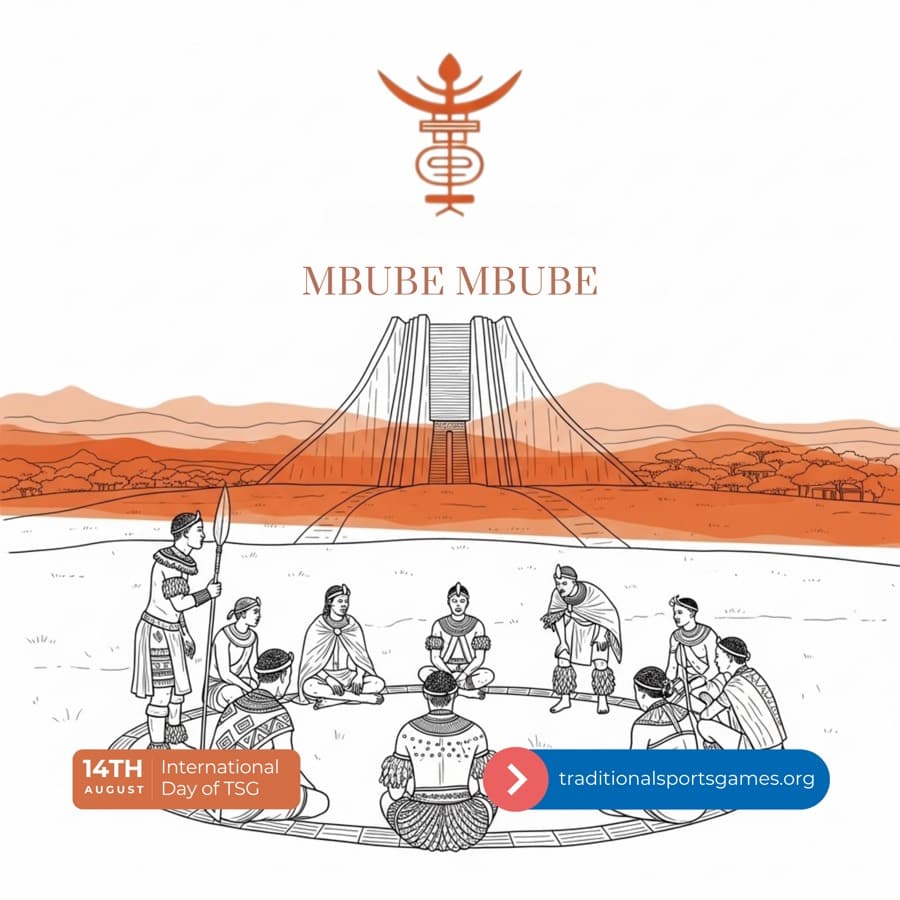
Mbube Mbube: A Living Tradition from South Africa Mbube Mbube is a dynamic and engaging traditional South African children's game that blends auditory awareness, physical movement, and communal interaction. Rooted in oral tradition and often played during gatherings or festivals, it exemplifies how traditional sports and games (TSG) serve as more than just recreation—they are vital expressions of intangible cultural heritage. Historical Background
Mbube Mbube originates from South Africa and has been passed down through generations as part of local social practices and storytelling traditions. The name “mbube” means lion in Zulu and is famously associated with the iconic song “Mbube,” which later became “The Lion Sleeps Tonight.” This game reflects indigenous knowledge systems that emphasize listening, spatial awareness, and group coordination.
Gameplay Rules
Players form a large circle. Two players are selected—one as the lion and one as the impala, both of whom are blindfolded and spun around. The lion attempts to locate and catch the impala within the circle. The surrounding players chant “Mbube, mbube” rhythmically, increasing volume when the lion approaches the impala and decreasing when they move apart. If the lion catches the impala within a set time (usually one or two minutes), the impala becomes the new lion; otherwise, a new lion is chosen.
Cultural Significance
Mbube Mbube embodies values such as cooperation, respect for nature, and collective joy—central themes in many African cultures. It serves as a tool for intergenerational transmission, where elders teach children not only the rules but also the moral lessons embedded in the game. As an example of performing arts and embodied learning, it supports UNESCO’s mission to protect intangible heritage.
Strategic Aspects
While seemingly simple, Mbube Mbube requires strategic thinking, spatial orientation, and emotional intelligence. Players must interpret sound cues accurately and adapt their movements accordingly, enhancing cognitive flexibility and teamwork. These elements make it ideal for use in inclusive education programs that value experiential and sensory-based learning.
Educational and Social Benefits
Encourages auditory perception, body coordination, and motor skills development. Promotes teamwork, empathy, and non-verbal communication among participants. Supports global health by encouraging physical activity and mental engagement in low-resource settings. Fosters civil society engagement through participatory play in schools, communities, and cultural festivals.
Community Impact and Sustainable Development Mbube Mbube aligns closely with several UNESCO Sustainable Development Goals (SDGs):
SDG 4 – Quality Education: Offers a culturally responsive and experiential approach to learning. SDG 5 – Gender Equality: Inclusive of all genders, promoting equal participation and representation. SDG 10 – Reduced Inequalities: Accessible to all children regardless of economic background or location. SDG 11 – Sustainable Cities & Communities: Encourages safe public spaces for cultural expression and recreation. SDG 16 – Peace, Justice & Strong Institutions: Fosters conflict resolution, trust-building, and mutual respect. SDG 17 – Partnerships: Supports collaboration between educators, cultural institutions, and international organizations like ICTSG.
Similar Traditional Games Around the World Explore other culturally rich games similar to Mbube Mbube:
Achi – A Ghanaian strategy game akin to Tic-Tac-Toe. Mancala – A classic African board game involving seeds and counting. Tag Games – A global collection of active, interactive games emphasizing chase and evasion. Kho Kho – An Indian tag game requiring speed and agility.
Call to Action: Get Involved, Preserve, Educate, Participate Help safeguard traditional games like Mbube Mbube for future generations. By preserving these practices, we protect cultural diversity, empower youth through youth empowerment initiatives, and celebrate the richness of performing arts and social practices across the globe. Get Involved Benefits of Joining Support ICTSG
About ICTSG The International Council on Traditional Sports and Games (ICTSG) works globally to promote, preserve, and revitalize traditional sports and games. Through advocacy, research, and community-driven programs, ICTSG champions the role of TSG in sustainable development, education, and cultural identity. Join us in protecting the world’s living heritage. About Us History Contact
When a sport disappears, it is like a language no longer spoken - its stories, values, and lessons risk being lost forever. When we revive a game, we revive a culture.
Khalil Ahmed Khan - President, ICTSG