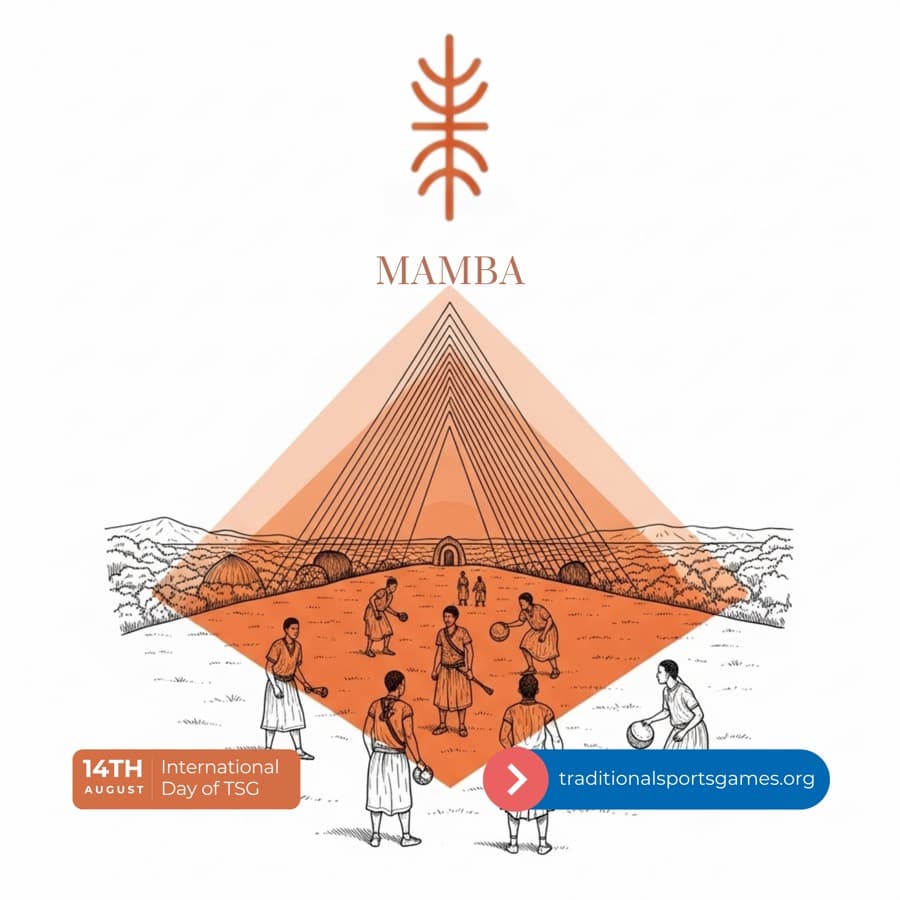
Mamba: Africa’s Traditional Chase Game of Strategy, Unity, and Play Mamba is a dynamic traditional sport and game (TSG) played across Africa that fosters agility, teamwork, and cultural learning. Rooted in indigenous knowledge and passed down through generations, it is a prime example of intangible heritage that continues to shape youth and community interactions. Origins and Cultural Background The game of Mamba is inspired by the movement of a snake—mamba—and is played by children in various African regions during recreational times and communal celebrations. The game represents not just speed and strategy, but also cultural diversity and symbolic storytelling, connecting children to their heritage and environment. Gameplay Rules
Roles: One player is chosen as the “mamba” (snake). Objective: The mamba chases and tries to tag other players within a designated play area. Linking: Once tagged, a player becomes part of the snake, holding onto the mamba to form a chain. Continuation: The snake grows with each captured player until one player remains uncaught. Winner: The last uncaptured player becomes the next mamba.
Strategic and Physical Elements Mamba requires players to utilize quick decision-making, sharp reflexes, and strategic movement to either escape or coordinate the growing chain. As the “snake” becomes longer, team coordination and rhythm become crucial for effective chasing, making this game a unique blend of fun and performing arts-like movement. Benefits and Educational Value
Fosters youth empowerment through leadership and role shifts. Promotes inclusive education by being accessible to all age groups and genders. Encourages community participation through group involvement and peer-led rule enforcement. Teaches social practices of fairness, cooperation, and turn-taking. Improves global health outcomes through active play and outdoor engagement.
Contribution to Sustainable Development Goals (SDGs)
SDG 4: Supports quality education by integrating cultural play in learning environments. SDG 5: Promotes gender equality through equal opportunity to play and lead. SDG 10: Reduces inequalities by valuing traditional knowledge from all communities. SDG 11: Builds sustainable communities through heritage-preserving recreational practices. SDG 16: Encourages peaceful conflict resolution through play-based rules. SDG 17: Strengthens global partnerships via heritage conservation networks.
Related Traditional Games from Other Cultures
Tagu Taguan (Philippines) – A hide-and-seek game involving strategy and stealth. Langdi (India) – A hopping tag game that builds agility and alertness. Chain Tag (Tibet) – Similar linking tag gameplay emphasizing unity and alertness.
Preserving the Spirit of Mamba As a reflection of Africa’s vibrant cultural identity, Mamba serves as more than a game—it is a legacy of intergenerational transmission, teaching life values through play. By promoting it in schools, festivals, and global platforms, we can ensure this timeless game continues to empower future generations. Get Involved Benefits of Joining Support ICTSG
About ICTSG: The International Council of Traditional Sports and Games (ICTSG) is dedicated to preserving, promoting, and revitalizing traditional sports and games as powerful tools for education, peace, and sustainable development.
About Us History Contact
When a sport disappears, it is like a language no longer spoken - its stories, values, and lessons risk being lost forever. When we revive a game, we revive a culture.
Khalil Ahmed Khan - President, ICTSG