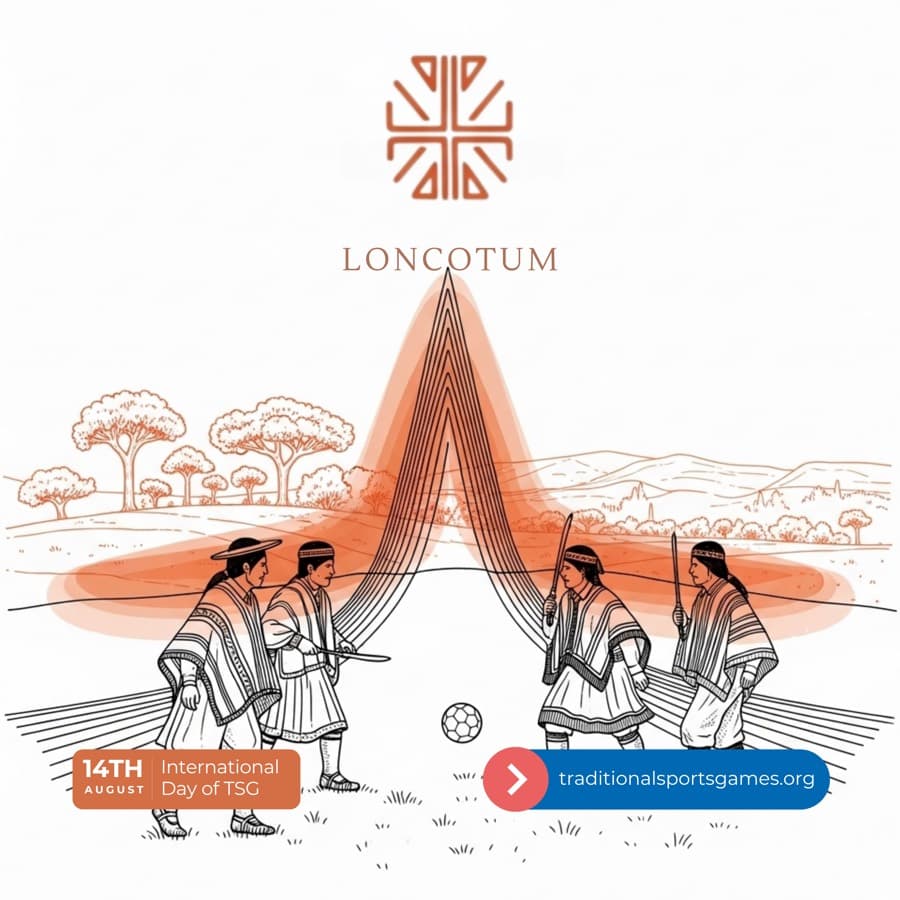
Loncotum: Reviving the Indigenous Mapuche Sport of Chile Loncotum, also referred to as Loncoto, is a traditional sport deeply rooted in the indigenous Mapuche culture of Chile. Recognized for its historical, communal, and cultural importance, Loncotum stands as a powerful emblem of intangible heritage and a vibrant expression of traditional sports and games (TSG) in South America. Historical Background and Cultural Significance The Mapuche people, one of the most resilient and culturally rich indigenous communities of South America, have long engaged in various traditional activities that blend physical ability with social practices. Loncotum is believed to have evolved as a strategic physical game involving agility, teamwork, and symbolic movement, often practiced during seasonal or ceremonial gatherings. The game historically helped foster community participation, inter-village cooperation, and spiritual connection to nature. Gameplay and Traditional Rules While precise rules vary by region and oral tradition, the core elements of Loncotum typically include:
Team-Based Play: Played between two groups, often of equal size and age range. Physical Strategy: Emphasis on running, dodging, and tactical passing of an object (such as a symbolic stone or wooden item). Open Field Setting: Played in outdoor, flat open areas, often circular or rectangular in shape. Objective: Involves carrying or maneuvering the object to a goal area, while avoiding interception.
Through Loncotum, players practice discipline, mutual respect, and communal strength, echoing Mapuche values of equilibrium and collective identity. Educational and Intergenerational Value Like many indigenous games, Loncotum plays a crucial role in intergenerational transmission of cultural values. It offers an educational platform for:
Youth empowerment by strengthening confidence, leadership, and ancestral connection. Inclusive education that honors oral tradition and experiential learning. Safeguarding intangible heritage by reinforcing identity through participatory engagement.
Health and Social Impact
Global health promotion: Encourages physical activity and psychological well-being. Civil society engagement: Revitalizes indigenous pride and brings together generations during community festivals. Gender inclusion: Modern adaptations promote participation by all genders, reflecting growing equality in traditional games.
UN and SDG Integration Loncotum embodies many of UN’s strategic goals through the lens of traditional sports:
SDG 4 – Quality Education: A holistic learning tool transmitting language, memory, and values. SDG 5 – Gender Equality: Contemporary Loncotum fosters equitable participation across communities. SDG 10 – Reduced Inequalities: Elevates the cultural narratives of marginalized groups. SDG 11 – Sustainable Cities and Communities: Reinforces cultural resilience and communal identity. SDG 16 – Peace, Justice and Strong Institutions: Builds social cohesion through sport. SDG 17 – Partnerships for the Goals: Promotes local-global cooperation in heritage preservation.
Explore Similar Traditional Games
Pelota Purépecha – An indigenous ball game of Mexico with ceremonial origins. Ulama – Mesoamerican rubber ball game with ritual significance. Bohu – A Chinese traditional rope-tossing game.
Call to Action Loncotum is more than a game—it is a living heritage, a celebration of indigenous resilience, and a pathway to inclusive education and cultural survival. Through education, participation, and recognition, we can safeguard this Mapuche treasure for future generations. Get Involved Benefits of Joining Support ICTSG About ICTSG: The International Council of Traditional Sports and Games (ICTSG) is dedicated to preserving, promoting, and revitalizing traditional sports and games as powerful tools for education, peace, and sustainable development.
About Us History Contact
When a sport disappears, it is like a language no longer spoken - its stories, values, and lessons risk being lost forever. When we revive a game, we revive a culture.
Khalil Ahmed Khan - President, ICTSG