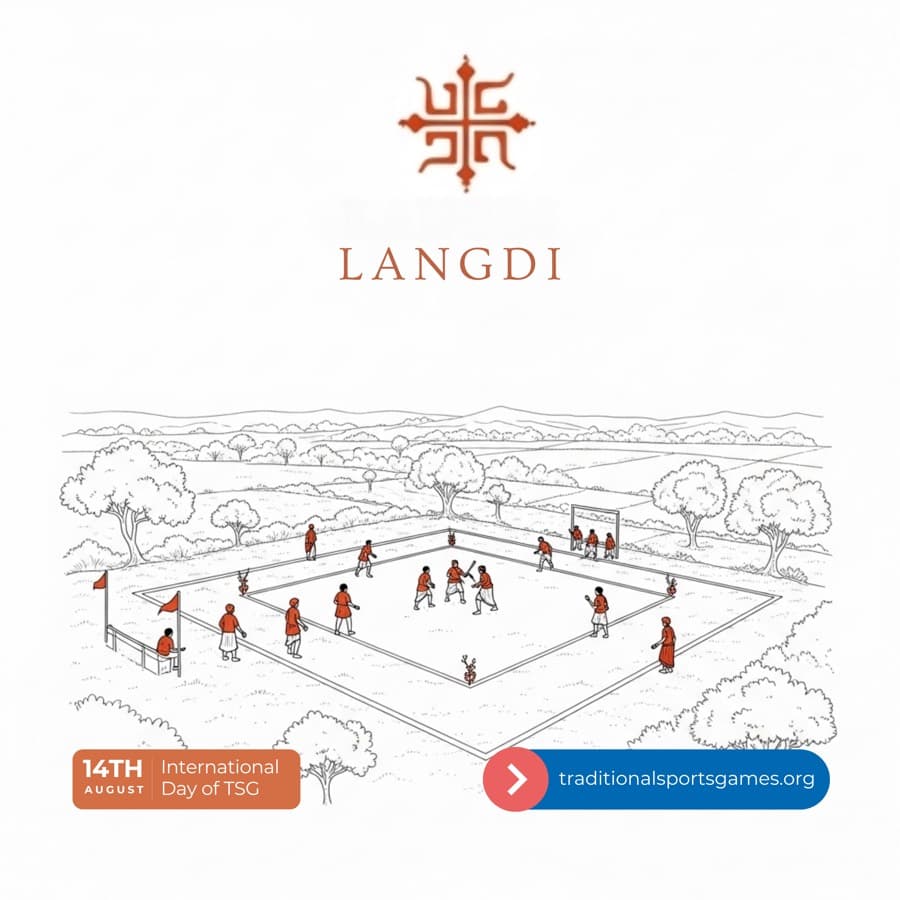
Langdi: India’s Traditional One-Legged Tag Game Preserving Culture and Empowering Generations Langdi is a vibrant traditional sport and game (TSG) from India that combines agility, strategy, and stamina. Played by hopping on one foot, it is not only physically engaging but also a powerful tool for promoting indigenous knowledge, inclusive education, and cultural diversity. Historical Background
Langdi has ancient roots in Indian traditions and was often played during festivals and communal gatherings. It is believed to have evolved from training routines used by warriors for balance and coordination. The game continues to be played across rural and urban India, especially in schools and community fields.
Gameplay and Rules
Team Format: Two teams compete with one team chasing and the other defending. Hopping Chasers: Players from the chasing team must tag defenders while hopping on one leg within a time limit. Rotation: Each player gets turns, and roles are switched after the innings. Time-Based Points: Points are awarded based on the number of players tagged.
Cultural and Educational Significance
Promotes physical literacy and body coordination through playful movement. Strengthens intergenerational transmission of indigenous sports knowledge. Used in schools for inclusive education—accessible to children regardless of background or gender. Encourages civil society engagement during cultural events and sports festivals.
Benefits and Strategic Aspects
Develops focus, balance, and endurance. Supports youth empowerment through non-competitive yet engaging sport. Fosters community participation and strengthens neighborhood bonds. Advances UNESCO’s safeguarding of intangible cultural heritage.
Alignment with UNESCO’s Sustainable Development Goals
SDG 4 – Quality Education: Enhances holistic learning in classrooms and open spaces. SDG 5 – Gender Equality: Played equally by boys and girls, promoting fairness and inclusion. SDG 10 – Reduced Inequalities: Bridges social gaps by involving children from diverse communities. SDG 11 – Sustainable Cities and Communities: Revives community spaces through recreational heritage. SDG 16 – Peace and Justice: Builds discipline and cooperation through structured gameplay. SDG 17 – Partnerships: Encourages collaboration between schools, local organizations, and global TSG movements like ICTSG.
Global Relevance and Similar Traditional Games Langdi shares the spirit of playful yet meaningful engagement with traditional games from other regions:
Kabaddi – India Amazones – Ghana Tag of War – Europe Tug of War – Global
Community Impact
Revives local playgrounds and strengthens traditional values. Engages children in global health and fitness through culturally rooted activity. Acts as a low-cost tool for physical education in under-resourced schools.
Call to Action: Join the Movement to Preserve Langdi Langdi is more than a game—it is a legacy of balance, discipline, and joy. Let us unite to preserve and promote this vibrant TSG, ensuring its place in both present communities and future generations. Get Involved Benefits of Joining Support ICTSG
About ICTSG: The International Council of Traditional Sports and Games (ICTSG) leads global efforts to safeguard and promote indigenous games like Langdi. Learn more:
About Us History Contact
When a sport disappears, it is like a language no longer spoken - its stories, values, and lessons risk being lost forever. When we revive a game, we revive a culture.
Khalil Ahmed Khan - President, ICTSG