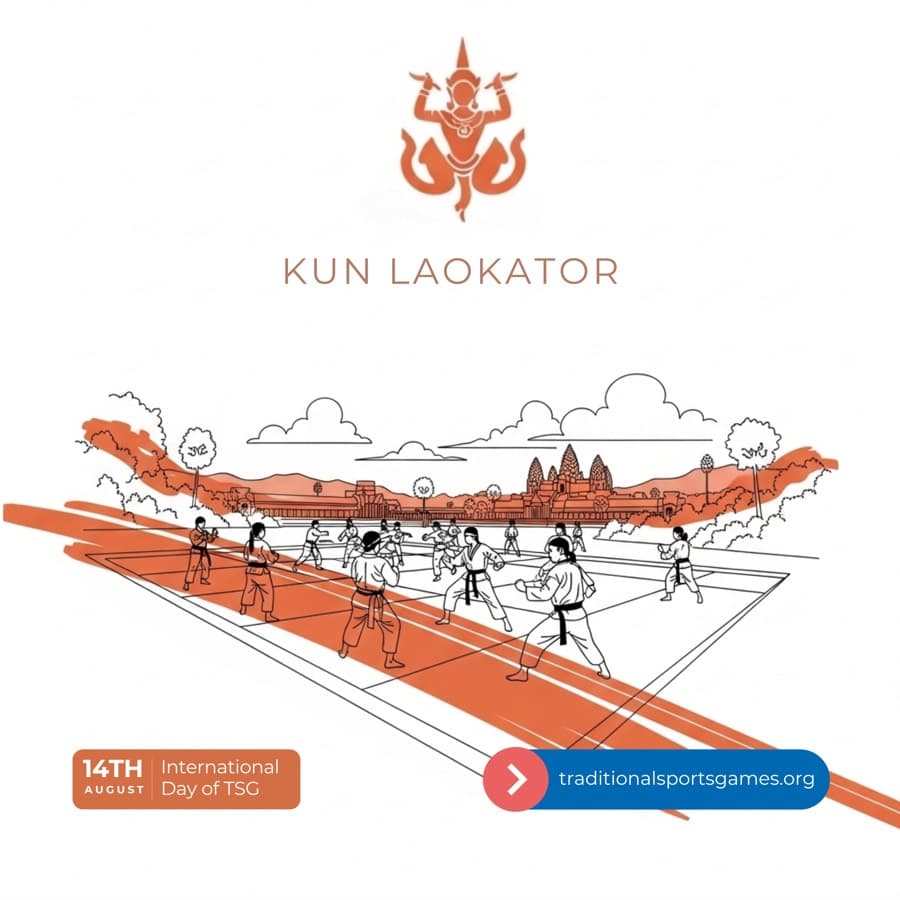
Kun Lbokator: Cambodia’s Ancient Martial Art Preserving Cultural Identity Kun Lbokator, one of Southeast Asia’s oldest martial arts, originates from Cambodia and represents a rich blend of traditional sports and games (TSG), performing arts, and indigenous knowledge. Recognized by UNESCO in 2022 as Intangible Cultural Heritage, Kun Lbokator plays a key role in safeguarding heritage and promoting youth empowerment, inclusive education, and community participation. Historical Background
Traces back over a millennium, rooted in Angkorian-era warrior traditions. Revived after near extinction during political turmoil and war in Cambodia. Now officially protected and integrated into national identity and cultural revival efforts.
Gameplay and Structure
Techniques: Includes hand-to-hand combat, joint locks, ground techniques, and animal-inspired movements (e.g., bird, tiger, horse). Training: Involves disciplined routines with philosophical teachings and respect-based rituals. Uniform: Practitioners wear traditional blue krama and sashes indicating level of skill. Instruction: Passed on by certified masters (lok kru) in temples, schools, and cultural academies.
Cultural Significance and Performing Arts
Kun Lbokator is not just a combat sport but a performing art involving ritualized choreography and music. Traditionally demonstrated at ceremonies, festivals, and royal events. Celebrates social practices of courage, harmony, and discipline.
Educational Value and Youth Empowerment
SDG 4 – Quality Education: Encourages learning through cultural curricula in schools and universities. SDG 5 – Gender Equality: Promotes female participation in a traditionally male-dominated domain. SDG 10 – Reduced Inequalities: Provides access to sports for children from all backgrounds. SDG 11 – Sustainable Cities and Communities: Reinforces local cultural programs and rural traditions. SDG 16 – Peace and Justice: Cultivates non-violence, respect, and self-control through martial training. SDG 17 – Partnerships for the Goals: Supported by international NGOs, government, and civil society initiatives.
Community Impact and Safeguarding
Reintegrated into daily life through village clubs and cultural schools. Fosters intergenerational transmission by encouraging elders to train youth. Acts as a vehicle for civil society engagement and mental health development. Drives global health outcomes through physical fitness and social belonging.
Related Traditional Martial Arts Explore other traditional combat practices that reflect similar cultural richness at TSG global database:
Silambam – India Taekkyeon – Korea Bokh – Mongolia Pencak Silat – Indonesia
Preserve, Participate, and Promote Kun Lbokator Kun Lbokator is more than a martial art; it is a resilient expression of Cambodia’s cultural soul. Together, let us protect and share this powerful heritage through education, participation, and community support. Get Involved Benefits of Joining Support ICTSG
About ICTSG: The International Council of Traditional Sports and Games (ICTSG) is a UNESCO-aligned platform dedicated to promoting and protecting intangible heritage through sport. Learn more about our mission, history, and ongoing initiatives:
About Us History Contact
When a sport disappears, it is like a language no longer spoken - its stories, values, and lessons risk being lost forever. When we revive a game, we revive a culture.
Khalil Ahmed Khan - President, ICTSG