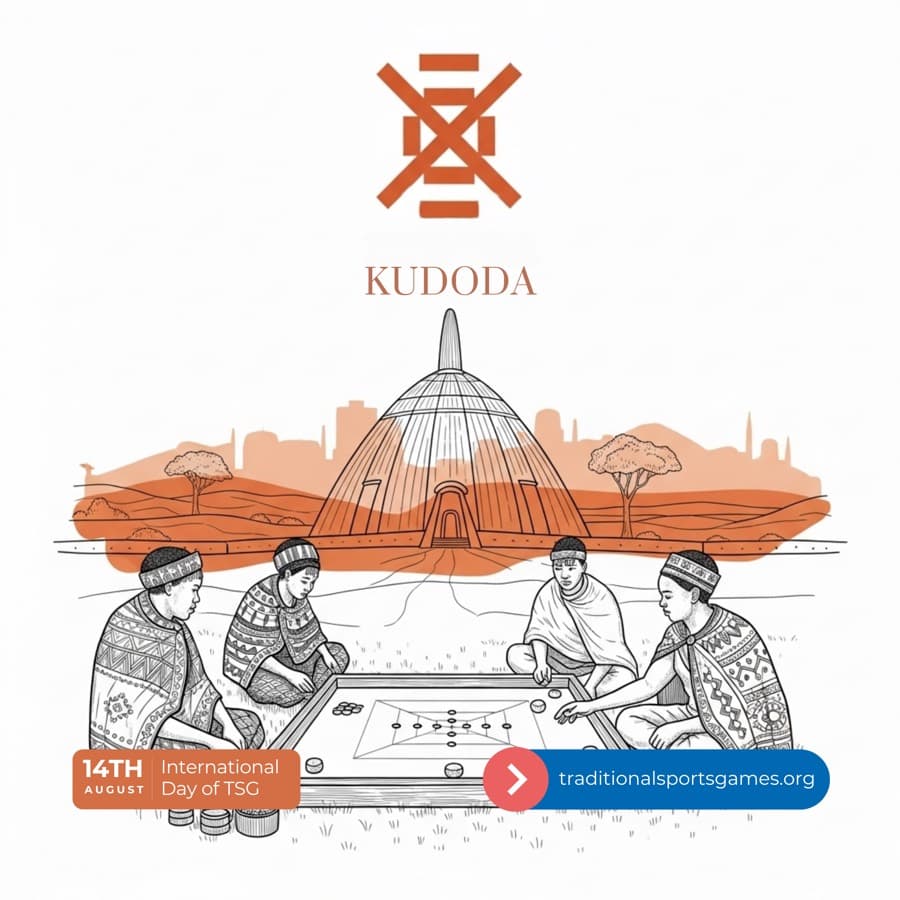
Kudoda: Zimbabwe’s Traditional Pebble Game of Skill, Focus, and Heritage Kudoda is a cherished traditional sport and game (TSG) from Zimbabwe, widely played by children to develop hand-eye coordination, strategic thinking, and cultural identity. As a vibrant expression of indigenous knowledge and intangible heritage, Kudoda reflects the values of focus, dexterity, and community interaction. Historical and Cultural Background Rooted in the oral traditions and social practices of Zimbabwean communities, Kudoda is typically played during gatherings, family events, and school breaks. It showcases local resourcefulness, using natural pebbles and minimal tools, and contributes to the intergenerational transmission of cultural identity through fun and learning. Gameplay and Rules
Setup: Players sit in a circle with a shallow bowl or smooth surface in the center filled with small pebbles. Main Action: A player tosses one pebble into the air and tries to pick up as many pebbles as possible before catching the tossed pebble with the same hand. Turn Continuation: A successful catch with collected pebbles allows the player to continue; a miss ends their turn. Winning: The player with the highest number of pebbles collected wins.
Cultural Significance and Strategic Value Kudoda encourages community participation and provides a space for civil society engagement by blending fun with learning. It strengthens friendships, teaches patience, and builds quick reflexes—all while keeping cultural identity alive. Often led by elder siblings or guardians, the game also reinforces youth empowerment and leadership skills. Educational and Social Benefits
Promotes inclusive education by using a non-verbal, accessible format for all children. Encourages strategic thinking and fine motor skills development. Builds confidence through play and performance, connecting to performing arts. Fosters cultural diversity and pride in local heritage.
Contribution to Sustainable Development Goals (SDGs)
SDG 4: Ensures inclusive and quality education through traditional knowledge-based games. SDG 5: Encourages equal participation of boys and girls in culturally grounded play. SDG 10: Reduces inequality through equitable access to cultural recreation. SDG 11: Supports sustainable communities with preserved heritage practices. SDG 16: Promotes peaceful interaction through non-competitive shared rules. SDG 17: Encourages global partnerships in heritage safeguarding and education.
Related Traditional Games Worldwide
Kokla Chapaki (Pakistan) – A fast-paced coordination game involving teamwork and surprise. Angkunh (Cambodia) – A traditional game using nuts and rhythm, focusing on mental and physical agility. Chindro (India) – A chalk-based hopping and grabbing game played widely by children.
Call to Action Let us safeguard Kudoda as a living heritage that empowers children, educates communities, and connects generations. Through educational programs, cultural events, and international collaboration, you can help ensure its place in our global future. Get Involved Benefits of Joining Support ICTSG
About ICTSG: The International Council of Traditional Sports and Games (ICTSG) is dedicated to preserving, promoting, and revitalizing traditional sports and games as powerful tools for education, peace, and sustainable development.
About Us History Contact
When a sport disappears, it is like a language no longer spoken - its stories, values, and lessons risk being lost forever. When we revive a game, we revive a culture.
Khalil Ahmed Khan - President, ICTSG