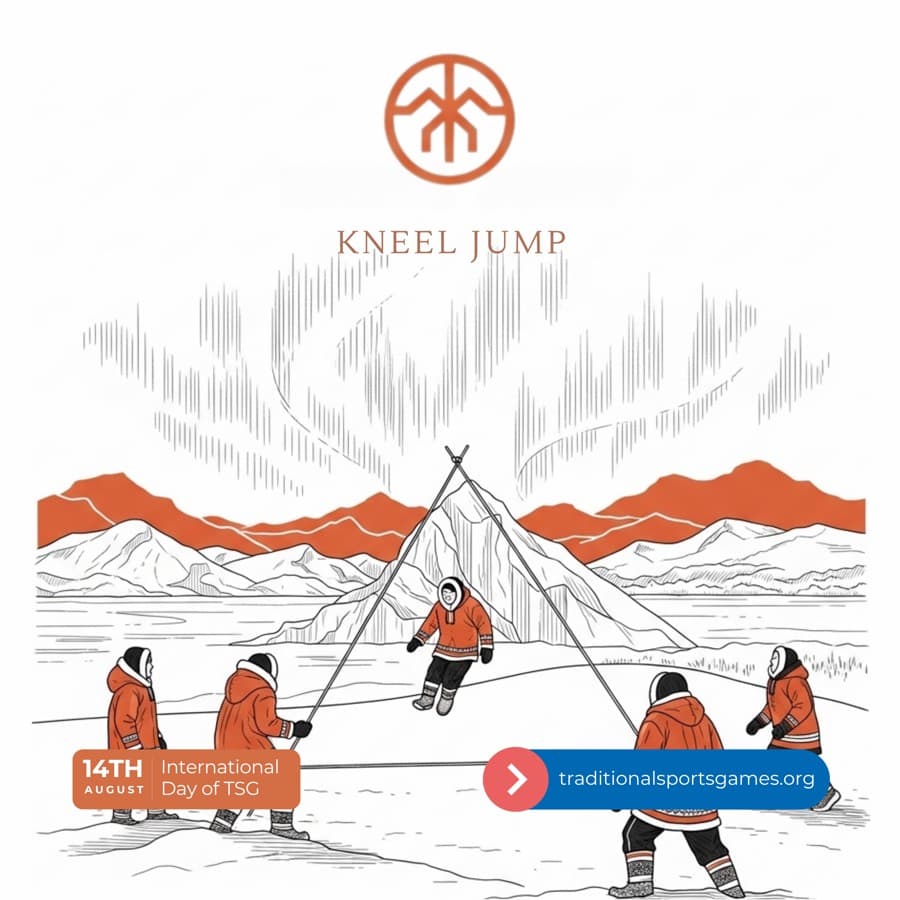
Kneel Jump – A Traditional Inuit Sport Preserving Indigenous Strength, Balance, and Resilience Kneel Jump is a traditional Indigenous game rooted in the survival practices of Inuit communities in North America’s Arctic regions. Often overlooked in mainstream athletics, this deceptively simple-looking sport showcases a participant's explosive strength, body control, and coordination—qualities critical to thriving in extreme cold environments. Historical Background Kneel Jump originated as part of traditional Inuit training exercises. It was used to enhance the skills necessary for hunting and movement across frozen terrain. In icy environments, the ability to spring up quickly from a kneeling position without slipping or falling was vital for survival. This game is deeply embedded in the indigenous knowledge system and embodies intangible cultural heritage. Gameplay Rules and How It's Played The game is straightforward but highly technical and requires rigorous body control:
Participants begin on their knees with both feet and legs flat on the ground behind them. Without any forward step or hand assistance, they must leap forward and land on both feet. The jump is measured from the starting point to the heel landing position. Success depends on balance, muscle coordination, and explosive strength.
Cultural and Strategic Significance More than a test of athleticism, Kneel Jump promotes intergenerational transmission of Inuit techniques and values. It encourages mindfulness, resilience, and inner strength. It also fosters social practices where youth learn under the guidance of elders, blending inclusive education with cultural mentorship. Health, Youth Empowerment, and Community Impact
Improves muscular strength, joint flexibility, and explosive agility. Supports global health by engaging youth in active, screen-free traditions. Empowers Indigenous youth through pride in their cultural roots. Promotes civil society engagement via community sports festivals and school programs. Encourages participation from both boys and girls, aligning with gender equality goals.
UNESCO and Sustainable Development Goals (SDGs) Recognized by the International Council of Traditional Sports and Games (ICTSG), the Kneel Jump contributes to several United Nations Sustainable Development Goals:
SDG 4 – Quality Education: Empowers through heritage-based learning. SDG 5 – Gender Equality: Encourages both male and female youth participation. SDG 10 – Reduced Inequalities: Amplifies Indigenous knowledge on global platforms. SDG 11 – Sustainable Cities and Communities: Protects Arctic cultures within urbanizing contexts. SDG 16 – Peace, Justice and Strong Institutions: Strengthens cultural identity through peaceful sport. SDG 17 – Partnerships for the Goals: Engages schools, local councils, and Indigenous organizations.
Similar Traditional Sports Around the World
Kabaddi (South Asia) – Combines balance, breath control, and strategic movement. Pulijudam (India) – A rural combat sport requiring agility and mental alertness. Angkunh (Cambodia) – A team sport using coordination and rhythm to engage players.
Call to Action – Preserve, Educate, and Participate The Kneel Jump continues to inspire youth and communities across the Arctic and beyond. As a testament to resilience, respect, and rhythm, this game should be celebrated in schools, festivals, and global heritage forums. Let’s champion traditional sports not just as games, but as vital cultural tools for education, healing, and unity. Get Involved Benefits of Joining Support ICTSG About ICTSG: The International Council of Traditional Sports and Games (ICTSG) is dedicated to preserving, promoting, and revitalizing traditional sports and games as powerful tools for education, peace, and sustainable development.
About Us History Contact
When a sport disappears, it is like a language no longer spoken - its stories, values, and lessons risk being lost forever. When we revive a game, we revive a culture.
Khalil Ahmed Khan - President, ICTSG