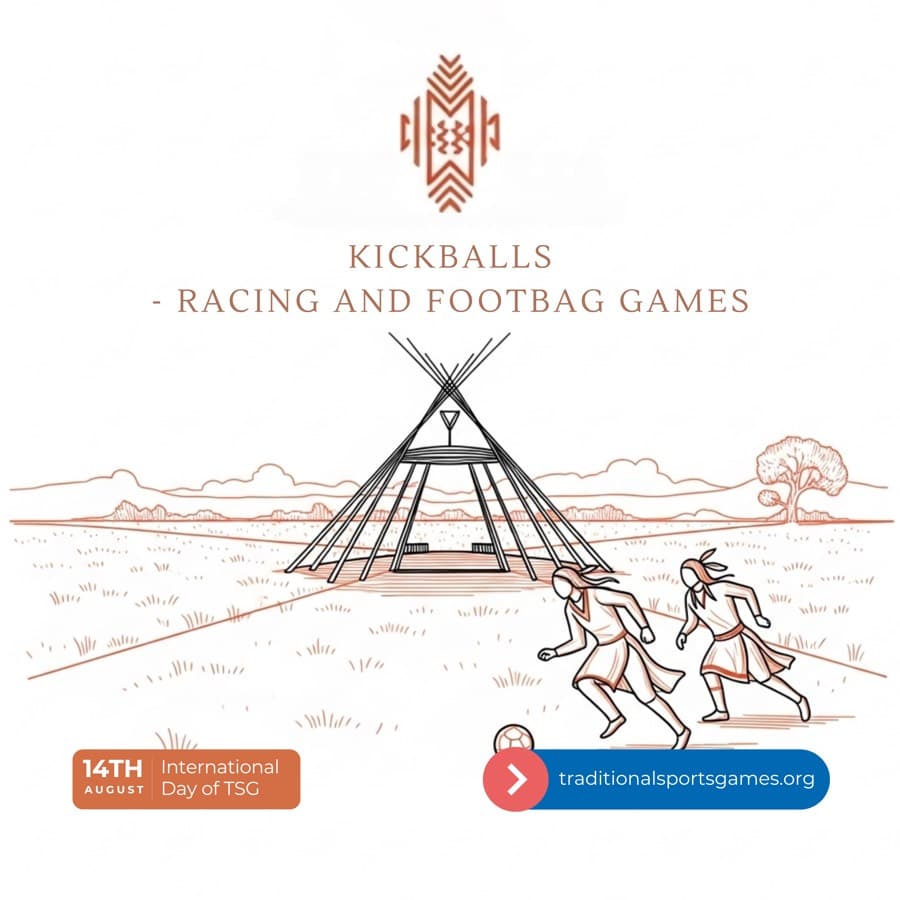
Kickballs – Indigenous Racing and Footbag Games of North America "Kickballs – Racing and Footbag Games" are traditional North American indigenous games that exemplify agility, endurance, and cultural storytelling. These games, passed through generations by Native American communities, are deeply rooted in intangible cultural heritage and align closely with UNESCO and ICTSG's mission to promote traditional sports and games (TSG) for sustainable development, inclusive education, and cultural preservation. Historical and Cultural Background Kickball games have been practiced by Plains and Southwestern tribal nations, including the Navajo and Zuni. They reflect ancient techniques for developing foot coordination, agility, and group cohesion. These games were often played during communal celebrations, rites of passage, and youth gatherings, embedding play in social practices and performing arts. Gameplay and Rules
Players: Individual or teams of 2–6 participants. Objective: Kick a small ball made of leather, cloth, or bark, and chase it over a marked or natural path until the finish line. Variations:
Footbag: Players keep the bag in the air using only their feet, often in competitive relay formats. Racing with Kickball: Players must kick and follow their ball across long distances, requiring speed and control.
Scoring: First to reach the goal or complete the task wins. Sportsmanship is a core value.
Cultural Significance Kickball games taught essential life skills to youth—especially endurance, focus, and self-discipline. These games also provided opportunities for intergenerational transmission of values, such as patience, teamwork, and resilience. The use of natural materials for the ball emphasized environmental harmony and traditional craftsmanship. Strategic and Educational Value
Improves cardiovascular health and muscular endurance. Strengthens coordination, balance, and rhythmic movement. Teaches self-regulation and focus under pressure. Fosters emotional intelligence and peer bonding. Offers inclusive education opportunities in formal and informal settings.
Social and Community Impact
Promotes community participation and outdoor recreation. Connects youth empowerment with cultural identity and movement-based learning. Integrates well-being with cultural pride and collective celebration. Supports civil society engagement through local tournaments and storytelling.
UN and Sustainable Development Goals These games are key tools in achieving the UN Sustainable Development Goals (SDGs) by integrating physical movement, cultural awareness, and community development:
SDG 4 – Quality Education: Brings indigenous games into classrooms and outdoor curricula. SDG 5 – Gender Equality: Played by both boys and girls equally in traditional settings. SDG 10 – Reduced Inequalities: No equipment cost—accessible to all socioeconomic backgrounds. SDG 11 – Sustainable Cities and Communities: Builds community bonds and active public spaces. SDG 16 – Peace and Justice: Teaches rules, fairness, and respectful interaction. SDG 17 – Partnerships for the Goals: Encourages NGOs, schools, and communities to collaborate for cultural safeguarding.
Related Games Worldwide
Sipa (Philippines) – Traditional footbag game focused on balance and foot control. Keretapi (Malaysia) – Racing game with emphasis on agility and teamwork. Tribal Distance Running (Kenya) – Long-distance running rooted in tradition and spiritual belief.
Call to Action – Keep the Ball Rolling Kickball games are more than play—they’re expressions of indigenous knowledge, physical art, and community wisdom. Let us safeguard these traditions and promote them in schools, parks, and programs worldwide. Support initiatives that empower youth and connect cultural diversity with physical literacy and global health. Get Involved Benefits of Joining Support ICTSG About ICTSG: The International Council of Traditional Sports and Games (ICTSG) is dedicated to preserving, promoting, and revitalizing traditional sports and games as powerful tools for education, peace, and sustainable development.
About Us History Contact
When a sport disappears, it is like a language no longer spoken - its stories, values, and lessons risk being lost forever. When we revive a game, we revive a culture.
Khalil Ahmed Khan - President, ICTSG