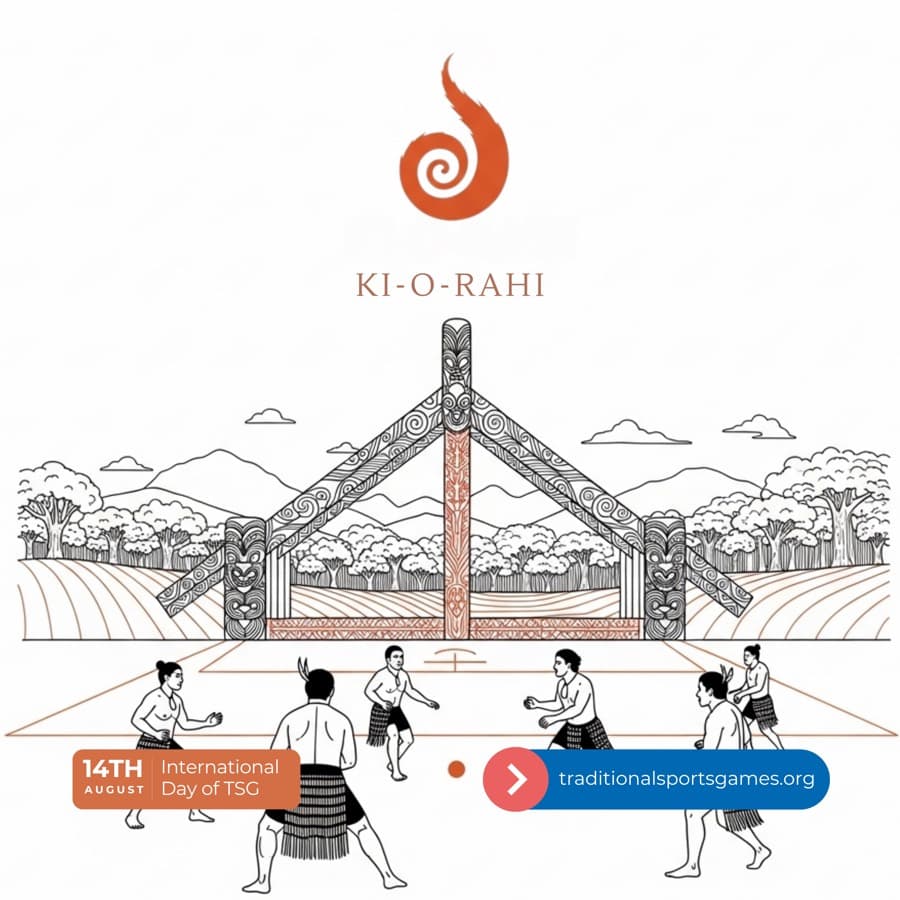
Ki-o-Rahi – Polynesian Traditional Team Sport of Strategy, Storytelling, and Cultural Heritage Ki-o-Rahi is a fast-paced, strategic traditional team sport that originates from Māori culture in Aotearoa (New Zealand). Deeply rooted in Polynesian storytelling and indigenous knowledge, Ki-o-Rahi represents a living form of intangible cultural heritage that bridges athleticism with oral tradition and community values. Historical Background Ki-o-Rahi is inspired by the Māori legend of Rahi and his journey to rescue his beloved. Passed down through intergenerational transmission, it embodies cultural narratives and social practices of the Māori people. The sport is more than a game; it is a performance of heritage, identity, and unity. Gameplay and Strategic Elements
Teams: Two teams (Taniwha and Kioma) compete on a circular field divided into zones, each with specific movement and scoring rules. Objective: Teams alternate between defending the central target (the “Tupu”) and scoring by touching boundary markers or hitting the Tupu with a ball. Equipment: Ki (ball) and a unique field setup; no additional gear needed, making it accessible and sustainable. Time-bound Play: Played in timed quarters, encouraging stamina, agility, and teamwork. Strategy: Involves tactical decisions, role coordination, and swift transitions between defense and offense.
Cultural Significance
Storytelling: The game honors the legend of Rahi and preserves Māori mythology through active participation. Social Practices: Ki-o-Rahi is a communal event involving families, elders, and youth, encouraging community participation. Performing Arts: Some matches are preceded by haka or waiata, reinforcing its place in cultural expression. Inclusive Education: The game is used in New Zealand’s physical education curriculum to teach students about Māori culture and heritage. Gender Inclusivity: Played by both men and women, promoting gender equality in sport.
Community Impact and Educational Value
Youth Empowerment: Engages youth in physical activity and cultural identity-building. Global Health: Encourages cardiovascular fitness, coordination, and teamwork. Civil Society Engagement: Played in schools, festivals, and community tournaments across Polynesia and the world. Cultural Diversity: Strengthens appreciation for indigenous perspectives and safeguards heritage through active transmission.
UNESCO SDGs Integration
SDG 4 – Quality Education: Used as a teaching tool to promote cultural literacy and physical education. SDG 5 – Gender Equality: Empowers all genders equally through co-ed team formats. SDG 10 – Reduced Inequalities: Amplifies marginalized voices by honoring indigenous narratives. SDG 11 – Sustainable Cities and Communities: Enhances urban and rural engagement through community-centered play. SDG 16 – Peace and Justice: Builds trust, respect, and peaceful competition among youth. SDG 17 – Partnerships for the Goals: Enables partnerships between educational institutions, Indigenous communities, and international cultural bodies.
Similar Traditional Games Worldwide
Sepaktakraw (Southeast Asia) – A team sport blending agility and traditional rules. Pelota Purépecha (Mexico) – A Mesoamerican ball game played with a flaming ball, rich in heritage. Ullamaliztli (Aztec) – A sacred ball game deeply tied to religious practices and community values.
Call to Action – Keep Ki-o-Rahi Alive Ki-o-Rahi exemplifies how traditional sports and games preserve culture, educate communities, and promote sustainable development. Join ICTSG in celebrating and protecting this vibrant expression of Polynesian heritage. Share it, learn it, and pass it forward. Get Involved Benefits of Joining Support ICTSG About ICTSG: The International Council of Traditional Sports and Games (ICTSG) is dedicated to preserving, promoting, and revitalizing traditional sports and games as powerful tools for education, peace, and sustainable development.
About Us History Contact
When a sport disappears, it is like a language no longer spoken - its stories, values, and lessons risk being lost forever. When we revive a game, we revive a culture.
Khalil Ahmed Khan - President, ICTSG