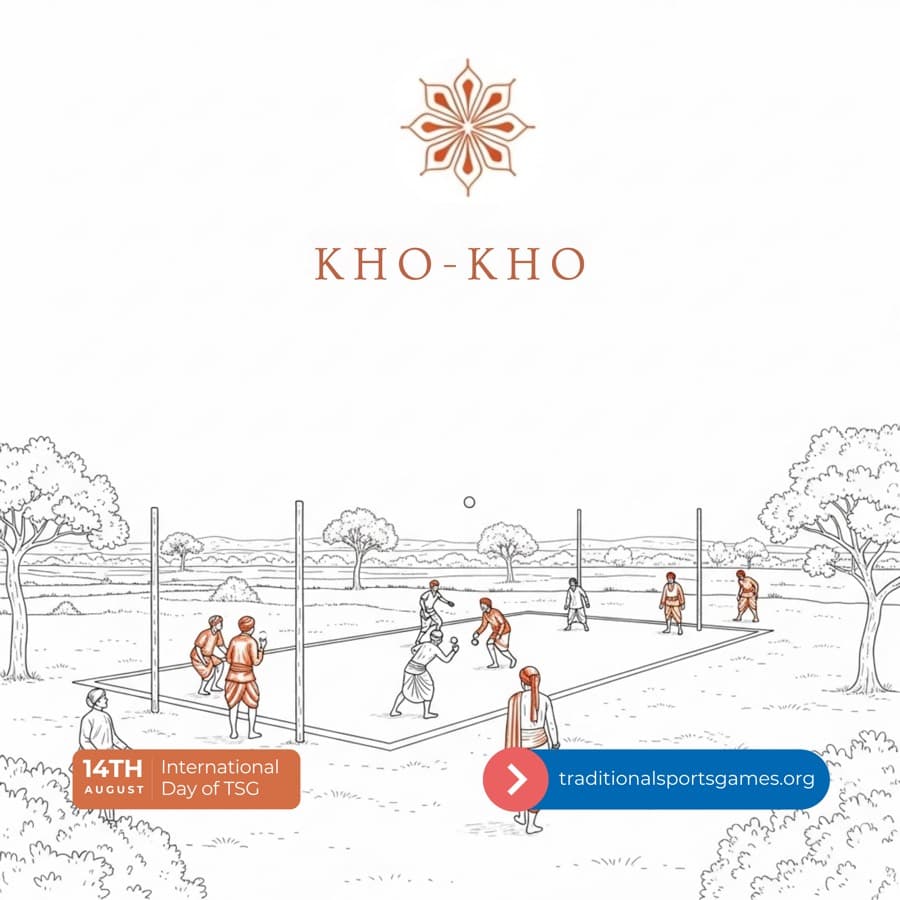
Kho-Kho: Traditional Indian Tag Game and Symbol of Cultural Resilience Kho-Kho is a fast-paced traditional sport and game (TSG) deeply rooted in Indian culture, typically played on a rectangular court. As part of India’s intangible heritage, it reflects centuries of indigenous knowledge, social practices, and intergenerational traditions. Historical Background
Kho-Kho traces its origins back to ancient Indian warfare training systems. The sport has been played in Indian villages for centuries, often during school events and community festivals. Kho-Kho was officially recognized and structured in the early 20th century, now part of national school curricula and sports programs.
Gameplay and Rules
Team Structure: Two teams of 12 players (9 active at a time) compete in chasing and dodging roles. Chasing Team: Players sit alternately on the center line, and one chaser at a time attempts to tag runners using strategy and speed. Turning Rule: The chaser must tag a teammate to change direction, making gameplay more dynamic and tactical. Time-based: Played in innings, with each team having chasing and defending turns within a set time frame.
Cultural Significance
Represents cooperation, agility, and mental alertness across generations. Played widely in Indian schools, making it a strong tool for inclusive education. Used in festivals and public gatherings, reinforcing community participation and civil society engagement.
Educational Value and Youth Development
SDG 4 – Quality Education: Enhances students’ coordination, discipline, and team dynamics. SDG 5 – Gender Equality: Played by boys and girls, breaking gender stereotypes in sports. SDG 10 – Reduced Inequalities: Promotes inclusivity by engaging children from rural and underprivileged areas. SDG 11 – Sustainable Communities: Helps preserve local culture and indigenous identity through active engagement. SDG 16 – Peace & Justice: Encourages teamwork, rules-based play, and conflict resolution. SDG 17 – Partnerships: Supported by schools, youth programs, and international organizations like ICTSG.
Strategic and Health Benefits
Develops reflexes, stamina, and strategic thinking. Encourages global health through an engaging form of physical activity. Strengthens intergenerational transmission of cultural values and athletic skills.
Related Traditional Sports Kho-Kho connects with various global traditional sports preserving cultural heritage:
Kabaddi – India Catch Wrestling – Central Asia Lelo Burti – Georgia Ulama – Mexico
Call to Action: Let’s Preserve Kho-Kho Together Kho-Kho is not just a sport—it is a vessel of identity, tradition, and unity. Your participation can help sustain this living heritage and inspire future generations through inclusive and community-driven action. Get Involved Benefits of Joining Support ICTSG
About ICTSG: The International Council of Traditional Sports and Games (ICTSG) promotes the preservation of global intangible heritage through traditional games. Learn how we protect indigenous culture through sport:
About Us History Contact
When a sport disappears, it is like a language no longer spoken - its stories, values, and lessons risk being lost forever. When we revive a game, we revive a culture.
Khalil Ahmed Khan - President, ICTSG