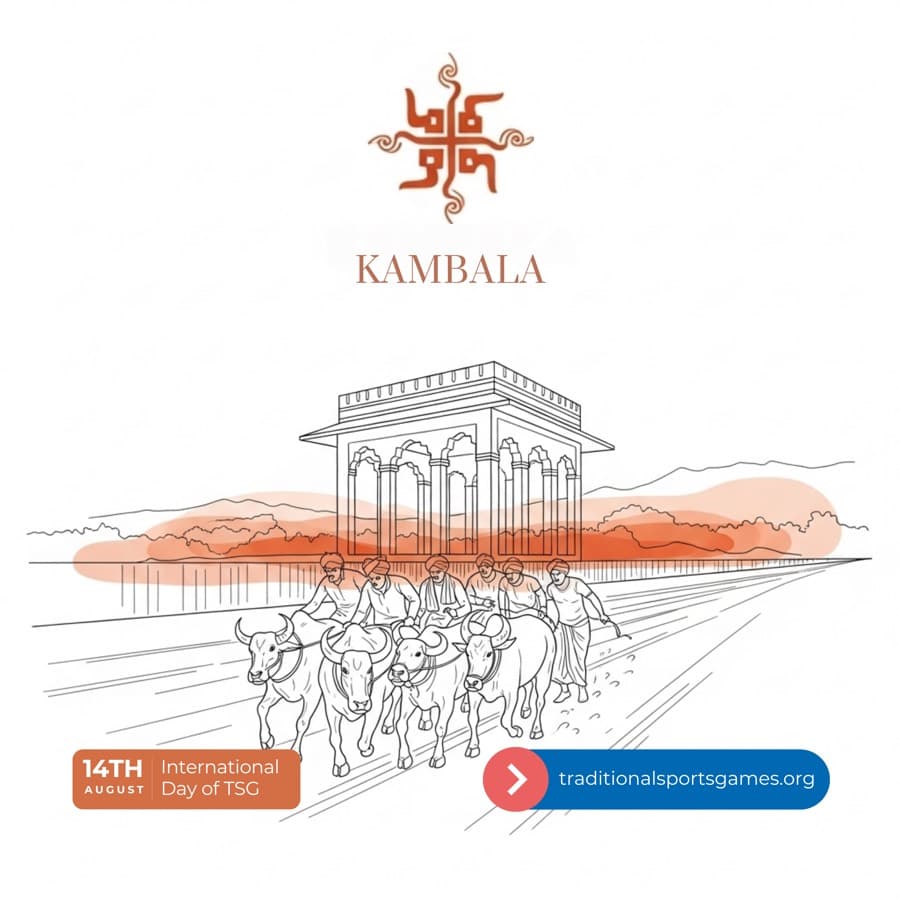
Kambala: Karnataka’s Thrilling Buffalo Race Upholding Indigenous Heritage Kambala is a traditional buffalo race held in the muddy paddy fields of Karnataka, India. Deeply embedded in India’s traditional sports and games (TSG), Kambala reflects the living legacy of indigenous knowledge, social practices, and intangible cultural heritage passed through generations. Historical and Cultural Background The origins of Kambala can be traced to agrarian rituals and festivities among farming communities in coastal Karnataka. Initially a religious offering to deities for a good harvest, it has evolved into a dynamic sport that unites people across regions while preserving intangible heritage. Gameplay Rules and Format
Kambala features a pair of buffaloes racing along parallel muddy tracks, guided by a skilled farmer-rider. The tracks, filled with water, measure roughly 120-160 meters in length. Performance is judged by speed and the symmetry of the buffalo pair. Traditional music and local festivities enhance the performing arts aspect of the event.
Cultural Significance and Social Practice Kambala is not merely a sport but a communal celebration where local farmers, artisans, and villagers participate with pride. It contributes to community participation, intergenerational transmission of knowledge, and reinforces cultural diversity and rural identity. Educational and Social Value
Promotes awareness of agricultural heritage and animal care. Teaches values of teamwork, tradition, and discipline. Encourages youth empowerment through training and volunteering opportunities. Supports inclusive education by blending culture with community-based learning.
Sustainability and Strategic Aspects Kambala contributes to sustainable development by supporting local economies and preserving traditional farming practices. The event sustains craftsmanship in buffalo training and track preparation and promotes eco-friendly sports. UNESCO and the Sustainable Development Goals (SDGs) Kambala aligns with several UNESCO SDGs:
SDG 4: Quality Education – Through community-based learning of traditional knowledge. SDG 5: Gender Equality – With growing female participation and recognition. SDG 10: Reduced Inequalities – As an inclusive rural sport for all communities. SDG 11: Sustainable Cities and Communities – Reinforcing the value of rural heritage. SDG 16: Peace and Strong Institutions – Celebrating values of cooperation and fair play. SDG 17: Partnerships for the Goals – Supported by local bodies, cultural councils, and global networks like ICTSG.
Related Traditional Sports from Other Regions Kambala finds resonance in other indigenous TSG focused on animals and agriculture:
Karapan Sapi (Indonesia) – Traditional bull racing on Madura Island. Camel Racing (Middle East) – A historic and community-driven cultural sport. Ox Cart Racing (Thailand) – Another form of traditional farm animal race.
Impact on Community and Civil Society Engagement Kambala plays a pivotal role in rural development and civil society engagement. Entire villages collaborate for preparation, reflecting grassroots empowerment and participatory governance. It sustains livelihood, encourages artistic expressions, and promotes global health through physical activity. Call to Action Kambala is more than just a race – it's a movement to protect our cultural roots. Join the effort to preserve and promote TSG worldwide through education, engagement, and empowerment. Get Involved Benefits of Joining Support ICTSG
About ICTSG: The International Council of Traditional Sports and Games (ICTSG) is committed to the global promotion and safeguarding of indigenous sports as pillars of living heritage and inclusive development. Explore our About Us, History, and Contact pages to learn more.
When a sport disappears, it is like a language no longer spoken - its stories, values, and lessons risk being lost forever. When we revive a game, we revive a culture.
Khalil Ahmed Khan - President, ICTSG