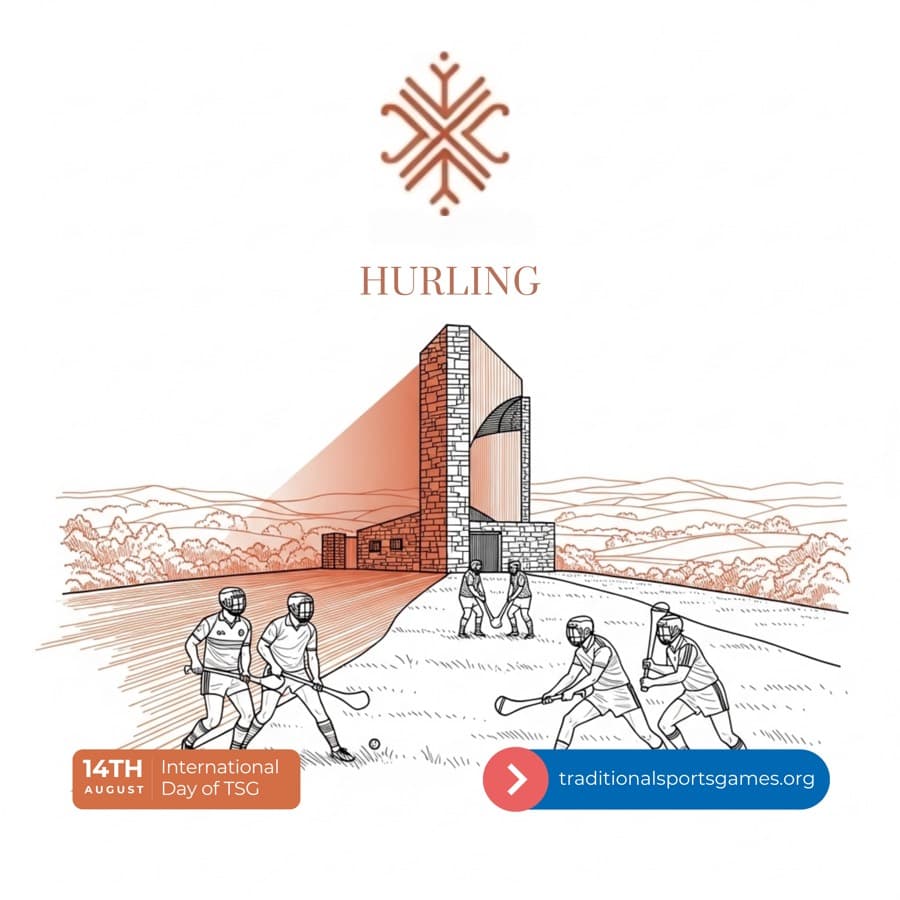
Hurling – Ireland’s Traditional Field Sport Hurling is one of Ireland’s oldest and most revered traditional sports, dating back to at least 1610. Governed by the Gaelic Athletic Association (GAA), it is a fast-paced field game that embodies indigenous knowledge, cultural heritage, and intergenerational transmission. Historical Background Hurling has deep roots in Irish history, with references in ancient manuscripts and folklore. It has been played for centuries, evolving into a structured sport while maintaining its traditional essence. Gameplay and Rules
Each team consists of 15 players. Players use a wooden stick called a hurley (or hurl) to strike a small ball known as a sliotar. The objective is to score points by hitting the sliotar over the crossbar (1 point) or into the goal (3 points). Hurling is played on a rectangular field similar to Gaelic football. The game is governed by the Gaelic Athletic Association (GAA).
Cultural Significance Hurling is more than a sport—it is a performing art and a social practice that fosters community participation and civil society engagement. UNESCO recognizes hurling as an element of intangible cultural heritage, highlighting its role in preserving indigenous traditions. Strategic Aspects Hurling requires exceptional hand-eye coordination, speed, and teamwork. Players must master striking, passing, and defensive tactics to excel in the game. Educational Value and Community Impact
Promotes inclusive education by teaching traditional skills. Enhances global health through physical activity. Strengthens cultural identity and indigenous knowledge. Encourages youth participation and leadership.
UNESCO and Sustainable Development Goals (SDGs) Hurling aligns with UNESCO’s mission to safeguard intangible heritage and promote sustainable development. It supports:
SDG 4: Quality education through cultural learning. SDG 5: Gender equality by encouraging participation. SDG 10: Reduced inequalities through inclusive sports. SDG 11: Sustainable cities and communities by preserving heritage. SDG 16: Peace and justice through cultural diplomacy. SDG 17: Partnerships for the goals via international cooperation.
Similar Traditional Games Explore other traditional field sports from different regions:
Gaelic Football (Ireland) Scuaib (Ireland) Pato (Argentina)
Call to Action Join the movement to preserve and promote traditional sports and games. Get involved, support indigenous heritage, and become a part of the ICTSG community. Get Involved Benefits of Joining Support ICTSG About ICTSG: The International Council of Traditional Sports and Games (ICTSG) is dedicated to preserving, promoting, and revitalizing traditional sports and games as powerful tools for education, peace, and sustainable development.
About Us History Contact
When a sport disappears, it is like a language no longer spoken - its stories, values, and lessons risk being lost forever. When we revive a game, we revive a culture.
Khalil Ahmed Khan - President, ICTSG