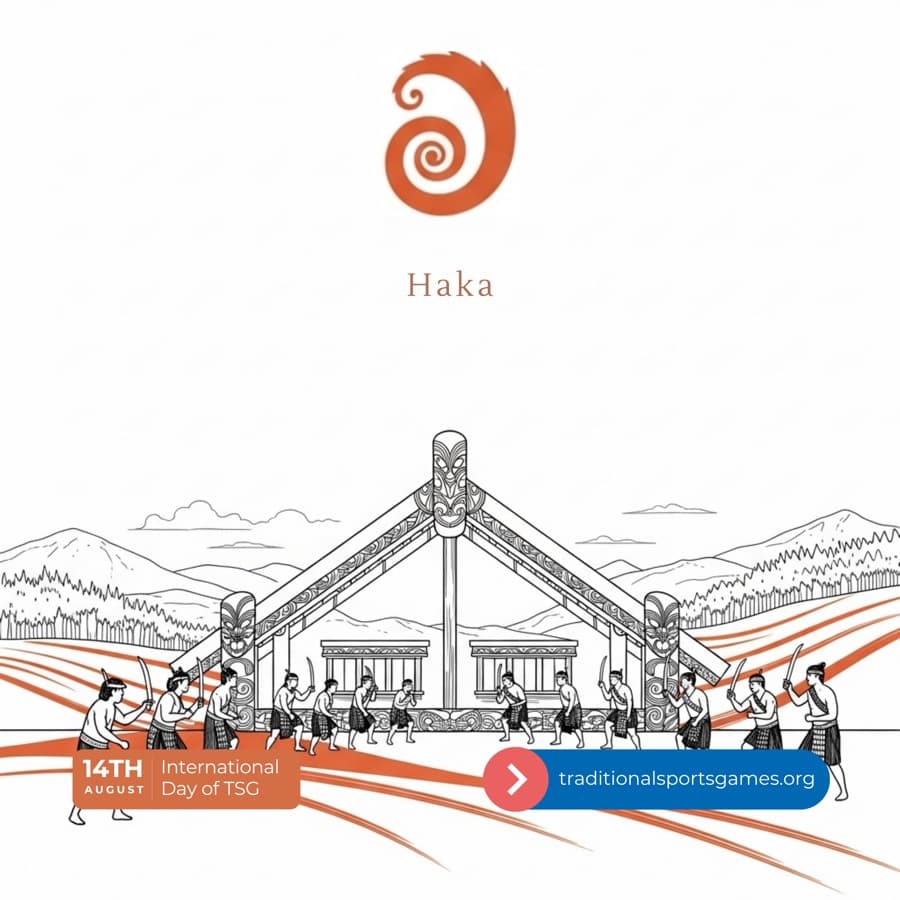
Haka – Māori Ancestral Dance as a Traditional Team Sport of Unity and Cultural Expression Haka is a powerful and rhythmic ancestral dance originating from the Māori people of New Zealand. It serves not only as a cultural expression but is also recognized as a traditional team sport, where coordinated performance, spiritual intent, and unity of movement transform it into a highly disciplined group activity. Haka represents the rich fabric of intangible heritage and is a strong symbol of indigenous knowledge and communal strength. Historical Background The Haka has its roots in ancient Polynesian traditions, particularly the mythology and ritual practices of the Māori of Aotearoa (New Zealand). It was traditionally performed to welcome guests, challenge opponents, prepare for war, or celebrate milestones. Through intergenerational transmission, the Haka remains central to Māori identity and collective memory. Gameplay and Team Performance Aspects
Team Formation: Performed in groups, often with synchronized movements, chants, and gestures that build unity and energy. Call and Response: Involves a leader initiating chants that are echoed by the group to convey strength, challenge, or welcome. Rhythmic Movement: Includes stomping, hand slapping, tongue protrusions, and fierce facial expressions representing determination and connection to ancestors. No Physical Combat: Unlike martial TSGs, Haka focuses on spiritual force and psychological engagement. Team Strategy: Success depends on harmony, timing, and emotional connection among participants.
Cultural Significance and Performing Arts Dimension
Acts as a social practice reaffirming identity, pride, and solidarity within Māori and Polynesian communities. Central to cultural diversity and storytelling through motion, chant, and ritual. A performing art displayed on global stages—from tribal ceremonies to international sports events. Safeguarded as part of New Zealand's intangible cultural heritage under international recognition including ICTSG and UNESCO values. Promotes inclusive education by blending history, language, and movement.
Community and Educational Impact
Youth Empowerment: Haka builds confidence, discipline, and a sense of purpose among youth. Global Health: Encourages physical activity, breathing control, and mental focus. Civil Society Engagement: Often used in schools, prisons, and community centers to foster healing and dialogue. Community Participation: Involves elders, women, and youth in collective performance and learning cycles.
UNESCO SDGs Integration
SDG 4 – Quality Education: Teaches history, language, values, and discipline in integrated formats. SDG 5 – Gender Equality: While often performed by men, inclusive forms of Haka are open to all genders. SDG 10 – Reduced Inequalities: Promotes respect for Indigenous heritage and combats cultural erasure. SDG 11 – Sustainable Cities and Communities: Supports cultural preservation within urban and rural development plans. SDG 16 – Peace and Justice: Transforms energy into peaceful and meaningful expression of resistance and unity. SDG 17 – Partnerships for Goals: Engages schools, governments, and civil society to preserve and promote Haka as cultural heritage.
Related Traditional Games from Other Regions
Samahan sa Sayaw (Philippines) – Community group dance integrated with spiritual ritual. Coreeda (Australia) – Aboriginal martial art combining combat and traditional dance. Indlamu (South Africa) – Zulu warrior dance representing communal strength and heritage.
Call to Action – Protect and Perform the Haka The Haka is a living cultural treasure that transcends time and borders. By promoting, learning, and respectfully performing the Haka, we help safeguard Māori identity, enrich global cultural diversity, and build stronger communities. Join ICTSG in preserving this powerful tradition. Get Involved Benefits of Joining Support ICTSG About ICTSG: The International Council of Traditional Sports and Games (ICTSG) is dedicated to preserving, promoting, and revitalizing traditional sports and games as powerful tools for education, peace, and sustainable development.
About Us History Contact
When a sport disappears, it is like a language no longer spoken - its stories, values, and lessons risk being lost forever. When we revive a game, we revive a culture.
Khalil Ahmed Khan - President, ICTSG