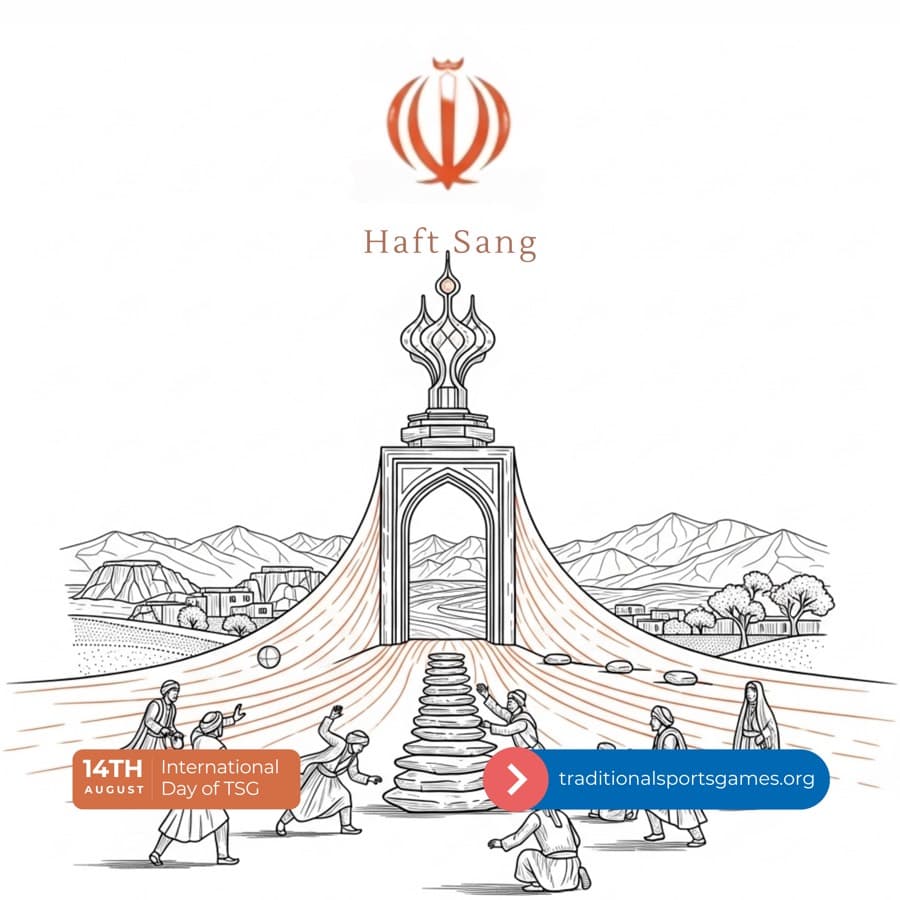
Haft Sang – Traditional Iranian Seven Stones Game Preserving Heritage and Promoting Cultural Unity Haft Sang (meaning "Seven Stones") is a beloved traditional Iranian sport involving two teams, a small ball, and a pile of flat stones. Played in schoolyards and village streets, this game blends strategic play, teamwork, and cultural tradition in an engaging format passed down through generations. Similar to other regional variations such as India’s Pittu or Bangladesh’s “Sat Chara,” Haft Sang is part of a broader family of ancestral throwing games safeguarding intangible heritage. Historical and Cultural Background Haft Sang is deeply rooted in Persian rural and urban communities and has been a common social practice among children and youth. It is typically played during leisure hours, particularly in spring and summer, symbolizing both physical joy and the collective memory of community play. With no requirement for special equipment, the game is a true example of inclusive cultural expression and intergenerational transmission. Gameplay Rules and Structure
Setup: Seven flat stones are stacked in a pile at the center of a play area. Teams: Two teams take turns—one attacking, the other defending. Attack: The attacking team throws a soft ball to knock over the pile. Objective: After knocking the stones, attackers try to rebuild the stack while defenders aim to eliminate them by hitting them with the ball. Winning: Points are scored by successfully rebuilding the stone tower or by eliminating the opponents.
Cultural and Educational Significance
Traditional Sports and Games (TSG): Haft Sang is a vital component of Iran’s traditional games heritage. Indigenous Knowledge: Reflects the intuitive use of everyday materials for recreation and education. Performing Arts & Social Practices: Often played with songs and chants, fostering communal joy. Inclusive Education: Accessible to children of all backgrounds, fostering unity and diversity. Community Participation: Encourages public engagement and teamwork through collective competition.
Physical and Strategic Benefits
Hand-eye Coordination: Throwing and dodging the ball enhances agility and reaction time. Team Strategy: Players must plan rebuild and defense tactics quickly under pressure. Social Development: Encourages peer interaction, mutual respect, and cooperation. Global Health: Promotes outdoor activity and physical wellness among youth.
UNESCO and Sustainable Development Goals
SDG 4 – Quality Education: Used in schools to promote physical education rooted in culture. SDG 5 – Gender Equality: Equally enjoyed by boys and girls in many Iranian communities. SDG 10 – Reduced Inequalities: Played across socio-economic and regional divides. SDG 11 – Sustainable Cities and Communities: Revives and sustains cultural traditions in urban and rural areas. SDG 16 – Peace and Justice: Fosters values of fair play and peaceful competition. SDG 17 – Partnerships for the Goals: Encourages cultural exchange and cooperation through global recognition.
Similar Games Around the World
Pittu – India: A strikingly similar ball-and-stone game. Angkun – Cambodia: Combines physical skill with traditional spirit. Mazkoob – Iran: Another Persian game rooted in tactical play.
Call to Action – Keep the Stones Rolling Haft Sang embodies the enduring spirit of cultural play and cooperation. As modern lifestyles reshape childhood, it is vital to safeguard these intangible treasures. Join the ICTSG in preserving and promoting Haft Sang and other traditional games to empower youth, bridge cultures, and uphold diversity. Get Involved Benefits of Joining Support ICTSG About ICTSG: The International Council of Traditional Sports and Games (ICTSG) is dedicated to preserving, promoting, and revitalizing traditional sports and games as powerful tools for education, peace, and sustainable development.
About Us History Contact
When a sport disappears, it is like a language no longer spoken - its stories, values, and lessons risk being lost forever. When we revive a game, we revive a culture.
Khalil Ahmed Khan - President, ICTSG