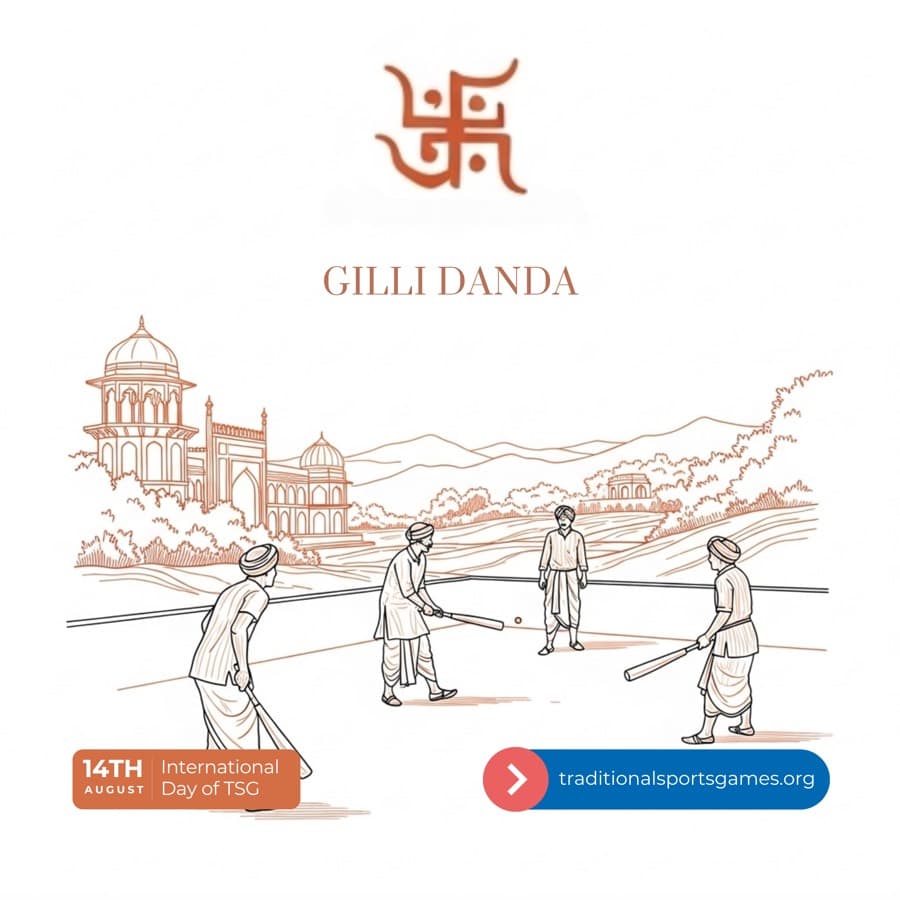
Gilli Danda: A Timeless Indian Stick Game Upholding Cultural Identity and Heritage Gilli Danda, one of India’s most iconic traditional sports and games (TSG), embodies centuries of indigenous knowledge, physical skill, and cultural expression. Played with a small stick (gilli) and a larger stick (danda), this game shares strategic similarities with cricket and baseball, and remains a symbol of intergenerational transmission and social bonding in Indian communities. Historical Background and Cultural Legacy Originating in rural India, Gilli Danda has been practiced for over a thousand years. Once a staple of village recreation, the game is deeply connected to the daily lives of farmers, students, and youth. Its oral transmission across generations makes it a living example of intangible cultural heritage as defined by UNESCO. Gameplay Rules and Materials
Materials: One short stick (gilli) about 3–6 inches long, and one long stick (danda) about 18–24 inches. Players: 2 or more participants. Objective: Use the danda to flick the gilli into the air and then strike it as far as possible. Points are scored based on distance and catching rules. Scoring: If opponents catch the gilli mid-air, the striker is out. Otherwise, points are awarded based on how far the gilli travels.
Cultural and Educational Significance Gilli Danda promotes critical values of inclusive education, community participation, and youth empowerment. It helps develop hand-eye coordination, agility, and teamwork—making it not just a sport, but also a performing art and social practice. UNESCO Alignment and SDGs Impact The game supports the following UNESCO Sustainable Development Goals (SDGs):
SDG 4: Quality Education – Through intergenerational learning and local sports curricula. SDG 5: Gender Equality – Encouraging participation of girls in safe and inclusive spaces. SDG 10: Reduced Inequalities – Making traditional sports accessible in marginalized areas. SDG 11: Sustainable Communities – Reviving local traditions and identity through sport. SDG 16: Peace and Justice – Promoting social cohesion through cooperative play. SDG 17: Partnerships – Collaboration through networks like ICTSG and civil society engagement.
Strategic Value and Global Relevance With the decline of traditional play spaces due to urbanization, safeguarding games like Gilli Danda has become more important than ever. ICTSG recognizes Gilli Danda as a model of cultural preservation and civil society engagement. It acts as a bridge between generations, enabling the revival of indigenous traditions in a modern context. Related Traditional Games Explore other regional traditional games sharing similar themes:
Kho Kho – A high-speed team tag game. Kabaddi – A contact-based game focused on breath control and strategy. Asol Aap Canoe Race – Indigenous racing from Andaman Islands.
Community Impact and Social Benefits
Fosters community participation and cross-generational dialogue. Encourages outdoor physical activity and global health awareness. Preserves cultural diversity and local identity. Promotes low-cost, inclusive alternatives to mainstream sports.
Call to Action Gilli Danda is more than a game—it is a call to protect our cultural DNA. We invite educators, cultural institutions, youth leaders, and communities to join our collective mission in safeguarding TSGs. Get Involved Benefits of Joining Support ICTSG
About ICTSG The International Council of Traditional Sports and Games (ICTSG) champions the protection and promotion of TSGs across cultures. Working globally to preserve intangible heritage, ICTSG empowers communities through inclusive initiatives. Learn more about our vision, history, and how to connect with us: About Us History Contact
When a sport disappears, it is like a language no longer spoken - its stories, values, and lessons risk being lost forever. When we revive a game, we revive a culture.
Khalil Ahmed Khan - President, ICTSG