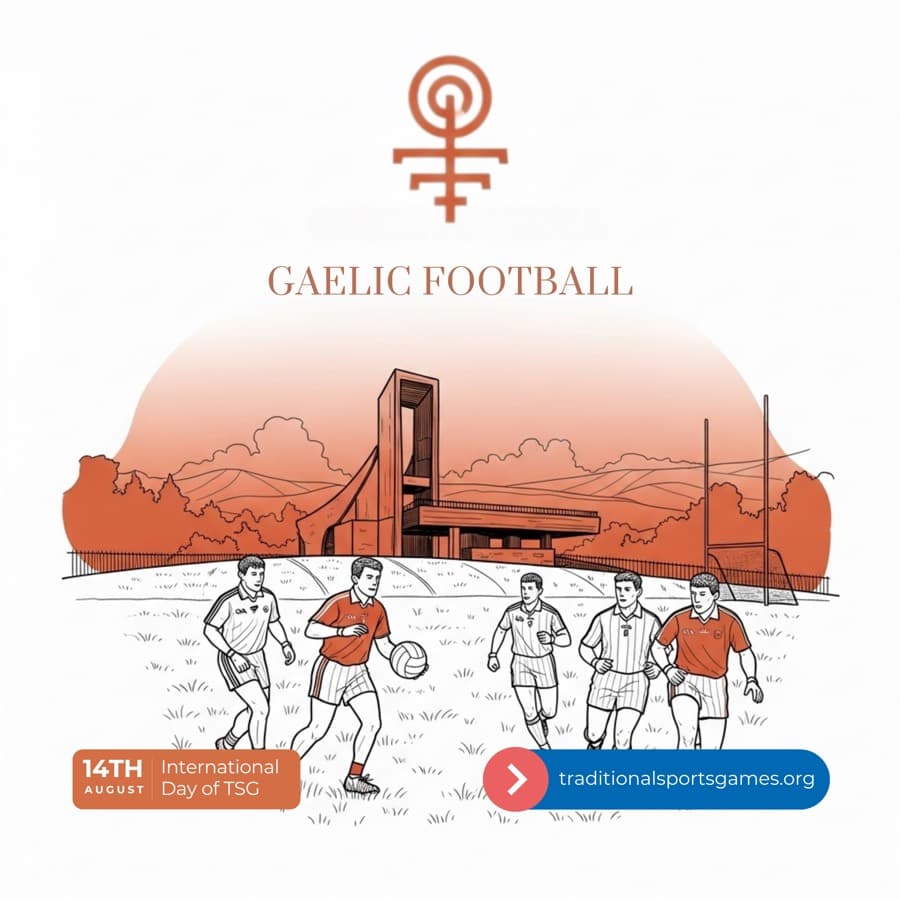
Gaelic Football – Ireland’s Iconic Cultural Sport Gaelic Football is a proud representative of traditional sports and games (TSG) from Ireland. A unique fusion of soccer and rugby, this fast-paced, physical game is a vibrant expression of Ireland’s intangible cultural heritage and a testament to its enduring community spirit. Historical Background Gaelic Football has been played in Ireland since ancient times. The modern version was formalized in 1887 with the establishment of the Gaelic Athletic Association (GAA), an organization central to preserving Irish culture, identity, and traditional sports. Today, it remains a cornerstone of Irish community life and national pride. Gameplay and Rules
Teams consist of 15 players. Played on a rectangular field with H-shaped goals. Players may kick, punch, or carry the ball to score. Points are awarded for kicking the ball over the crossbar (1 point) or into the net (3 points). The game emphasizes endurance, skill, and strategic team coordination.
Cultural Significance Beyond sport, Gaelic Football is a social practice that brings families and generations together. Matches are major community events, where culture, language, and local identity are celebrated. Its intergenerational transmission keeps traditions alive while empowering younger generations. Strategic, Educational, and Social Benefits
Promotes inclusive education by encouraging participation regardless of background. Strengthens youth empowerment through team-based learning and leadership roles. Provides global health benefits through active lifestyles and mental well-being. Encourages gender inclusion with both male and female leagues. Builds community participation and civic responsibility.
Global Relevance and Similar TSGs Gaelic Football shares traits with Shinty (Scotland), Aussie Rules (Australia), and Calcio Storico (Italy). These cross-cultural connections highlight the shared importance of safeguarding traditional sports globally through civil society engagement and ICTSG-led cooperation. Alignment with UNESCO’s SDGs
SDG 4: Inclusive, quality education through sports programs. SDG 5: Gender equality in sports participation and leadership. SDG 10: Reduced inequalities through access to community-based sports. SDG 11: Sustainable communities through shared cultural heritage. SDG 16: Promoting peace and inclusive societies through cooperative play. SDG 17: Building global partnerships for safeguarding TSGs with UNESCO and ICTSG.
Call to Action Preserve, protect, and promote Gaelic Football as part of the world's living heritage. Your support helps ensure the vitality of traditional sports, cultural identity, and inclusive participation for future generations. Get Involved Benefits of Joining Support ICTSG
About ICTSG The International Council of Traditional Sports and Games (ICTSG) leads global efforts to preserve, promote, and revitalize traditional sports as living expressions of cultural diversity and human creativity, in alignment with UNESCO’s mission and Sustainable Development Goals. About Us History Contact
When a sport disappears, it is like a language no longer spoken - its stories, values, and lessons risk being lost forever. When we revive a game, we revive a culture.
Khalil Ahmed Khan - President, ICTSG