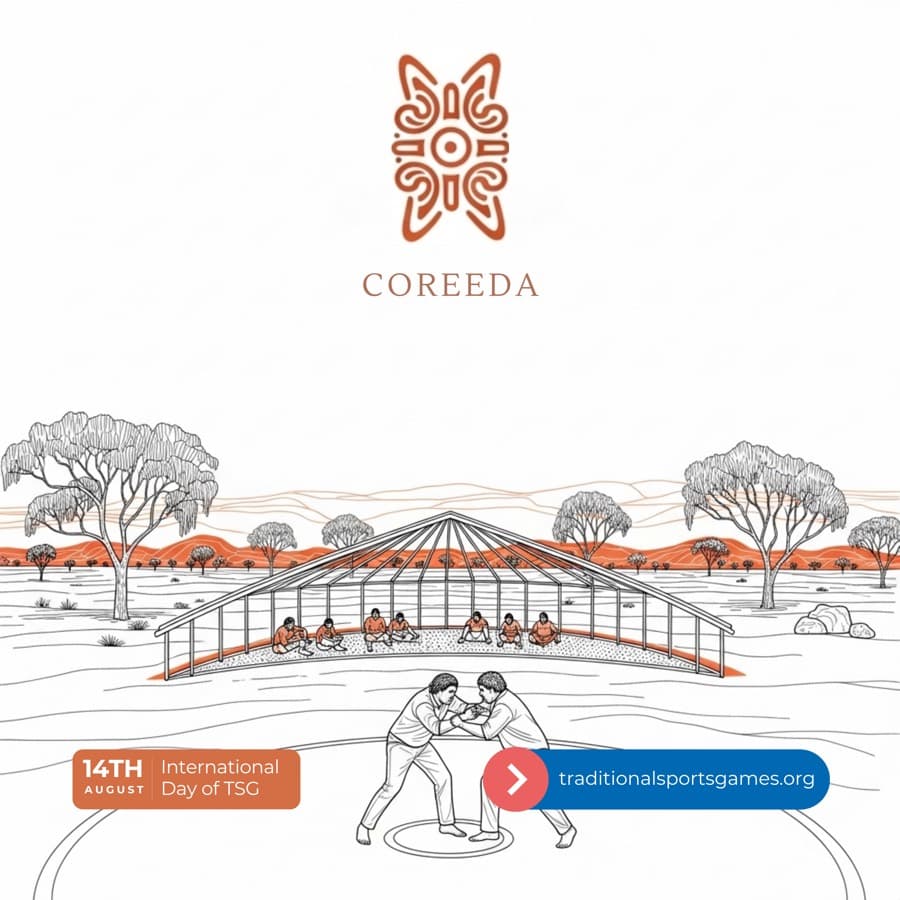
Coreeda – Indigenous Australian Martial Art Blending Dance, Wrestling, and Cultural Wisdom Coreeda is a traditional Indigenous Australian martial art that uniquely combines ceremonial dance with combat wrestling. Originating from Aboriginal lore and inspired by ancestral knowledge, it is more than a form of self-defense—it is a sacred embodiment of cultural storytelling, physical training, and community unity. Coreeda exemplifies intangible cultural heritage and stands as a powerful expression of indigenous knowledge systems. Historical Background According to Aboriginal oral traditions, Coreeda is inspired by the movements of the red kangaroo and the Coreeda spirit warrior. It reflects the deep relationship between the natural environment, ceremonial dance, and communal defense. Passed down through intergenerational transmission, Coreeda was historically practiced in clans for both spiritual strength and physical development. Coreeda Techniques and Training
Dance-based Warmups: Practitioners begin with traditional Aboriginal dance movements to honor ancestors and ground energy. Grappling Techniques: Coreeda emphasizes balance, footwork, and throws derived from animal mimicry. Weapons Practice: Includes training with traditional tools such as boomerangs and clubs in ceremonial combat forms. Solo and Pair Drills: Students practice in both individual katas and sparring scenarios to build discipline and adaptability. Non-aggressive Philosophy: Coreeda promotes respectful engagement over aggression, embodying values of peace and unity.
Cultural and Educational Importance
Fosters cultural identity and pride among Aboriginal youth. Serves as a performing art during community ceremonies and festivals. Supports inclusive education by integrating physical learning with oral history. Bridges intergenerational gaps by involving elders in teaching roles. Provides a medium for cultural exchange and understanding in multicultural events.
Health, Social, and Strategic Benefits
Global Health: Encourages fitness, flexibility, and mental focus. Youth Empowerment: Builds confidence, leadership, and cultural awareness. Community Participation: Invites families and local organizations to engage in practice and performance. Strategic Thinking: Enhances coordination and situational decision-making through traditional combat logic. Civil Society Engagement: Used in youth programs and rehabilitation efforts promoting peace and identity.
Alignment with UNESCO’s Sustainable Development Goals
SDG 4 – Quality Education: Combines academic and cultural learning for holistic development. SDG 5 – Gender Equality: Offers equal access to boys and girls in culturally appropriate ways. SDG 10 – Reduced Inequalities: Elevates marginalized voices through recognition of Indigenous sport. SDG 11 – Sustainable Communities: Strengthens social fabric and cultural continuity. SDG 16 – Peace and Justice: Encourages discipline, respect, and peaceful conflict resolution. SDG 17 – Partnerships for Goals: Promotes collaboration between educational institutions, Aboriginal councils, and global TSG networks.
Related Traditional Martial Arts and Games
Bazh Yod (France) – A traditional Breton wrestling form with cultural dance influence. Kushti (India) – An ancient Indian wrestling sport rooted in philosophy and fitness. Moraingy (Madagascar) – A traditional striking martial art practiced in communal festivals.
Call to Action – Help Preserve Coreeda Coreeda is not just a sport—it is a cultural lifeline, an educational tool, and a peaceful practice of Indigenous resilience. Your support can help safeguard this heritage. Teach it. Learn it. Share it. Join the global movement of ICTSG to preserve traditional sports and games for future generations. Get Involved Benefits of Joining Support ICTSG About ICTSG: The International Council of Traditional Sports and Games (ICTSG) is dedicated to preserving, promoting, and revitalizing traditional sports and games as powerful tools for education, peace, and sustainable development.
About Us History Contact
When a sport disappears, it is like a language no longer spoken - its stories, values, and lessons risk being lost forever. When we revive a game, we revive a culture.
Khalil Ahmed Khan - President, ICTSG