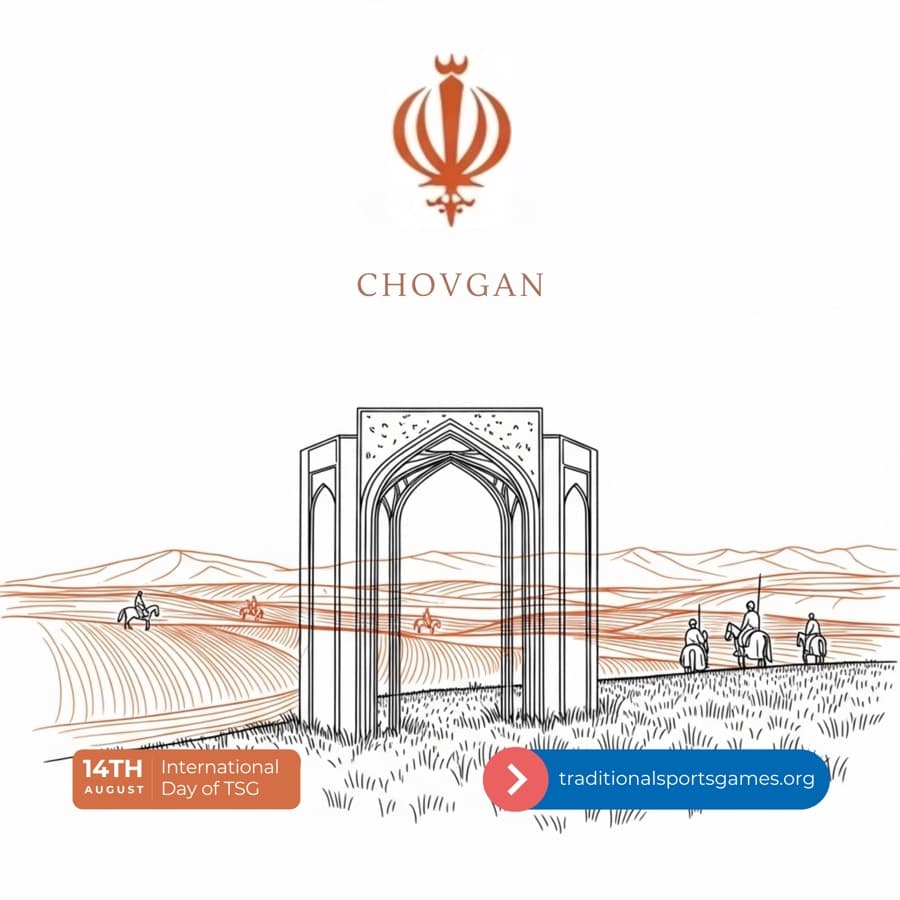
Chovgan: A Historic Persian Equestrian Sport Chovgan, also known as **Chogan**, is an ancient **Persian equestrian team sport** played on horseback. Originating in **Iran**, it has been practiced for over **2,000 years** and is considered the **precursor to modern polo**. Historical Background Chovgan was a **royal pastime** in the **Sasanian Empire (224–651 AD)** and later spread across **Central Asia and the Middle East**. The game was played in **royal courts**, accompanied by **music and storytelling**, making it a **cultural and artistic tradition**. Gameplay and Rules
Played with **two teams of six riders** on horseback. Players use **wooden mallets** to hit a **ball** towards the opposing team’s goal. Matches are accompanied by **traditional music and storytelling**. Victory is achieved by **scoring the most goals** within the allotted time.
Cultural Significance Chovgan is more than a sport—it is a **symbol of Persian tradition and aristocratic heritage**. It fosters **intergenerational transmission, youth empowerment, and community participation**. Strategic Aspects and Benefits
Enhances **horse-riding skills, agility, and teamwork**. Promotes **cultural pride and heritage preservation**. Encourages **social bonding and intellectual engagement**.
Educational Value and Community Impact Aligned with **UNESCO’s Sustainable Development Goals (SDG 4, 5, 10, 11, 16, and 17)**, Chovgan supports **inclusive education, social practices, and global health initiatives**. Similar Traditional Games Explore other traditional equestrian sports like Buzkashi and Tent Pegging, which share similar competitive elements. Call to Action Join the movement to preserve Chovgan and other traditional games. Engage with ICTSG and support cultural heritage. Get Involved Benefits of Joining Support ICTSG About ICTSG: The International Council of Traditional Sports and Games (ICTSG) is dedicated to preserving, promoting, and revitalizing traditional sports and games as powerful tools for education, peace, and sustainable development.
About Us History Contact
When a sport disappears, it is like a language no longer spoken - its stories, values, and lessons risk being lost forever. When we revive a game, we revive a culture.
Khalil Ahmed Khan - President, ICTSG