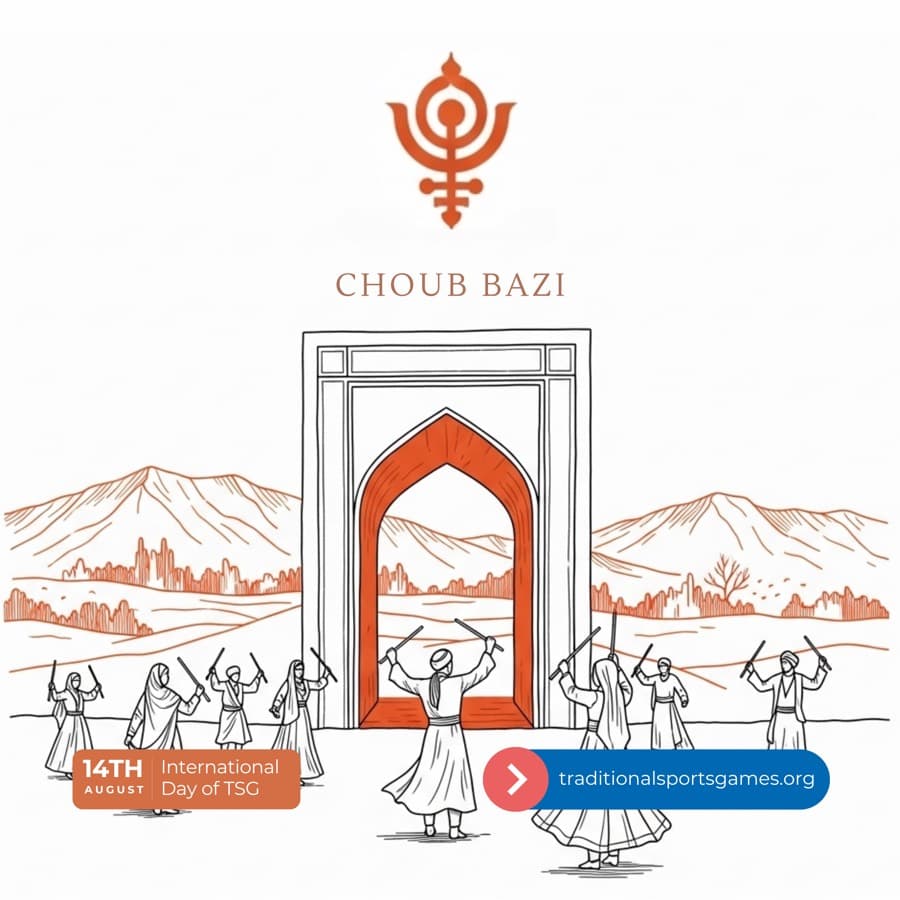
Choub Bazi – Iranian Traditional Stick Game Promoting Heritage, Strategy, and Community Unity Choub Bazi is a dynamic and heritage-rich traditional Iranian sport involving rhythm, agility, and symbolic martial artistry. Rooted in the cultural fabric of rural Iran, the game has two notable regional styles: the Sistani version from eastern Iran and the Lori version from southern and western regions. It embodies indigenous knowledge systems and contributes to the preservation of intangible cultural heritage. Historical Background Historically, Choub Bazi has served as both entertainment and a symbolic representation of martial skill and honor. It is especially prominent during festive gatherings such as weddings and harvest celebrations. Often accompanied by traditional music, Choub Bazi is a performing art as well as a competitive game, passed down across generations and practiced by men and youth as a rite of passage. Gameplay and Regional Variations The gameplay differs slightly between the two main types:
Sistani Choub Bazi: Focuses more on rhythmic movement and performance, often with a choreographed display and symbolic attacks. Lori Choub Bazi: Emphasizes speed, strategy, and direct competition where players must strike and defend using wooden sticks.
Basic Elements:
Players: Usually performed in pairs or groups with alternating roles of attacker and defender. Equipment: Two lightweight wooden sticks (Choubs), usually between 60-90 cm in length. Objective: To outmaneuver the opponent while maintaining rhythm and control, avoiding direct body contact. Setting: Open fields, village squares, or ceremonial platforms, often with traditional music and spectators.
Cultural Significance
Traditional Sports and Games (TSG): An embodiment of Iran’s living heritage, Choub Bazi bridges the gap between sport and ceremonial art. Indigenous Knowledge: Reflects ancestral martial training, physical literacy, and communal education. Performing Arts & Social Practices: Accompanied by rhythmic music and traditional songs symbolizing heroism and respect. Inclusive Education: Teaches discipline, self-control, and cultural identity among youth. Intergenerational Transmission: Skills are passed from elders to younger generations during festivals and gatherings.
Physical and Strategic Benefits
Agility and Coordination: Requires rapid reflexes, precise timing, and balance. Self-Discipline: Teaches respect for opponents and control over movement. Community Engagement: Performed during collective events, it strengthens local solidarity and pride. Global Health: Encourages outdoor physical activity rooted in cultural values.
UNESCO and Sustainable Development Goals (SDGs)
SDG 4 – Quality Education: Promotes traditional learning through observation and practice. SDG 5 – Gender Equality: Though traditionally male-dominated, modern versions advocate inclusivity and balanced participation. SDG 10 – Reduced Inequalities: Accessible across socio-economic backgrounds, celebrating cultural equity. SDG 11 – Sustainable Cities and Communities: Helps maintain cultural identity in rural and urban transitions. SDG 16 – Peace and Justice: Reinforces peaceful competition and community respect through non-violent interaction. SDG 17 – Partnerships for the Goals: Can foster international cultural exchange and civil society engagement.
Similar Global Games
Bazh Yod – Brittany: A traditional French stick fighting game rooted in honor and endurance. Kabaddi – South Asia: A strategic contact game emphasizing skill, movement, and teamwork. Silat – Southeast Asia: A martial art involving weaponry and ritual, linking combat and culture.
Call to Action – Let the Sticks Speak Choub Bazi stands not just as a game but as a legacy. Reviving and promoting this TSG contributes to the global celebration of cultural diversity, traditional knowledge, and community participation. Support its documentation, practice, and inclusion in educational and recreational programs. Get Involved Benefits of Joining Support ICTSG About ICTSG: The International Council of Traditional Sports and Games (ICTSG) is dedicated to preserving, promoting, and revitalizing traditional sports and games as powerful tools for education, peace, and sustainable development.
About Us History Contact
When a sport disappears, it is like a language no longer spoken - its stories, values, and lessons risk being lost forever. When we revive a game, we revive a culture.
Khalil Ahmed Khan - President, ICTSG