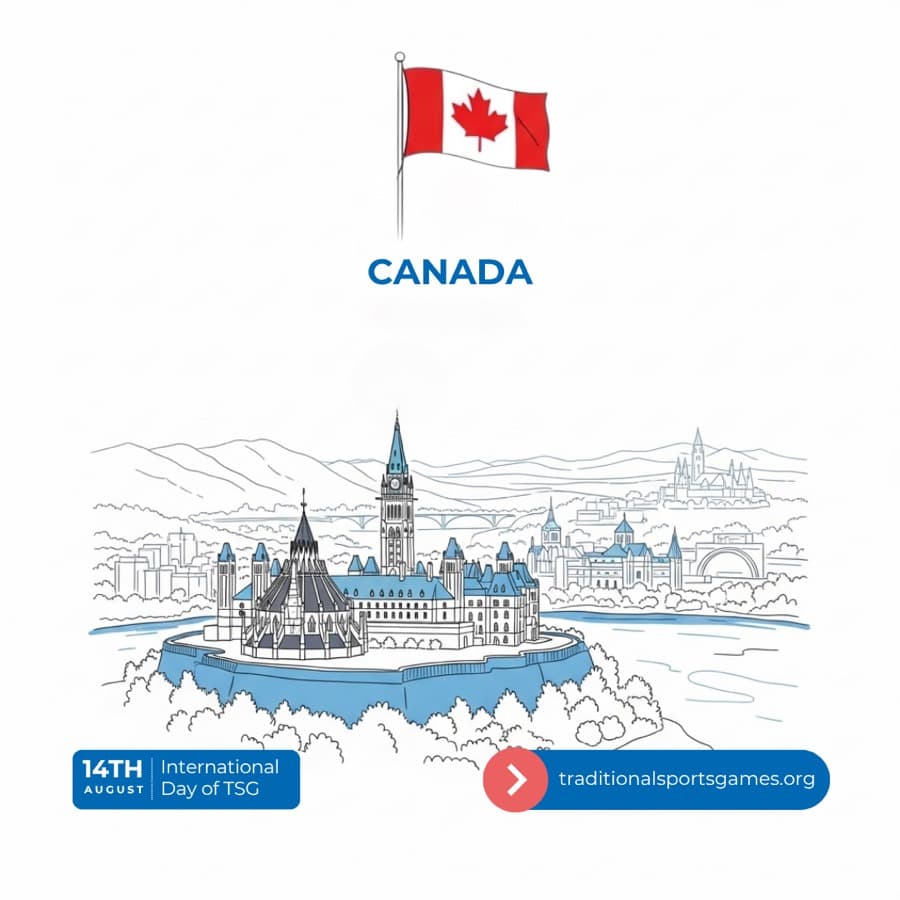
Positions Open with Canada Chapter 1. Chapter President for CanadaApply Now 2. General Secretary for CanadaApply Now 3. Information & Communications Lead for CanadaApply Now Pre‑Qualification Checklist Benefits & Perks Responsibilities
Canada Chapter of ICTSG Representation at UNESCO 2018 Consultation On 13–14 August 2018, during the 4th Collective Consultation on Traditional Sports and Games in Istanbul, Canada was represented by Mr. Chief Willie Littlechild, President of the Confederacy of Treaty Six Nations. As a Member of the AAC, Chief Littlechild officially signed the joint declaration on behalf of Canadian Indigenous peoples, symbolizing Canada’s commitment to UNESCO’s efforts to protect and revive traditional sports. Country Overview & Geographic Significance Canada, the world’s second-largest country, spans from arctic tundra to temperate rainforests and prairie provinces. This vast geography shapes its rich tapestry of Indigenous cultures and **Canada Indigenous sports**, which include ice-based games, horseback traditions, and community competitions passed down through generations. Traditional & Indigenous Sports in Canada
Lacrosse: Known as the Creator’s Game, rooted in Haudenosaunee and First Nations traditions with spiritual significance. Snow Snake: A winter throwing game played by many First Nations, with history stretching back centuries. Finger Pull: A traditional contest among Indigenous communities in Western Canada, building strength and camaraderie. Double Ball: A Plains Indigenous ball game, played by women, with origins before European arrival.
These **Canada Indigenous sports** illustrate the diversity and resilience of Indigenous cultures, offering lessons of respect, community, and connection with nature. Canada’s Role in ICTSG Formation Chief Willie Littlechild’s involvement brought vital representation for Indigenous voices within UNESCO and ICTSG frameworks. His leadership emphasized protecting treaty-based Indigenous sporting traditions, weaving them into institutional structures that ensure cultural safety and intergenerational legacy. Weather & Climate Context Canadian climates vary from arctic cold in the north to temperate coastal weather in British Columbia. Winters support ice‑based traditional sport practices while summers enable lacrosse, ringette, and outdoor pow‑wow celebrations. Seasonal conditions deeply influence the rhythms of participation and preservation of Indigenous sports. UN SDG Goals Alignment Canada’s traditional sports align with global goals: SDG 3 Good Health and Well‑being – community fitness through Indigenous games; SDG 10 Reduced Inequalities – elevating Indigenous athletes and cultural equity; SDG 11 Sustainable Cities and Communities – Indigenous-led sports in urban contexts enhance cultural inclusion. Historical Relevance & Cultural Legacy From centuries-old men's stick games to women's ball games, Canada's Indigenous sporting heritage informs identity, ceremony, and community wellness. Through ICTSG recognition and institutional support, these practices are protected against cultural erosion and integrated into education and reconciliation efforts for future generations. Featured Indigenous Games
Lacrosse: A sacred Creator’s Game, integrated into national athletics, with roots going back over 500 years among Haudenosaunee and other First Nations. Snow Snake: A winter tradition where carved snake‑like poles glide across snow; played among Ojibwe, Cree, and others for centuries. Finger Pull: Traditional contest of strength among Indigenous peoples in Western Canada, emphasizing resilience and social bonding. Double Ball: Women’s ball game historically played for ceremony and social gathering on the Plains.
Get Involved Benefits of Joining Support ICTSG About ICTSG: The International Council of Traditional Sports and Games (ICTSG) is dedicated to preserving, promoting, and revitalizing traditional sports and games as powerful tools for education, peace, and sustainable development.
About Us History
When a sport disappears, it is like a language no longer spoken - its stories, values, and lessons risk being lost forever. When we revive a game, we revive a culture.
Khalil Ahmed Khan - President, ICTSG