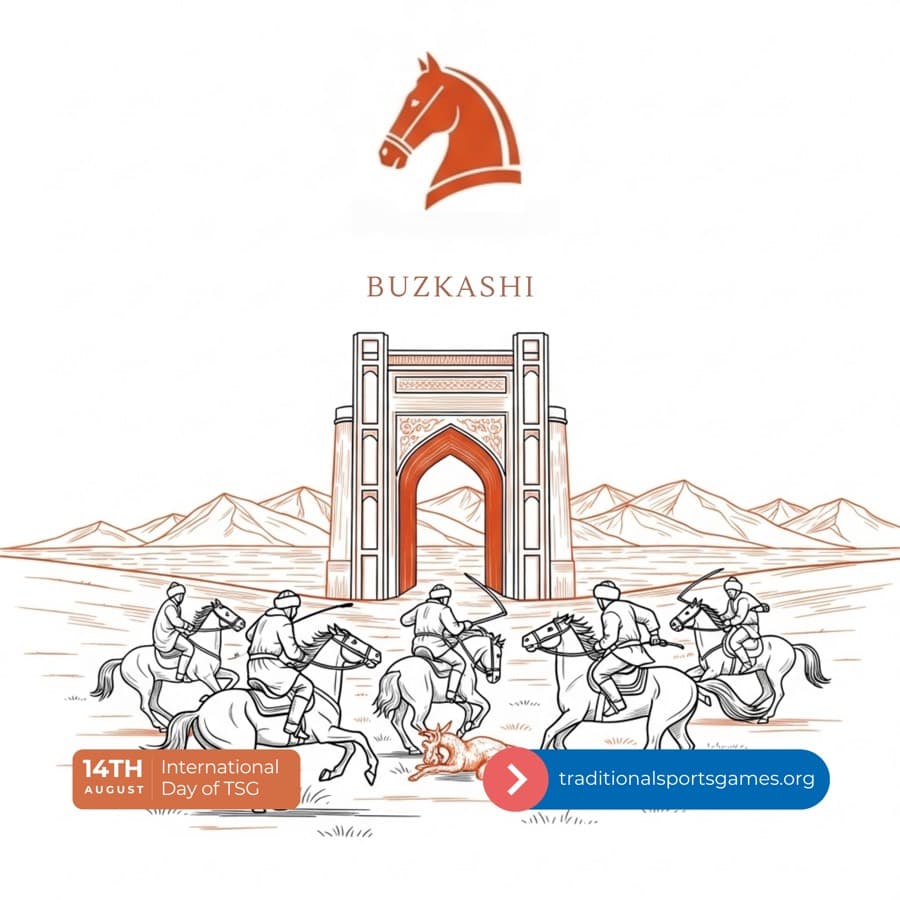
Buzkashi – The Traditional Equestrian Sport of Central Asia Buzkashi, meaning "goat grabbing" in Persian, is a traditional equestrian sport deeply embedded in the cultural fabric of Central Asia. Played in Afghanistan, Kazakhstan, Kyrgyzstan, Tajikistan, and Uzbekistan, this sport is a testament to indigenous knowledge, intergenerational transmission, and the safeguarding of intangible heritage. Historical Background Originating around 1272 BC, Buzkashi has been a symbol of strength, strategy, and endurance among Turkic and Persian communities. Historically, it was played by nomadic tribes as a demonstration of horsemanship and warrior skills. Gameplay and Rules
Teams usually consist of 10 riders, but only five from each team play per half. The playing field is often a square, each side measuring 400 meters. The game involves riders competing to seize and retain control of a goat or calf carcass weighing between 20 to 50 kg. Each half lasts 45 minutes, with a 15-minute break in between. Two main forms exist:
Traditional (Tūdabarāy): No formal teams or boundaries. Government-sponsored (Qarajāy): Defined fields, flags, and scoring circles.
Common etiquette prohibits biting, hair-pulling, grabbing reins, or using weapons.
Cultural Significance Buzkashi is more than a sport—it is a performing art and a social practice that fosters community participation and civil society engagement. It plays a crucial role in intergenerational transmission, ensuring that youth empowerment and cultural diversity remain at the forefront of sustainable development. Strategic Aspects Expert riders, known as chapandāzān, exhibit exceptional horsemanship and tactical skills. The game demands physical endurance, strategic maneuvering, and teamwork, making it a revered tradition among Central Asian equestrian sports. Educational Value and Community Impact
Promotes inclusive education by teaching traditional skills. Enhances global health through physical activity. Strengthens cultural identity and indigenous knowledge. Encourages youth participation and leadership.
UNESCO and Sustainable Development Goals (SDGs) Buzkashi aligns with UNESCO’s mission to safeguard intangible heritage and promote sustainable development. It supports:
SDG 4: Quality education through cultural learning. SDG 5: Gender equality by encouraging participation. SDG 10: Reduced inequalities through inclusive sports. SDG 11: Sustainable cities and communities by preserving heritage. SDG 16: Peace and justice through cultural diplomacy. SDG 17: Partnerships for the goals via international cooperation.
Similar Traditional Games Explore other traditional equestrian sports and games from different regions:
Kok Boru (Kyrgyzstan) Bandy (Russia) Pato (Argentina)
Call to Action Join the movement to preserve and promote traditional sports and games. Get involved, support indigenous heritage, and become a part of the ICTSG community. Get Involved Benefits of Joining Support ICTSG About ICTSG: The International Council of Traditional Sports and Games (ICTSG) is dedicated to preserving, promoting, and revitalizing traditional sports and games as powerful tools for education, peace, and sustainable development.
About Us History Contact
When a sport disappears, it is like a language no longer spoken - its stories, values, and lessons risk being lost forever. When we revive a game, we revive a culture.
Khalil Ahmed Khan - President, ICTSG