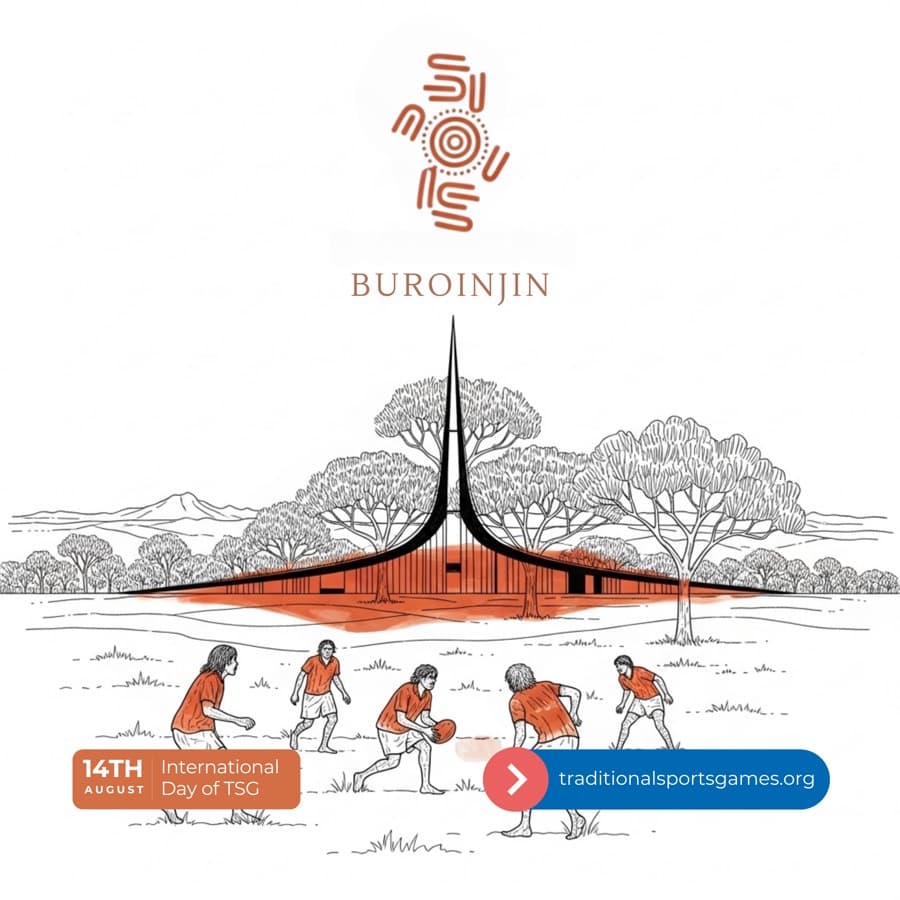
Buroinjin – Indigenous Australian Ball Game Promoting Agility, Culture, and Community Buroinjin is a traditional Indigenous Australian ball game originally played by the Murris—Aboriginal people from Queensland. It combines fast-paced action with strategic team play, fostering physical fitness, cooperation, and cultural pride. Recognized for its contribution to intangible heritage, Buroinjin aligns with ICTSG and UNESCO’s vision of preserving traditional sports and games (TSG) as tools for education, peace, and sustainable development. Historical Background The game originated among Aboriginal communities and was typically played with a ball made from kangaroo skin. Buroinjin was not just a sport but a social practice integrated into daily life and community gatherings. It symbolized indigenous knowledge systems and served as a platform for intergenerational transmission of values and skills. Gameplay and Rules
Team Size: 5 to 7 players per team. Objective: To score by running the ball across the opponent’s goal line. Ball: Traditionally made of kangaroo hide; modern versions use soft rubber balls. Passing: Players can run while holding the ball but must pass it to avoid being tagged. Field: Open flat land or grassy field, approximately 40 x 20 meters. Tags: Defensive players tag ball carriers using open-hand touches; no tackling is allowed.
Cultural and Educational Significance Buroinjin serves as a powerful educational and cultural tool:
Reinforces respect, discipline, and cooperation. Teaches teamwork, strategy, and leadership. Encourages inclusive education and is suitable for school settings and community festivals. Supports youth empowerment by fostering confidence and belonging. Facilitates intercultural dialogue when played in diverse settings.
Strategic and Physical Benefits
Enhances agility, speed, and coordination. Promotes strategic decision-making under pressure. Improves cardiovascular health and physical literacy. Offers a low-contact, accessible format for all ages and genders.
Community Participation and Global Impact
Fosters community participation through local tournaments and cultural days. Encourages civil society engagement in preserving Indigenous traditions. Promotes social inclusion and cultural pride in Indigenous youth. Builds cultural bridges through adaptation in multicultural educational settings.
Alignment with UNESCO Sustainable Development Goals
SDG 4 – Quality Education: Facilitates holistic learning and life skills. SDG 5 – Gender Equality: Played by boys and girls alike in modern programs. SDG 10 – Reduced Inequalities: Reconnects marginalized youth with heritage. SDG 11 – Sustainable Communities: Promotes cultural preservation through play. SDG 16 – Peace & Justice: Encourages peaceful interaction and rule-based play. SDG 17 – Partnerships: Supports collaboration between schools, NGOs, and cultural institutions.
Related Traditional Games
Pasuckuakohowog (USA) – A Native American ball game emphasizing endurance and strategy. Ulama (Mexico) – A Mesoamerican ball game with deep cultural roots and ceremonial relevance. Sipa (Philippines) – A foot-based traditional game promoting dexterity and rhythm.
Call to Action – Help Keep Buroinjin Alive By playing, sharing, and teaching Buroinjin, we strengthen Indigenous identity, bridge generations, and preserve cultural diversity. Join the ICTSG in promoting traditional games as inclusive, educational tools for peace and sustainability. Get Involved Benefits of Joining Support ICTSG About ICTSG: The International Council of Traditional Sports and Games (ICTSG) is dedicated to preserving, promoting, and revitalizing traditional sports and games as powerful tools for education, peace, and sustainable development.
About Us History Contact
When a sport disappears, it is like a language no longer spoken - its stories, values, and lessons risk being lost forever. When we revive a game, we revive a culture.
Khalil Ahmed Khan - President, ICTSG