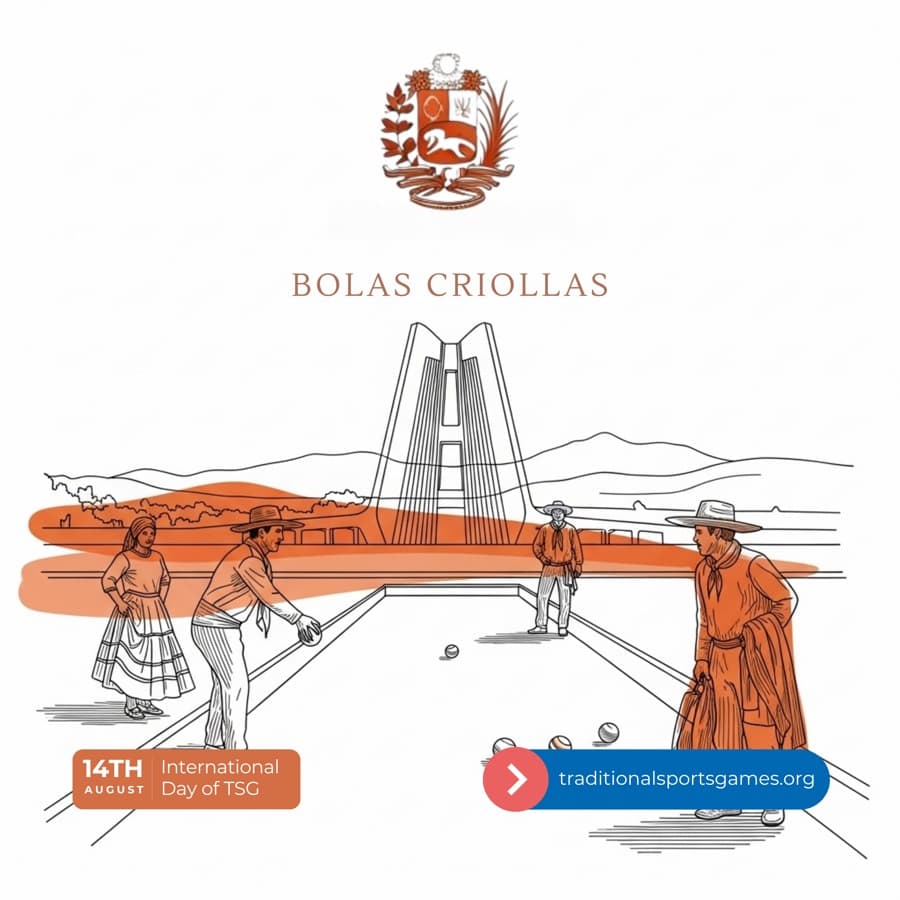
Bolas Criollas: Preserving Venezuela’s Rural Bowling Heritage Bolas Criollas is a beloved traditional South American game, widely played in rural Venezuela and known in Brazil as Bocha. This culturally rich bowling game shares similarities with the Italian sport Bocce, emphasizing precision, strategy, and community connection. More than just a sport, Bolas Criollas reflects the principles of traditional sports and games (TSG), indigenous knowledge, and cultural safeguarding as recognized by UNESCO and the International Council of Traditional Sports and Games (ICTSG). Historical Background and Cultural Significance Rooted in the Venezuelan countryside, Bolas Criollas has evolved over generations as a symbol of local identity and pride. It is often played during community festivals, social gatherings, and national holidays, particularly in states such as Lara, Barinas, and Portuguesa. Its Brazilian variant, Bocha, is equally significant in regional sporting culture and reflects shared South American heritage. Gameplay and Rules
Each game is played by two teams of one to three players. Players throw large wooden or synthetic balls toward a smaller white target ball, known as the Mingo. Points are awarded for balls that land closest to the Mingo. Games are typically played on a sand or clay court measuring around 20 meters in length. Strategic throwing, blocking, and ball placement are key to winning.
Social Practice and Strategic Play Bolas Criollas emphasizes community participation and inclusive social practice. Whether in rural villages or urban barrios, it brings together individuals of all ages and backgrounds, reinforcing intergenerational transmission of knowledge and sportsmanship. It fosters civil society engagement, helps reduce barriers to participation, and is adaptable for players of varying physical abilities. Benefits, Education, and Cultural Value
SDG 4 (Quality Education): Promotes learning through physical activity, math (scoring), and cultural storytelling. SDG 5 (Gender Equality): Welcomes women and men in equal roles, supporting gender-balanced play. SDG 10 (Reduced Inequality): Widely played across social and economic classes with minimal resources required. SDG 11 (Sustainable Communities): Encourages cultural heritage practices that unite diverse populations. SDG 16 (Peace and Justice): Enhances respect, dialogue, and peaceful competition. SDG 17 (Global Partnerships): Strengthens cultural exchange across Latin America and globally.
Similar Traditional Games Around the World Bolas Criollas shares features with other global TSGs such as:
Balle au Tambourin (France) – A court game emphasizing teamwork and coordination Pittu Garam (South Asia) – Involving precision and group tactics Klootschieten (Netherlands) – A distance-throwing ball game with similar strategic aims
Call to Action: Engage, Educate, Preserve Bolas Criollas is more than a rural pastime—it is a vessel of heritage, inclusion, and joy. Let us work together to promote its presence in schools, festivals, and community centers worldwide. Support traditional sports like Bolas Criollas and help build bridges between generations, cultures, and countries. Get Involved Benefits of Joining Support ICTSG About ICTSG: The International Council of Traditional Sports and Games (ICTSG) is dedicated to preserving, promoting, and revitalizing traditional sports and games as powerful tools for education, peace, and sustainable development.
About Us History Contact
When a sport disappears, it is like a language no longer spoken - its stories, values, and lessons risk being lost forever. When we revive a game, we revive a culture.
Khalil Ahmed Khan - President, ICTSG