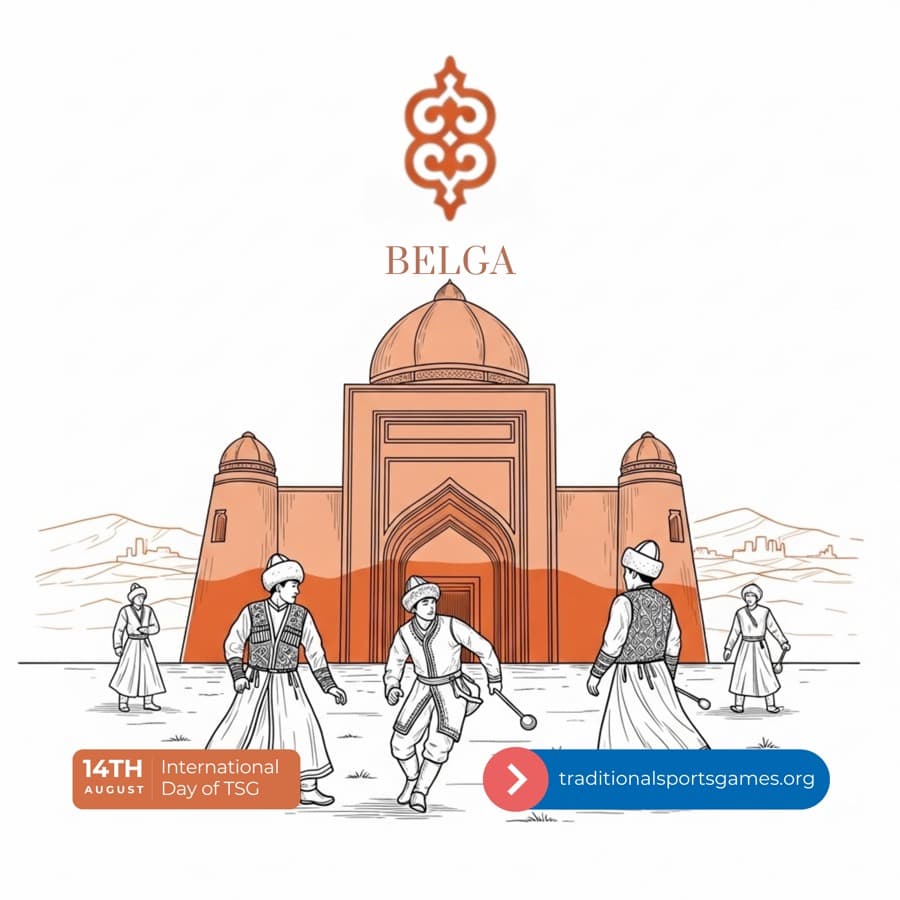
Belga: Reviving Kazakhstan’s Enduring Nomadic Stick-and-Ball Tradition Belga is a centuries‑old nomadic stick‑and‑ball game from Kazakhstan—an expression of indigenous knowledge, intangible heritage, and traditional sports and games (TSG) rooted in rural life :contentReference[oaicite:3]{index=3}. Historical & Cultural Background Known simply as Belga, this game was historically played by nomadic herders during communal gatherings and festivals. Its origins lie in pastoral Kalmyk and Kazakh society, fostering community solidarity and active cultural transmission. Gameplay & Equipment
Teams: Two groups—players use wooden sticks to strike a ball. Ball & Sticks: Locally sourced wood, simple craftsmanship. Field: Open grasslands or communal courtyards with makeshift goals. Rules: Scores made by directing the ball into opponent’s zone; exact rules vary regionally, emphasizing community flexibility and local adaptation.
Cultural Significance & Social Practice Belga acts as a performing art—highlighting communal unity and intergenerational transmission as elders teach youth. It supports rural traditions, inviting social cohesion and civil society engagement. Strategic Aspects & Benefits
Coordination & agility: Requires timing and teamwork. Inclusive education: Easily taught in schools without high costs. Youth empowerment: Builds leadership, physical fitness, and cultural pride. Global health: Encourages physical activity in open-air settings.
Alignment with UNESCO SDGs
SDG 4: Quality education through culturally rooted play. SDG 5: Gender inclusion through community participation. SDG 10: Reducing rural inequalities via access to play. SDG 11: Preserving cultural identity in nomadic communities. SDG 16: Promoting social harmony and rule-guided interaction. SDG 17: Strengthening partnerships among schools, communities, and ICTSG.
Related Traditional Games
Beikou (Inner Mongolia) – Stick-and-ball fire‑lit hockey. Bando (Myanmar) – Fields players rallying a ball with sticks. Asyk Atu (Kazakhstan) – Sheep-bone tossing promoting aim and tradition :contentReference[oaicite:4]{index=4}.
Call to Action We encourage educators, cultural workers, and rural communities to help recover Belga: document its regional rules, introduce it into PE programs, and showcase it at festivals to empower youth and keep heritage alive. Get Involved Benefits of Joining Support ICTSG
About ICTSG: ICTSG supports the documentation and revitalization of traditional games like Belga, promoting inclusivity, cultural diversity, and community-led sports initiatives worldwide. About Us | History | Contact
When a sport disappears, it is like a language no longer spoken - its stories, values, and lessons risk being lost forever. When we revive a game, we revive a culture.
Khalil Ahmed Khan - President, ICTSG