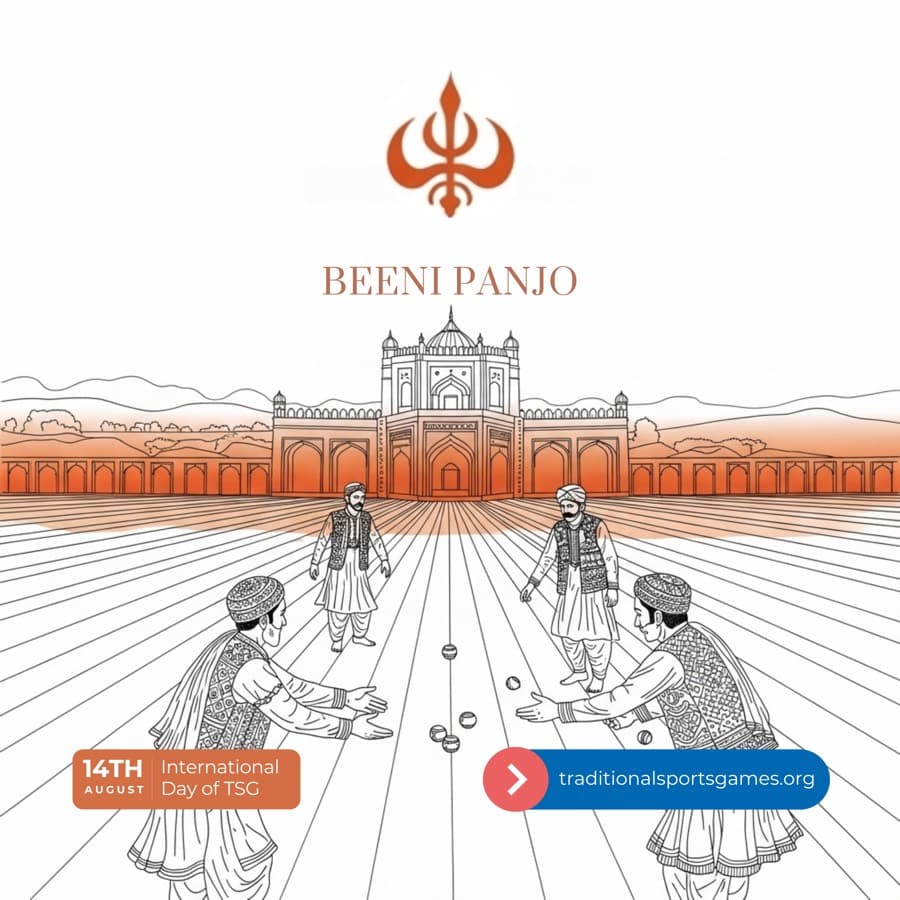
Beeni Panjo: India’s Indigenous Arm-Wrestling Game of Strength and Heritage Beeni Panjo is a traditional arm-wrestling game deeply embedded in the rural social fabric of India. This age-old contest of strength and technique reflects indigenous knowledge, intangible cultural heritage, and community participation, aligning strongly with UNESCO’s efforts toward safeguarding traditional sports and games (TSG). Historical and Cultural Background Originating in Indian villages, Beeni Panjo has long served as a platform for friendly rivalry and intergenerational transmission. It often takes place during fairs, festivals, and local gatherings, encouraging both athletic prowess and social bonding. The game is a symbol of resilience and cultural continuity. Rules and Gameplay
Two players sit across from each other at a flat surface or traditional wooden table. Elbows are placed on the table, hands locked in an upright position. The objective is to pin the opponent’s hand to the table surface using only arm strength and strategic positioning. Referees from the community ensure fairness and safety during the match.
Cultural Significance Beeni Panjo is not just about strength—it embodies trust, sportsmanship, and the honoring of ancestral practices. It is part of the social practices that connect youth with their roots and elders with legacy, reflecting India's rich cultural diversity. Educational Value and Youth Empowerment Beyond physical development, Beeni Panjo serves as a vital medium for inclusive education. It nurtures discipline, respect, and critical thinking while providing a culturally rich environment for youth empowerment. Benefits of Beeni Panjo
Physical Fitness: Enhances upper-body strength, coordination, and endurance. Emotional Balance: Encourages emotional control and fair play. Community Bonding: Strengthens social cohesion and inter-village relationships. Heritage Transmission: Offers platforms for elders to share stories, skills, and local values.
Strategic Importance and Skill Development Beeni Panjo requires more than brute force. Participants train in wrist control, leverage, and psychological readiness. This performing art of physical engagement offers both spectacle and substance, promoting civil society engagement through inclusive competition. UNESCO’s SDG Alignment
SDG 4: Quality Education through informal, experiential learning SDG 5: Gender inclusivity (women’s participation in local variants) SDG 10: Reduced Inequalities through rural inclusion and accessibility SDG 11: Sustainable Communities by celebrating local customs SDG 16: Peace and Social Justice via conflict-free engagement SDG 17: Partnerships through local, regional, and national cultural bodies
Related Traditional Games
Mukna – Indigenous wrestling from Manipur, India Mali Yuddha – Ancient Indian combat sport Kabaddi – Tag-based power game from South Asia
Community Impact and Cultural Preservation Beeni Panjo fosters global health and unity by promoting a healthy, heritage-based lifestyle. It encourages community participation, especially in remote or underrepresented areas, creating bonds and safeguarding a shared cultural future. Call to Action Support the preservation and revitalization of Beeni Panjo. Engage in training programs, share knowledge, or help document the game in your region. Together, we safeguard traditions and empower future generations. Get Involved Benefits of Joining Support ICTSG
About ICTSG The International Council of Traditional Sports and Games (ICTSG) works globally to safeguard cultural diversity through sport. Promoting peace, sustainability, and youth engagement, ICTSG empowers communities to thrive. Learn more via About Us, our History, and Contact page.
When a sport disappears, it is like a language no longer spoken - its stories, values, and lessons risk being lost forever. When we revive a game, we revive a culture.
Khalil Ahmed Khan - President, ICTSG