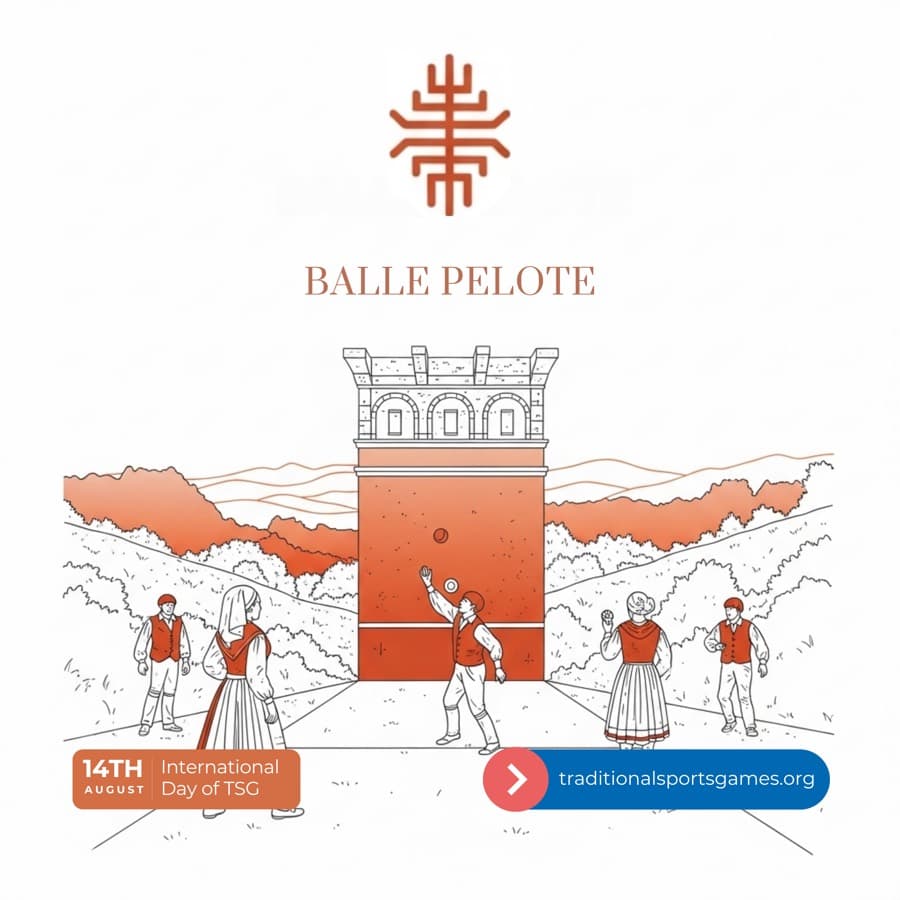
Balle Pelote – A Traditional Walloon Hand Ball Game from Belgium Balle Pelote is a cherished traditional sport and game (TSG) native to the Wallonia region in Belgium. This dynamic hand ball competition not only exemplifies European sporting heritage but also serves as a vibrant expression of intangible cultural heritage aligned with UNESCO’s safeguarding principles. Historical Background The origins of Balle Pelote date back several centuries and are deeply rooted in rural Belgian communities. Once a popular form of entertainment across village squares, it evolved into a formalized sport by the 19th century. It reflects the transmission of indigenous knowledge and cultural identity through generations. Gameplay and Rules The game is typically played between two teams of five players on an open-air court. Key gameplay elements include:
Each player uses a gloved hand to hit a leather-covered ball. The objective is to strike the ball past the opponent's defensive line to score points. Games are usually played up to 6 games, with multiple sets. Precision, teamwork, and spatial awareness are essential strategic components.
Cultural Significance Balle Pelote serves as a symbol of Walloon identity and European cultural diversity. Often played during local festivals, it fosters social practices and community participation, contributing to intergenerational transmission and inclusive education within rural regions. Benefits and Educational Value
Enhances motor coordination and teamwork. Promotes youth engagement and physical well-being. Acts as an educational tool for teaching historical, linguistic, and social traditions. Supports the preservation of performing arts associated with ceremonial match openings and uniform designs.
Strategic Importance for Heritage Safeguarding As a living example of intangible heritage, Balle Pelote embodies key aspects of UNESCO’s Sustainable Development Goals:
SDG 4: Quality education through cultural learning. SDG 5: Gender equity in traditional and community-based sports. SDG 10: Reducing inequalities via heritage inclusion. SDG 11: Sustainable communities preserving local identity. SDG 16: Peaceful institutions through sport. SDG 17: Partnerships through ICTSG and civil society engagement.
Global and Regional Connections Balle Pelote shares commonalities with similar European handball games like:
Balle au Tambourin – France Kaatsen – Netherlands Pelota Mixteca – Mexico
Community Impact and Civil Society Engagement Balle Pelote enhances community participation, revitalizes public spaces, and encourages youth empowerment. Local clubs and municipalities work collaboratively with schools to integrate the game into educational curricula, aligning with ICTSG goals for inclusive, equitable heritage sport education. Call to Action Join us in preserving, educating, and participating in Balle Pelote and other traditional sports. Help safeguard indigenous heritage while fostering social connection, physical health, and cultural pride across generations. Get Involved Benefits of Joining Support ICTSG
About ICTSG The International Council of Traditional Sports and Games (ICTSG) is a global platform dedicated to safeguarding and promoting traditional sports and games through collaboration, education, and cultural sustainability. About Us History Contact
When a sport disappears, it is like a language no longer spoken - its stories, values, and lessons risk being lost forever. When we revive a game, we revive a culture.
Khalil Ahmed Khan - President, ICTSG