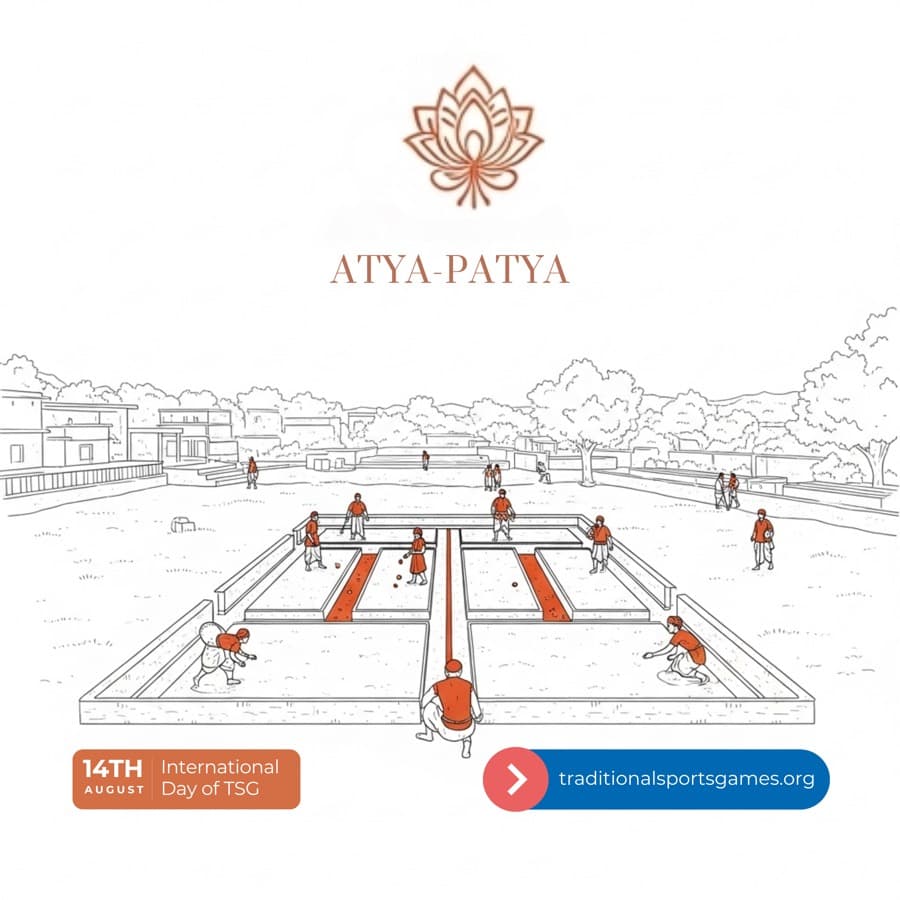
Atya-Patya: India’s Traditional Trench Tag Game Safeguarding Heritage and Empowering Communities Atya-Patya is a high-energy traditional sport and game (TSG) from India played on a field with strategically placed trenches. With deep roots in cultural practices and community gatherings, this tag-style sport serves as a bridge between generations and a powerful tool for youth empowerment, inclusive education, and indigenous knowledge preservation. Historical Background
Originating in Maharashtra, India, Atya-Patya is mentioned in ancient Indian literature and epics. Historically used as a training drill for warriors, the game emphasizes reflexes, agility, and strategy. Once a common feature in rural festivals and temple fairs, Atya-Patya is now regaining recognition through community and school events.
Gameplay and Rules
Field Design: Played on a rectangular court divided into trenches (narrow lanes), usually nine total. Teams: Two teams of nine players each alternate between attacking and defending. Objective: Attackers attempt to cross the trenches without being tagged by defenders. Time Limit: Each round is timed, and points are scored based on successful trench crossings.
Cultural and Educational Significance
Embodies social practices and community rituals passed down through generations. Encourages intergenerational transmission of indigenous physical games and values. Offers opportunities for inclusive education by engaging youth from diverse backgrounds. Acts as a performing art of movement, celebrating rhythm, timing, and body intelligence.
Benefits and Strategic Aspects
Promotes mental agility and decision-making under pressure. Inspires team spirit and civil society engagement in rural and urban settings. Improves physical fitness, balance, and reflexes in youth. Encourages the revival of traditional sports and games in sustainable ways.
Alignment with UNESCO Sustainable Development Goals
SDG 4 – Quality Education: Integrates movement-based learning in physical education curriculum. SDG 5 – Gender Equality: Actively involves both girls and boys with equitable rules and roles. SDG 10 – Reduced Inequalities: Accessible to all communities, bridging urban-rural divides. SDG 11 – Sustainable Cities and Communities: Utilizes public spaces for meaningful community recreation. SDG 16 – Peace and Justice: Cultivates respect, discipline, and rule-following through fair play. SDG 17 – Partnerships: Promoted globally by the International Council of Traditional Sports and Games (ICTSG) to strengthen TSG networks.
Global Relevance and Related Traditional Games Atya-Patya’s structure and cultural purpose connect it with similar tag-based and trench-style traditional games worldwide:
Langdi – India Kho Kho – India Harpastum – Italy Bokk Takraw – Southeast Asia
Community Impact
Reinforces community participation through localized competitions and youth festivals. Promotes global health by encouraging active outdoor lifestyles. Strengthens cultural pride and local identity through safeguarding intangible heritage.
Call to Action: Safeguard Atya-Patya for Future Generations Atya-Patya is more than a game—it’s a living cultural heritage. Support its revival through community events, school inclusion, and global advocacy. Let us work together to protect and promote this invaluable treasure of traditional sports. Get Involved Benefits of Joining Support ICTSG
About ICTSG: The International Council of Traditional Sports and Games (ICTSG) is dedicated to preserving, promoting, and empowering traditional games like Atya-Patya across cultures. Learn more:
About Us History Contact
When a sport disappears, it is like a language no longer spoken - its stories, values, and lessons risk being lost forever. When we revive a game, we revive a culture.
Khalil Ahmed Khan - President, ICTSG