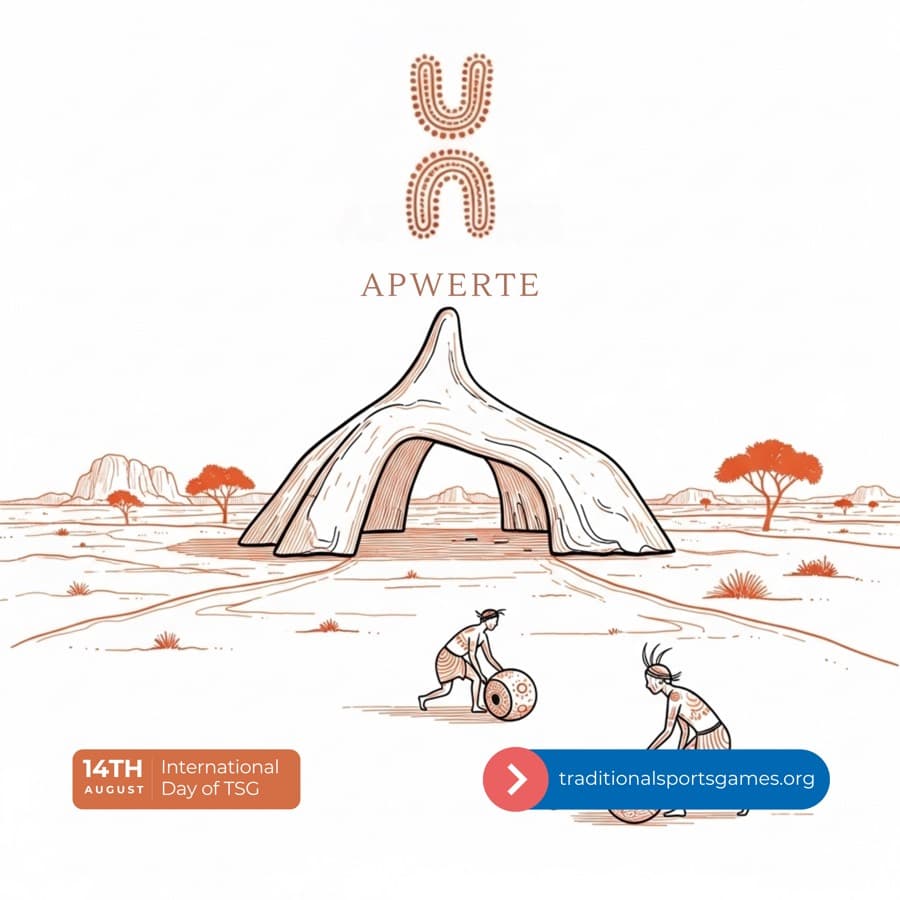
Apwerte – Traditional Aboriginal Game of Precision and Skill from Australia Apwerte is a traditional precision-based game played by Aboriginal communities in Central Australia. Passed down through generations, Apwerte highlights the deep connection between play, environment, and culture, emphasizing values of patience, coordination, and intergenerational respect. This game aligns with the mission of the International Council of Traditional Sports and Games (ICTSG) and UNESCO’s agenda to safeguard intangible cultural heritage and promote inclusive education and sustainable development. Historical and Cultural Background Rooted in the traditions of the Arrernte people of the Northern Territory, Apwerte was traditionally played with spears or similar projectiles thrown at rolling targets across flat terrain. The game simulated hunting scenarios and developed the skills needed for survival. It also served as a social practice bringing together different generations for learning, bonding, and cultural transmission. Gameplay Rules and Equipment
Players: Typically 2–6 players per game, suitable for all age groups. Objective: Hit a small, rolling disc or target (traditionally a circular object or bark) using a spear or stick. Materials: Wooden spears, throwing sticks, and rolling discs carved from bark or wood. Field Setup: A flat, open area where the disc can roll at a distance of 5 to 20 meters. Scoring: Points awarded based on accuracy and distance of the throw.
Cultural Significance Apwerte is more than a game—it’s a method of preserving indigenous knowledge, refining motor skills, and honoring ancestral practices. It served educational and ceremonial roles, reinforcing community cohesion, youth empowerment, and intergenerational transmission of cultural values. Strategic Aspects and Educational Value
Improves hand-eye coordination, focus, and spatial awareness. Encourages logical thinking and anticipation skills. Teaches patience, discipline, and cultural narratives through practice. Supports inclusive education across formal and informal learning environments. Integrates traditional environmental knowledge and respect for land.
Community and Social Impact
Revives pride in Aboriginal heritage and cultural diversity. Encourages community participation through festivals, schools, and local initiatives. Promotes healthy lifestyles and outdoor play, enhancing global health. Facilitates civil society engagement through youth programs and cultural centers.
Alignment with UNESCO SDGs Apwerte supports the UNESCO Sustainable Development Goals (SDGs) through cultural preservation, education, and social inclusion:
SDG 4 – Quality Education: Empowers indigenous youth through experiential learning. SDG 5 – Gender Equality: Accessible and inclusive for all genders in Aboriginal communities. SDG 10 – Reduced Inequalities: Bridges educational and cultural gaps in remote regions. SDG 11 – Sustainable Cities and Communities: Strengthens cultural identity and local knowledge systems. SDG 16 – Peace and Justice: Promotes fairness, discipline, and non-violent competition. SDG 17 – Partnerships: Encourages cooperation between schools, NGOs, and indigenous communities.
Related Traditional Games
Behempas (Indonesia) – Rattan stick combat with defensive tactics. Angkunh (Cambodia) – Throwing game using wooden fruit-like objects. Kho-Kho (India) – Tag game that tests agility and tactical thinking.
Call to Action – Safeguard and Share the Spirit of Apwerte Preserving traditional games like Apwerte is essential for keeping indigenous knowledge systems alive. These games are not only play—they are carriers of cultural identity, educational value, and community resilience. Join ICTSG and global partners in preserving, practicing, and promoting traditional sports and games worldwide. Get Involved Benefits of Joining Support ICTSG About ICTSG: The International Council of Traditional Sports and Games (ICTSG) is dedicated to preserving, promoting, and revitalizing traditional sports and games as powerful tools for education, peace, and sustainable development.
About Us
When a sport disappears, it is like a language no longer spoken - its stories, values, and lessons risk being lost forever. When we revive a game, we revive a culture.
Khalil Ahmed Khan - President, ICTSG