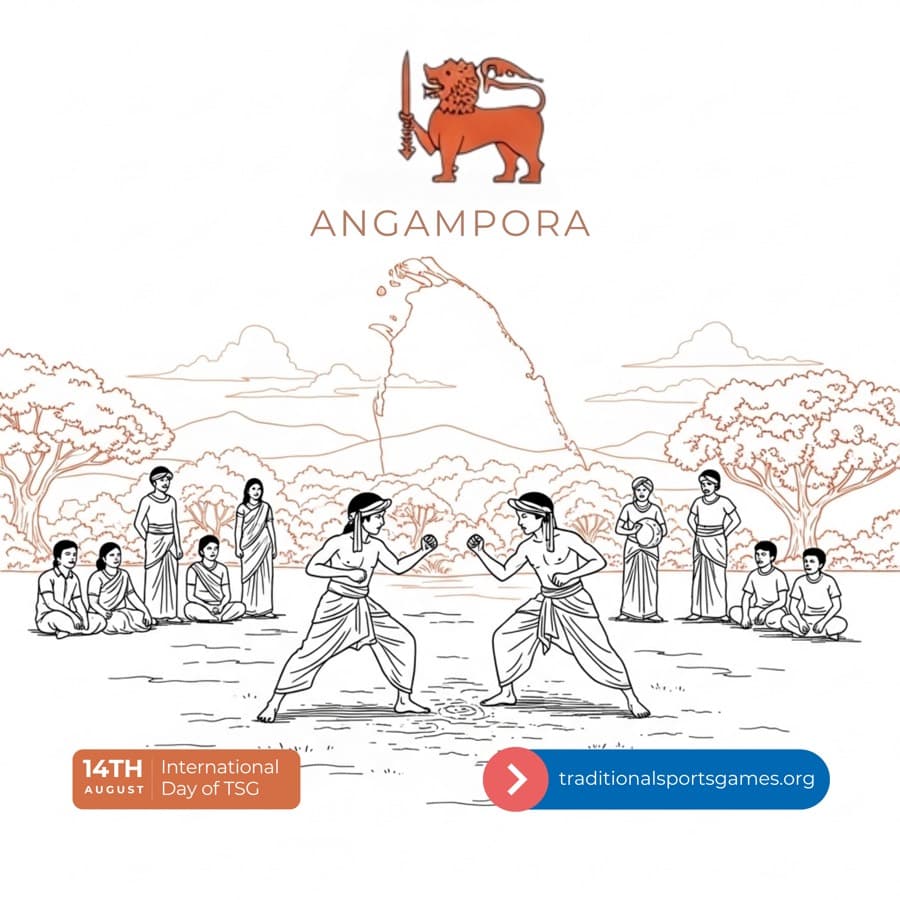
Angampora: Sri Lanka’s Ancient Martial Art of Cultural Preservation and Empowerment Angampora is one of Sri Lanka’s oldest and most revered traditional sports and games (TSG), blending unarmed combat, weapon techniques, and artistic movements. As a living form of indigenous knowledge, Angampora holds deep significance in the preservation of intangible heritage and Sri Lankan identity. Historical Background of Angampora
Originated over 2,000 years ago during the Anuradhapura and Kandy Kingdoms in Sri Lanka. Practiced secretly under colonial rule as it was banned by British authorities in the 19th century. Revived in recent decades by cultural custodians to ensure safeguarding of heritage.
Combat Techniques and Training Structure Angampora is a comprehensive martial art incorporating both spiritual and physical discipline. It consists of:
Unarmed combat (Angam): Includes grappling, strikes, and locks. Weaponry (Illangam): Techniques with swords, staves, and knives. Meditative practices: Breathing techniques and mental control for harmony. Performing arts: Ritualized demonstrations infused with cultural symbolism.
Cultural Significance and Intergenerational Transmission
Passed down from generation to generation through oral instruction and physical training. Strengthens social practices and familial bonds through community-based teaching. Promotes inclusive education by welcoming both men and women into its traditions. Serves as a symbol of national resilience and identity preservation.
Educational Value and Youth Empowerment Angampora is deeply aligned with TSG educational goals, especially in empowering younger generations through:
Self-discipline and mental focus cultivated through ritualized training. Development of strategic thinking and coordination in learners of all ages. Opportunities for youth leadership and mentorship within their communities. Preservation of cultural diversity through active practice and storytelling.
UNESCO’s SDGs and the Relevance of Angampora By preserving Angampora, we directly contribute to multiple UNESCO Sustainable Development Goals (SDGs):
SDG 4: Ensuring inclusive, equitable, quality education through cultural practices. SDG 5: Promoting gender equality by encouraging female participation. SDG 10: Reducing inequalities by supporting cultural heritage access in rural areas. SDG 11: Making cities inclusive and sustainable by integrating cultural identity. SDG 16: Promoting peaceful societies through respect-based martial disciplines. SDG 17: Fostering global partnerships to safeguard intangible heritage.
Community Participation and Global Health Benefits
Enhances civil society engagement through festivals and cultural events. Promotes global health by encouraging physical fitness and emotional balance. Builds resilient communities through collective training and cultural pride.
Similar Traditional Martial Practices Worldwide Explore related martial traditions on the TSG platform:
Silambam – India Pencak Silat – Indonesia Taekkyeon – Korea Capoeira – Brazil
Safeguarding Through Participation: Join the Movement Angampora is more than a martial art—it's a living expression of culture, discipline, and peace. Let’s protect and promote it globally. Become a part of the movement supporting traditional sports and games and enriching future generations. Get Involved Benefits of Joining Support ICTSG
About ICTSG: The International Council of Traditional Sports and Games (ICTSG) is committed to preserving cultural identity through traditional games and martial arts. Learn more about our mission, heritage, and contact details below:
About Us History Contact
When a sport disappears, it is like a language no longer spoken - its stories, values, and lessons risk being lost forever. When we revive a game, we revive a culture.
Khalil Ahmed Khan - President, ICTSG