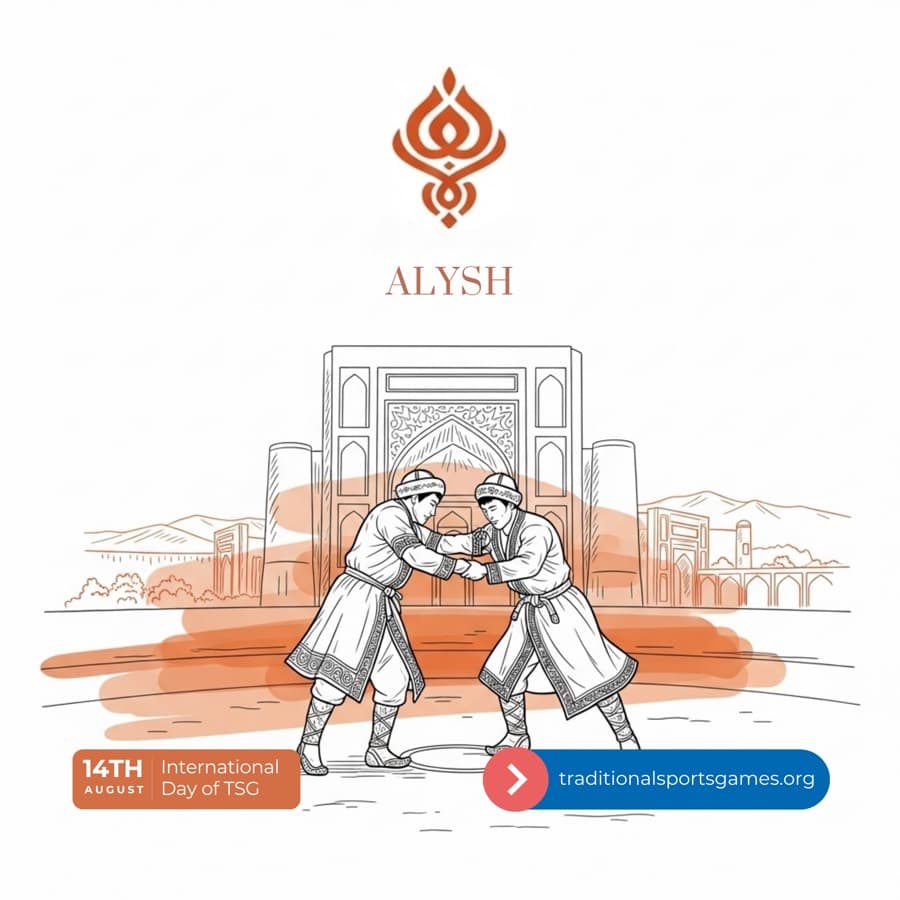
Alysh: Kyrgyzstan’s Intangible Heritage of Belt Wrestling Empowering Youth and Cultural Identity Alysh, the traditional belt wrestling of Kyrgyzstan, stands as a powerful symbol of traditional sports and games (TSG), deeply rooted in indigenous knowledge and intangible cultural heritage. Passed through generations, it plays a vital role in the safeguarding of cultural identity, youth development, and community pride, aligning with the values of ICTSG and UNESCO. Historical Background Dating back centuries, Alysh evolved among the nomadic tribes of Central Asia. Traditionally practiced during festivals, ceremonies, and rural gatherings, it served both as physical training for warriors and a demonstration of cultural pride and honor. Gameplay Rules and Format Alysh is a regulated sport today, with defined weight categories and international championships, but retains its traditional essence.
Two opponents grip each other using a belt wrapped around their waists. The objective is to throw the opponent onto the mat using balance, strength, and technique. Victory is awarded based on throws, pins, and point accumulation. Respect, fairness, and cultural representation are emphasized.
Cultural Significance and Social Practices Alysh reflects social practices and performing arts of Kyrgyz communities. The sport is often accompanied by music, national dress, and festive ceremonies, fostering a sense of belonging and intergenerational learning. Benefits and Strategic Aspects
Youth empowerment: Inspires resilience, discipline, and teamwork. Inclusive education: Encourages physical education in rural and urban schools. Global health: Supports fitness, motor skills, and mental wellbeing. Civil society engagement: Connects diverse groups through shared tradition. Community participation: Celebrated at local, regional, and national festivals.
UN’s SDG Integration Alysh contributes directly to the United Nations Sustainable Development Goals (SDGs) through the framework of ICTSG:
SDG 4 – Quality Education: Offers lifelong learning through traditional physical education. SDG 5 – Gender Equality: Increasing female participation in Alysh competitions. SDG 10 – Reduced Inequalities: Promotes inclusion across ethnic and socioeconomic groups. SDG 11 – Sustainable Cities and Communities: Strengthens local identity and cultural sustainability. SDG 16 – Peace, Justice and Strong Institutions: Encourages non-violent competition and mutual respect. SDG 17 – Partnerships for the Goals: Facilitates international collaboration through events and federations.
Educational and Community Impact Alysh is more than a sport—it is a channel for intergenerational transmission of heritage and discipline. It strengthens cultural resilience while serving as a bridge between tradition and modern education. Schools and sports academies across Kyrgyzstan use Alysh as a tool to promote healthy lifestyles and cultural awareness among the youth. Explore Related Traditional Sports Discover similar traditional grappling and martial arts forms from other cultures:
Kurash (Uzbekistan) – A traditional upright wrestling style with deep historical roots. Ssireum (Korea) – A Korean wrestling tradition that promotes strength and cultural pride. Nguni Stick Fighting (South Africa) – A symbolic martial art passed down among youth.
Call to Action Support the global safeguarding of traditional sports like Alysh by becoming an active member of the ICTSG movement. Together, we can preserve cultural identity, promote inclusive education, and empower future generations. Get Involved Benefits of Joining Support ICTSG
About ICTSG: The International Council of Traditional Sports and Games (ICTSG) promotes the safeguarding and global recognition of indigenous sports through education, partnerships, and cultural heritage preservation initiatives worldwide. About Us History Contact
When a sport disappears, it is like a language no longer spoken - its stories, values, and lessons risk being lost forever. When we revive a game, we revive a culture.
Khalil Ahmed Khan - President, ICTSG