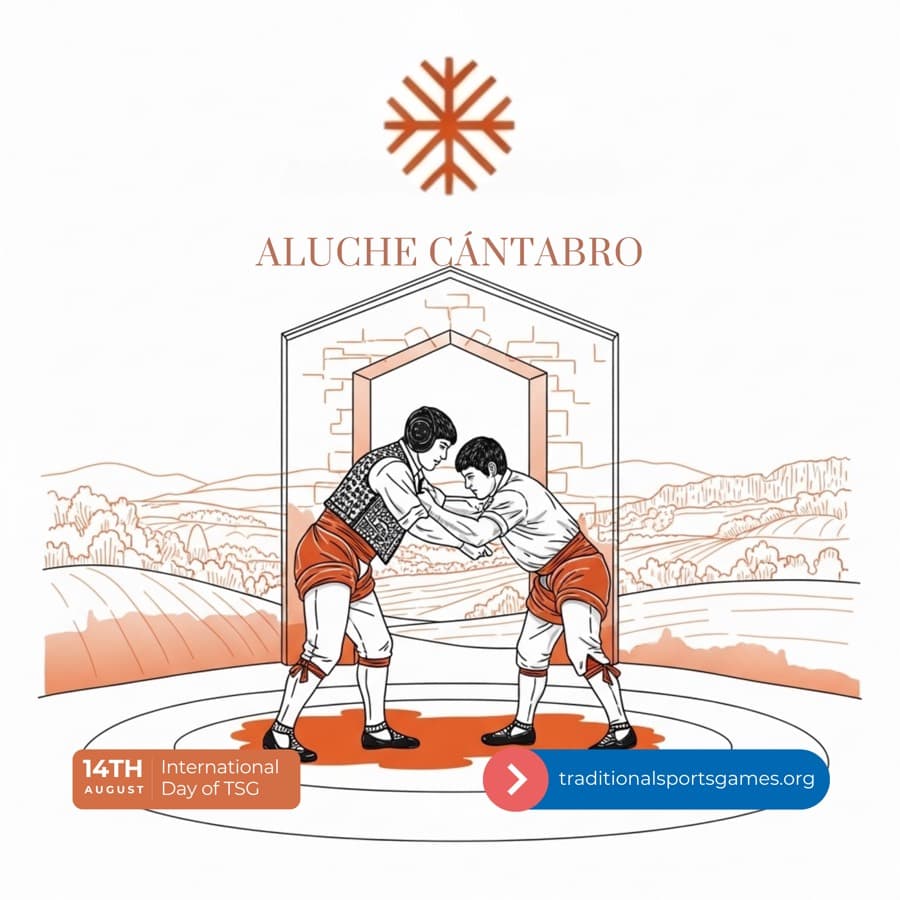
Aluche Cántabro: Spain’s Traditional Wrestling and Symbol of Cultural Resilience Aluche Cántabro is an ancient form of traditional wrestling originating from the mountainous region of Cantabria in northern Spain. With distinctive garments, codified rules, and ritualistic practices, it exemplifies Europe’s rich landscape of traditional sports and games (TSG) and contributes to the safeguarding of intangible heritage in alignment with UNESCO’s global mission. Historical Background Deeply rooted in pre-Roman traditions, Aluche was historically practiced by Cantabrian warriors and rural communities during harvest festivals and community gatherings. Passed down through intergenerational transmission, it served as a rite of passage for youth and a peaceful expression of strength and unity. Rules, Techniques, and Attire Aluche is practiced with a blend of indigenous techniques that emphasize skill over force, making it inclusive and adaptable. The game structure reflects local traditions and social practices specific to the Cantabrian identity.
Attire: Wrestlers wear traditional cloth belts used for gripping, allowing specific techniques unique to Aluche. Gameplay: Two opponents begin in a fixed standing hold and must use balance, leg sweeps, and body pivots to throw the opponent to the ground. Match Format: Matches are often held on grass fields, during cultural festivals, and are judged on technique and sportsmanship. Inclusive Format: Modern adaptations encourage mixed-gender exhibitions and youth participation.
Cultural and Social Significance Aluche is a living testimony of Spain’s cultural diversity and showcases how traditional practices shape local identity. It combines physical activity with ritual elements, performing arts, and communal celebration. Its benefits include:
Promoting social inclusion across genders and generations. Upholding civic values such as respect, honor, and mutual care. Reviving indigenous knowledge systems in physical education and health.
Strategic Aspects and Educational Value As a discipline, Aluche enhances not only body awareness and strategy but also cultural literacy. Through inclusive education, schools and associations now teach Aluche as a holistic learning model. Educational contributions include:
Developing coordination, strategy, and non-violent conflict resolution. Connecting youth to local language, dress, and customs. Strengthening community participation through inter-school competitions and rural festivals.
Health Benefits and Youth Empowerment
Global health: Aluche encourages cardiovascular fitness, strength, and discipline without requiring expensive infrastructure. Youth empowerment: Local clubs mentor young participants, using wrestling to build confidence and community engagement. Civil society engagement: Cultural NGOs and municipal groups organize open exhibitions that welcome tourists and locals alike.
Support for UN’s Sustainable Development Goals
SDG 4: Quality education through local sports integrated into school systems. SDG 5: Empowering girls and women through equal representation in exhibitions and workshops. SDG 10: Reducing inequality by celebrating indigenous practices in national culture. SDG 11: Building sustainable cities through heritage-based tourism and events. SDG 16: Promoting peaceful dialogue through sport-based diplomacy and respect. SDG 17: Strengthening partnerships with ICTSG and other cultural networks.
Global Parallels in Traditional Wrestling
Glima (Iceland) – A Nordic wrestling form with ceremonial roots and similar grips. Schwingen (Switzerland) – Wrestlers use traditional attire and upright techniques like Aluche. Bokh (Mongolia) – Wrestling integrated into nomadic festivals and youth development.
Preservation, Practice, and Community Empowerment Through workshops, school inclusion, and government-backed festivals, Aluche continues to inspire Cantabrian youth and global heritage enthusiasts. Its revival reflects the power of community-led safeguarding and the commitment to sustaining cultural diversity in an era of globalization. Get Involved Benefits of Joining Support ICTSG
About ICTSG: The International Council of Traditional Sports and Games (ICTSG) works to preserve global heritage through sport, empower communities, and inspire peace through traditional practices. It connects nations, cultures, and generations under the shared values of heritage and harmony. About Us History Contact
When a sport disappears, it is like a language no longer spoken - its stories, values, and lessons risk being lost forever. When we revive a game, we revive a culture.
Khalil Ahmed Khan - President, ICTSG