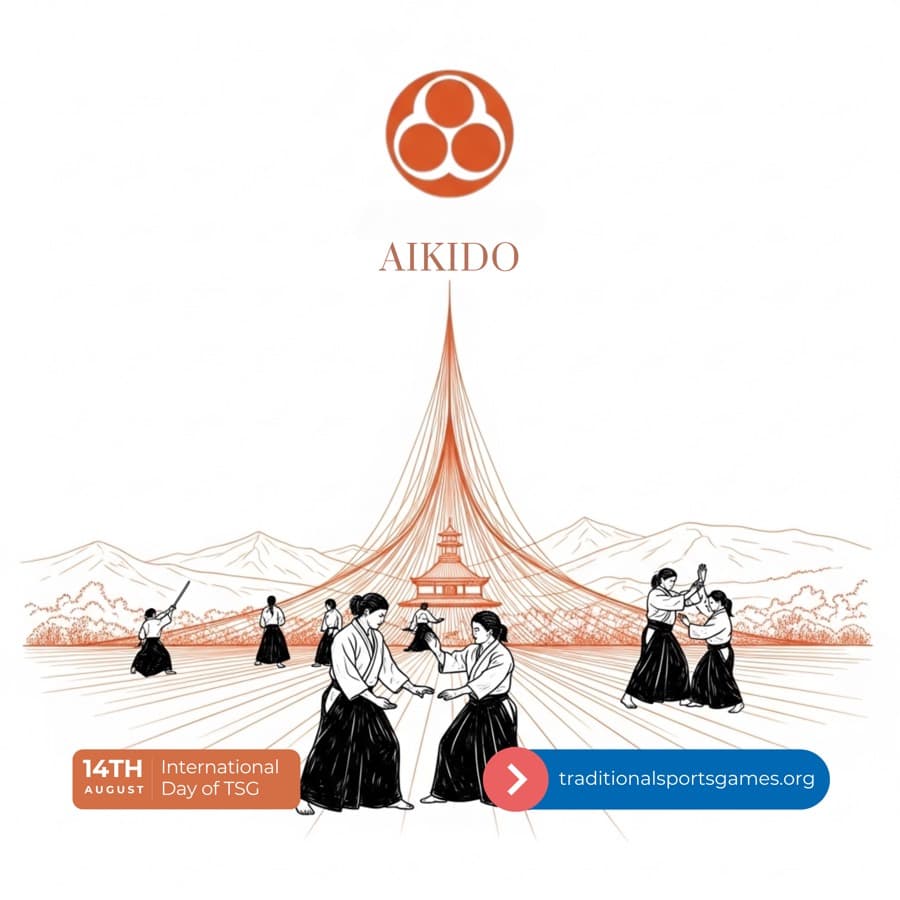
Aikido: Japan’s Intangible Heritage Empowering Peace, Culture, and Intergenerational Learning Aikido is a distinguished Japanese martial art that represents the core principles of harmony, respect, and self-discipline. As a significant part of traditional sports and games (TSG), it serves as a living example of intangible cultural heritage, shaped by indigenous knowledge and safeguarded across generations. Recognized globally, Aikido aligns with the mission of ICTSG and UNESCO to preserve cultural diversity, promote peace, and foster inclusive development. Historical Background Originating in the early 20th century, Aikido was developed by Morihei Ueshiba, who drew inspiration from ancient samurai disciplines like jujutsu and swordsmanship. Ueshiba’s spiritual beliefs and pacifist philosophy shaped Aikido into an art form that seeks to resolve conflict without violence. The name "Aikido" means "the way of harmonizing energy." Gameplay Rules and Techniques Aikido is practiced in dojos and does not follow a competitive format. Instead, it emphasizes cooperative learning, ethical discipline, and self-improvement.
Non-competitive and partner-based learning structure Techniques include joint locks, throws, pins, and redirection of force Use of traditional weapons such as bokken (wooden sword), jo (staff), and tanto (knife) Emphasis on controlled, flowing motion and mutual respect
Cultural Significance and Social Practices Aikido transcends physical technique—it is a performing art and social practice that conveys ethical values, mental clarity, and spiritual growth. It is a vehicle for intergenerational transmission and community participation in Japan and abroad. Strategic and Educational Benefits
Youth empowerment: Develops confidence, discipline, and emotional intelligence Inclusive education: Accessible to individuals of all ages, genders, and abilities Global health: Encourages physical fitness, coordination, and stress management Civil society engagement: Strengthens bonds within communities and promotes peaceful coexistence
Contribution to Sustainable Development Goals (SDGs) By safeguarding and promoting Aikido, ICTSG contributes directly to UNESCO’s core Sustainable Development Goals:
SDG 4 – Quality Education: Promotes lifelong learning through physical and ethical instruction SDG 5 – Gender Equality: Encourages equal participation of women and men in practice and teaching SDG 10 – Reduced Inequalities: Accessible regardless of social or economic background SDG 11 – Sustainable Cities and Communities: Revives local heritage through martial arts SDG 16 – Peace, Justice and Strong Institutions: Advocates nonviolence, self-control, and mutual respect SDG 17 – Partnerships for the Goals: Facilitates global cooperation through international federations and ICTSG
Global and Community Impact Aikido is more than a sport—it is a tool for peacebuilding and cross-cultural understanding. Practiced across continents, its teachings unite people of diverse backgrounds through shared values. Aikido dojos serve as cultural centers, teaching traditional sports and games as heritage and identity. Explore Similar Traditional Games Discover more about martial and performance-based traditional sports across Asia and beyond:
Silambam (India) – Stick fighting with deep spiritual roots Taekkyeon (Korea) – A rhythmic martial art with UNESCO recognition Nguni Stick Fighting (South Africa) – A youth rite of passage and heritage tradition
Call to Action Help preserve Aikido and other global traditional sports and games. Support inclusive education, cultural safeguarding, and youth development by joining the movement today. Get Involved Benefits of Joining Support ICTSG
About ICTSG: The International Council of Traditional Sports and Games (ICTSG) is committed to safeguarding, promoting, and supporting traditional sports and games worldwide as vehicles of education, peace, and cultural identity. About Us History Contact
When a sport disappears, it is like a language no longer spoken - its stories, values, and lessons risk being lost forever. When we revive a game, we revive a culture.
Khalil Ahmed Khan - President, ICTSG