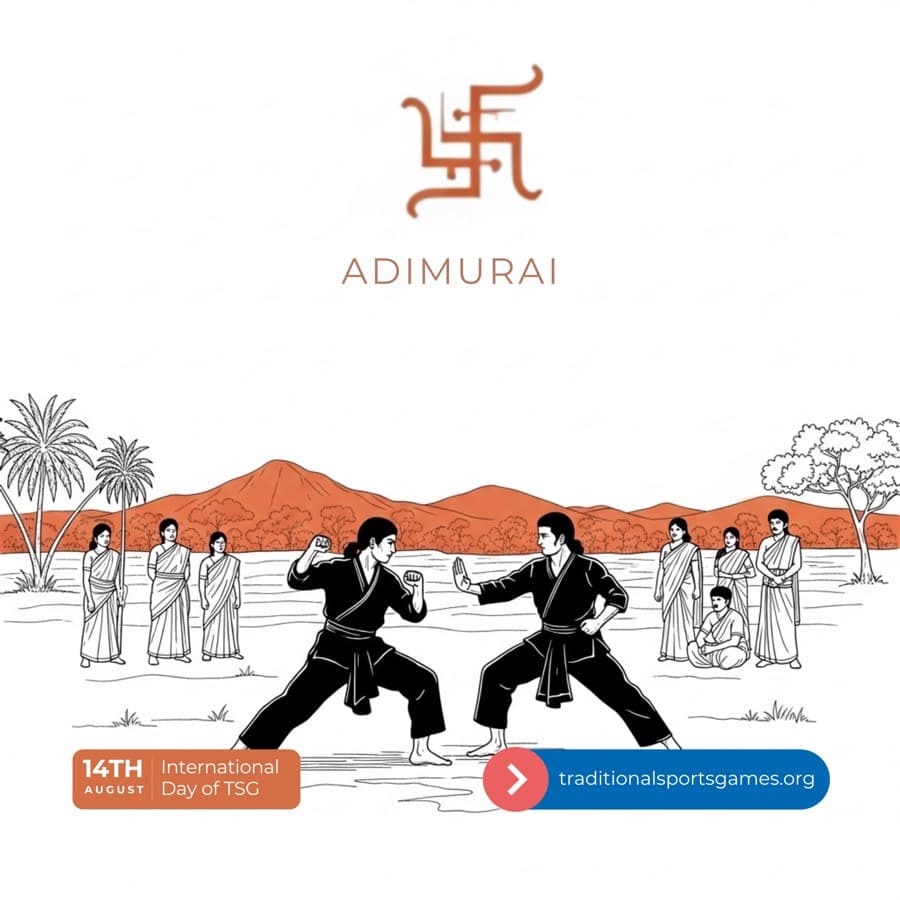
Adimurai – The Ancient Martial Art of Tamil Nadu, India Adimurai is an ancient Indian martial art from Tamil Nadu that focuses on bare-knuckle strikes, tactical movements, and self-defense. As a vital part of India’s traditional sports and games (TSG), Adimurai is not only a physical discipline but also a symbol of cultural pride and intangible heritage. Its revival and preservation resonate strongly with UNESCO’s mission to safeguard indigenous knowledge and promote cultural diversity. Historical Roots and Cultural Significance Originating in the southern part of India, Adimurai traces its lineage to ancient warrior clans and traditional defense techniques of Tamil Nadu. Practiced both as a combat art and a spiritual discipline, it was historically passed down through generations within communities.
Deep cultural heritage: Adimurai is considered one of the oldest combat systems from the Indian subcontinent. Community identity: The martial art embodies local identity, storytelling, and ritual practices. Intergenerational value: Adimurai is often taught from elder masters to youth, preserving intangible knowledge systems.
Techniques and Practice Unlike modern martial arts that focus on competition, Adimurai emphasizes real-life self-defense skills and discipline.
Bare-knuckle striking: The art includes open-hand slaps, punches, and pressure-point attacks. Vital point targeting: Practitioners learn to identify and defend against attacks on vulnerable body areas. Mental and spiritual training: Discipline, respect, and balance are integral to Adimurai training.
Modern Relevance and Benefits In today’s world, Adimurai offers multiple advantages across social, educational, and health domains:
Empowerment and gender equality: Especially for women and girls, learning Adimurai fosters confidence and self-reliance. Physical literacy and wellness: The art enhances fitness, reflexes, and coordination. Educational value: As a tool of value-based learning, it aligns with SDG 4 (Quality Education) and SDG 5 (Gender Equality). Socio-cultural development: Strengthening community ties and youth engagement, Adimurai contributes to SDG 10 (Reduced Inequalities) and SDG 11 (Sustainable Cities and Communities).
Adimurai in the Global Context ICTSG and other international networks are working to safeguard and promote martial arts like Adimurai as part of UNESCO's broader commitment to TSG. As traditional combat arts face extinction, it becomes crucial to integrate them into modern frameworks of sport, education, and tourism. Discover other similar martial traditions at Traditional Sports and Games – Global Sports Directory, including:
Kalaripayattu (India) – One of the oldest martial systems in the world. Silat (Southeast Asia) – A martial art known for graceful movements and spiritual depth. Bokator (Cambodia) – An ancient Khmer martial art with rich ritual elements.
Join the Movement to Preserve Traditional Martial Arts As globalization advances, the urgency to document, practice, and transmit endangered martial traditions like Adimurai grows. Governments, civil society, educators, and individuals all play a critical role in this endeavor. Get Involved Benefits of Joining Support ICTSG
Integrate Adimurai in schools and community centers. Encourage academic and cultural research on traditional martial practices. Support intergenerational learning between elders and youth.
Let us ensure that Adimurai continues to inspire future generations as a living symbol of cultural resilience, dignity, and empowerment. Get Involved
When a sport disappears, it is like a language no longer spoken - its stories, values, and lessons risk being lost forever. When we revive a game, we revive a culture.
Khalil Ahmed Khan - President, ICTSG