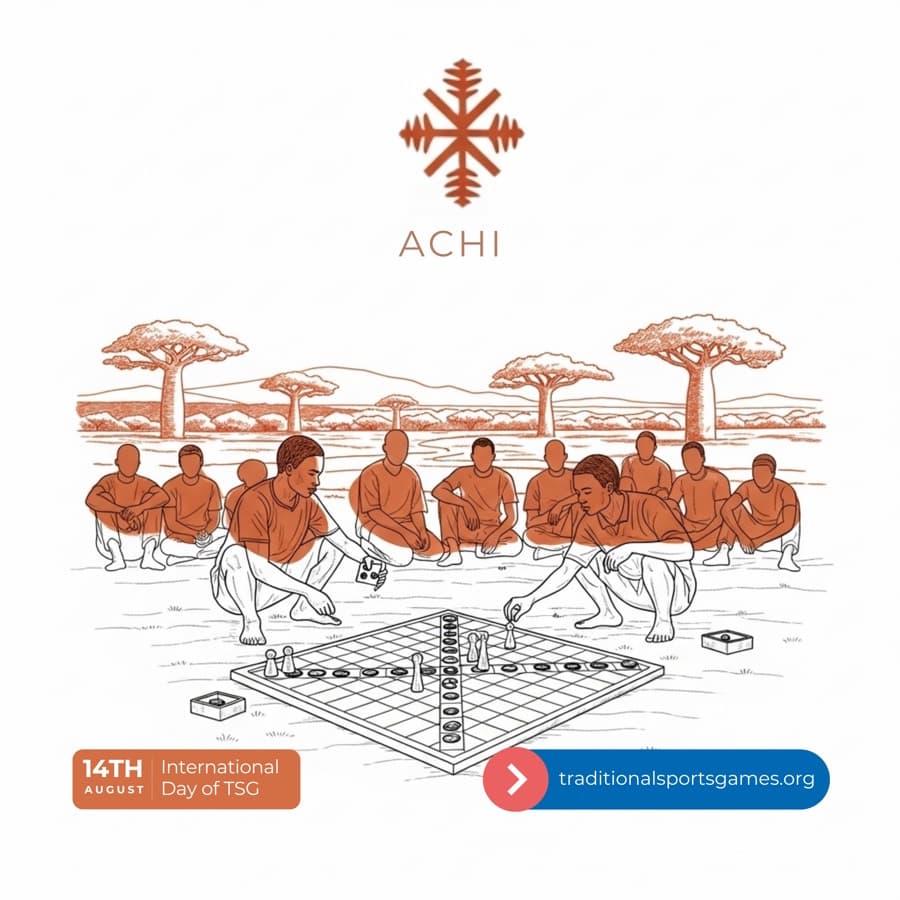
Achi: Ghana’s Traditional Strategy Game of Logic, Heritage, and Community Empowerment Achi, a traditional strategy game from Ghana, reflects centuries of indigenous knowledge passed down through generations. Played on a 3x3 grid with two players aiming to form a row of three, Achi is more than a pastime—it’s a cultural treasure that nurtures critical thinking, intergenerational transmission, and community participation. Historical Background of Achi
Originates from the rural communities of Ghana and West Africa. Traditionally played using stones or seeds on a grid drawn in the sand. Passed orally, reinforcing intangible cultural heritage. Celebrates social practices that strengthen family and community ties.
Gameplay and Strategic Rules Achi combines simplicity with strategy, making it ideal for all ages. It promotes inclusive and accessible gameplay across communities.
Players: 2 players, each with 4 pieces. Objective: Be the first to form a row of three pieces—horizontally, vertically, or diagonally. Phase 1: Players take turns placing pieces on any of the 9 spaces. Phase 2: Once all pieces are placed, players take turns sliding a piece to an adjacent empty space. Win Condition: First player to align 3 pieces in a row wins.
Cultural Significance and Community Value Achi is deeply embedded in Ghanaian culture and serves as a vehicle for:
Preserving indigenous African identity through communal play. Encouraging youth empowerment and leadership through strategy-based interaction. Fostering cultural diversity and pride in traditional knowledge.
Educational Benefits and Strategic Skills Aligned with TSG educational initiatives, Achi builds cognitive and emotional skills:
Promotes inclusive education through accessible, non-digital engagement. Enhances logical reasoning, patience, and foresight in young learners. Used in classrooms and community centers to teach decision-making and conflict resolution.
Global Impact and Alignment with UNESCO SDGs Integrating Achi in cultural programs directly supports the following UNESCO Sustainable Development Goals:
SDG 4: Quality education via culturally rooted learning. SDG 5: Gender equality through inclusive play. SDG 10: Reduced inequalities by supporting access to heritage education. SDG 11: Sustainable communities through heritage conservation. SDG 16: Peaceful societies via intergenerational respect and play. SDG 17: Global partnerships for TSG safeguarding.
Connecting Cultures Through Traditional Games Achi links Ghana to the global family of traditional games. Explore similar games from diverse cultures:
Tic-Tac-Toe (global variant) Fanorona from Madagascar Pachisi from India Makruk from Thailand
Social and Health Benefits
Encourages outdoor interaction and screen-free engagement. Strengthens civil society engagement through inclusive group activities. Supports global health by promoting mental well-being.
Call to Action: Safeguard and Celebrate Achi Help us preserve Achi and other traditional sports and games for future generations. Join the global movement to support cultural heritage, education, and youth development through play. Get Involved Benefits of Joining Support ICTSG
About ICTSG: The International Council of Traditional Sports and Games (ICTSG) is dedicated to preserving, promoting, and revitalizing traditional sports and games as powerful tools for education, peace, and sustainable development.
About Us History Contact
When a sport disappears, it is like a language no longer spoken - its stories, values, and lessons risk being lost forever. When we revive a game, we revive a culture.
Khalil Ahmed Khan - President, ICTSG